
The pressure for tighter deadlines, controlled costs, and standout customer experience has never been higher in logistics. In volatile scenarios, smart routing is no longer a differentiator—it’s a must-have. That’s where Meu Rastreio’s Route Planner API comes in: it connects your ERP/TMS, e-commerce, or internal apps to an optimized routing engine to help you deliver more, drive fewer miles, and increase predictability.
In this article, you’ll learn the most common challenges, how our Route Planner API helps you overcome them, and practical strategies to maximize results from day one.
Challenges of Route Planning Today
- Dynamic variables: traffic, delivery windows, customer availability, access restrictions, and last-minute cancellations.
- Cost pressure: fuel, maintenance, and idle time weigh on the budget and erode margins.
- Operational complexity: multiple depots, different vehicle capacities, varied SLAs, and priorities by customer or product.
- Scale and seasonality: demand spikes require elasticity without sacrificing service quality.
- Visibility and control: without trustworthy data, it’s hard to measure performance, tune routes, and predict delays.
Without a robust route planner, teams end up making reactive decisions—losing efficiency and productivity.
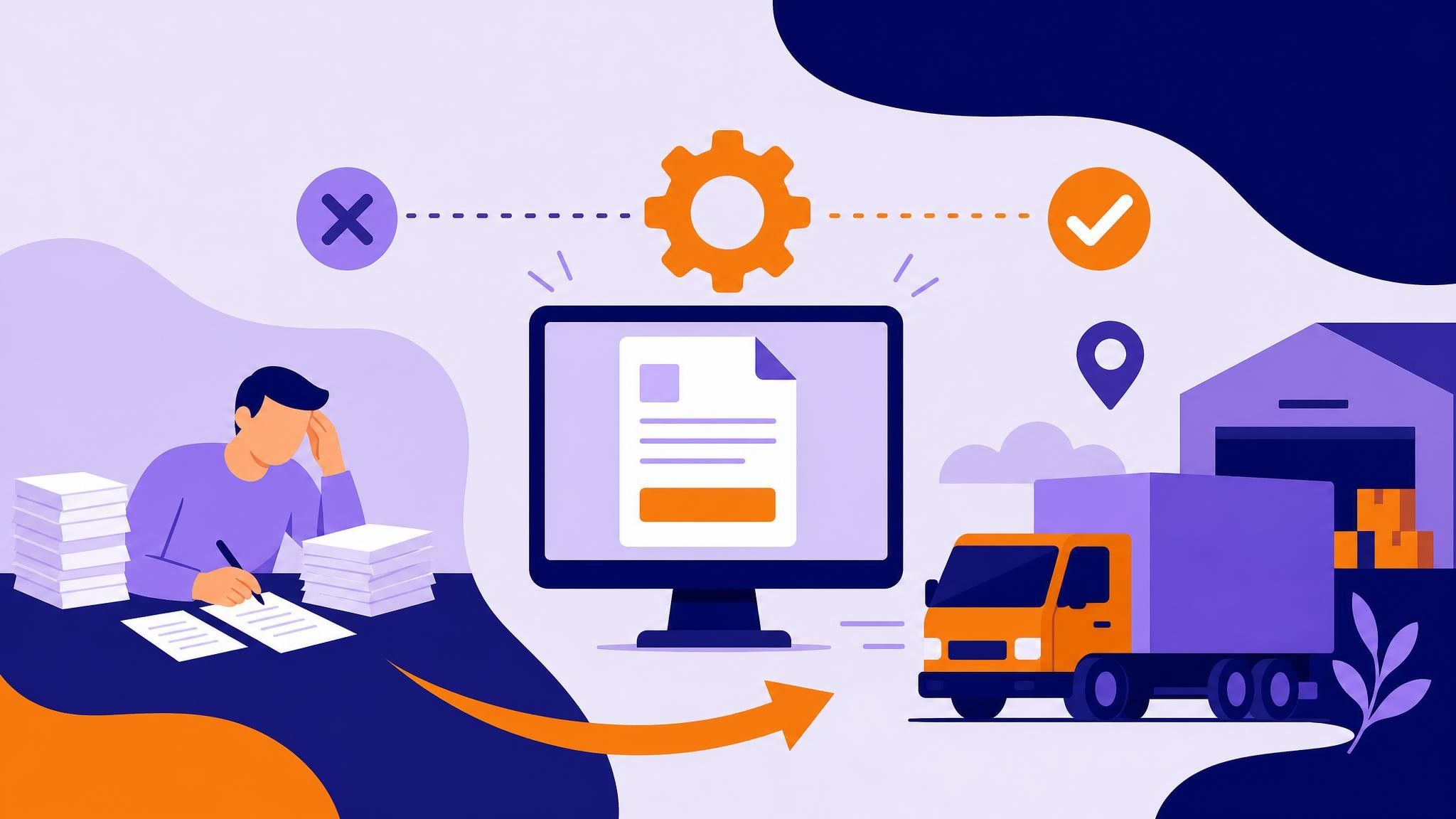
What a Smart Routing API Is and How It Works A routing API lets your systems send orders, pickup/delivery points, constraints, and objectives to an optimization service—and receive an ideal plan back with routes, stop sequencing, and execution metrics. Instead of spreadsheets and manual decisions, you put algorithms and data to work for you.
How Meu Rastreio’s Route Planner API Adds Value
- Goal-driven optimization: prioritize what matters (total time, distance, delivery windows, service level, load balancing).
- Operational constraints: consider vehicle capacities, time windows, multi-stop routes, priorities, required points, and custom business rules.
- Enrichment and standardization: geocoding and address validation to reduce routing errors.
- Observability: inputs for monitoring KPIs (deliveries per route, km/stop or mi/stop, SLA rate, OTIF).
- Simple integration: RESTful APIs with JSON payloads, secure authentication, and webhook support for routing and execution events.
- Scalability: handles volume peaks without compromising performance.
Learn more and see the docs: Meu Rastreio Route Planner API — https://meurastreio.app/pt-BR/api-roteirizador
Tips and Strategies to Maximize Results with the API
- Start with Data: Quality Drives Performance
- Standardize addresses (street, number, complement, neighborhood, city, ZIP).
- Remove duplicates and normalize customer and site names.
- Capture coordinates (lat/long) when possible to reduce ambiguity.
- Classify orders by priority, delivery window, and constraints (e.g., appointment required, vehicle height restrictions). The better the input quality, the more accurate the route plan.
- Model Your Business Rules in the API
- Capacities: volume, weight, cube, and stops per vehicle.
- Time windows and SLAs by customer/region.
- Service priorities (e.g., perishables > non-perishables).
- Cost matrices (time vs. distance) and multiple objectives.
- Operational limits (e.g., low-emission or restricted circulation zones). Translating these rules into the API prevents day-to-day exceptions and reduces manual intervention.
- Set Clear Optimization Objectives
- Reduce total distance driven.
- Increase deliveries per route/day.
- Improve OTIF (On Time In Full).
- Decrease idle time and dwell time per stop.
- Lower cost per stop. Pro tip: work with phased targets (e.g., -10% distance in 30 days, +12% deliveries per route in 60 days) to guide tuning.
- Simulate Before You Operate: Build a “Route Lab”
- Test A/B scenarios: different objectives (time vs. distance), sequencing with/without windows, zone-based grouping.
- Compare results using standardized KPIs (km/stop or mi/stop, total time, SLA).
- Use real samples from the last 30 days to calibrate parameters.
- Validate with planners and drivers: the “algorithmically good” route must be executable in the real world.
- Tactical Planning: Cut-offs and Consolidation Windows
- Establish cut-offs to consolidate orders and run optimization in waves (e.g., 10:00, 13:00, 16:00).
- Segment depots by typology (dense urban vs. regional) and fleet rules.
- Use geographic clusters to reduce zig-zag and balance workload.
- Real-time Execution: Reoptimize When the Plan Changes
- Trigger the API automatically on events: customer no-show, failed delivery, urgent new order.
- Dynamically reassign stops among nearby drivers.
- Proactively notify the end customer when ETA is reprogrammed.
- KPIs and Continuous Improvement Measure, understand, adjust. Track:
- OTIF and SLA rate by route/area.
- Distance per delivery and cost per stop.
- Vehicle idle rate.
- Average service time per stop.
- Redeliveries and reasons for failure. Use API outputs and field data to close the optimization loop.
- Engage Your Team and Drivers
- Train planners on objectives and model rules.
- Standardize departure and return checklists.
- Gather driver feedback on road restrictions, times, and access to refine the model.
- Prepare for Seasonality
- Create optimization profiles for peak periods (e.g., Black Friday, Mother’s Day).
- Adjust objectives (e.g., prioritize SLA over distance) when delivery reputation is on the line.
- Ensure integration elasticity to handle extra request volume.
Practical Use Cases E-commerce and Last Mile
- Challenge: many residential addresses, tight windows, and high tracking expectations.
- Strategy: consolidate by ZIP ranges, apply delivery windows, use reoptimization for no-shows.
- Typical benefits: fewer redeliveries, better SLA, and more deliveries per driver per day.
B2B Distribution and Multi-pickups
- Challenge: dock constraints, business hours, volumes, and customer-specific priorities.
- Strategy: parameterize capacities, priorities, and window-based sequencing, with stable routes for recurring customers.
- Typical benefits: less idle mileage, predictable service, and better fleet utilization.
Field Services (Installation and Maintenance)
- Challenge: appointments, specific technical skills, and rescheduling.
- Strategy: route by proximity, time window, and technician skill; reoptimize when delays occur.
- Typical benefits: reduced non-productive travel and higher window compliance.
Best Practices for Integrating with the Route Planner API
- Integration design: clearly define objects (order, stop, vehicle, route) and flow (creation, optimization, execution, feedback).
- Idempotency and logs: ensure safe reprocessing and call traceability.
- Webhooks/events: update your systems asynchronously to react to route and status changes.
- Observability: monitor latency, success rate, and optimization time; tune timeouts by volume.
- Security: use strong authentication, sandbox/production separation, and role-based access control.
Documentation and details: https://meurastreio.app/pt-BR/api-roteirizador
30-Day Implementation Plan Days 1–7: Discovery and Mapping
- Gather objectives, rules, and data.
- Clean addresses and standardize records. Days 8–15: Prototyping and Simulations
- Basic integration (send orders and fleet).
- Run A/B scenarios and validate with operations. Days 16–30: Controlled Pilot
- Operate in one region/route and collect KPIs.
- Fine-tune, train teams, and plan rollout.
Indicators That Prove Value
- Lower km/stop (or mi/stop) and higher route density.
- More deliveries per route/day without growing the fleet.
- Higher SLA/OTIF compliance.
- Better ETA predictability and customer experience.
- Fewer redeliveries and lower cost per stop.
Why Meu Rastreio
- Logistics-focused: an API designed for real-world operations.
- Flexibility: configuration aligned to your business—without rigid workflows.
- Scalability: built to grow with performance through seasonal peaks.
- Close support: technical onboarding and best-practice guidance.
Conclusion: Turn Route Planning into a Competitive Advantage Smart routing isn’t just drawing a path—it’s orchestrating people, deadlines, and resources to deliver value efficiently. With Meu Rastreio’s Route Planner API, you connect your operation to a modern optimization engine capable of absorbing your rules, learning from data, and scaling safely.
Ready to take the next step?
- Book a free demo and see the API applied to your operation.
- Talk to a specialist to design your pilot and define KPI targets.
Accelerate your operation today: https://meurastreio.app/pt-BR/api-roteirizador