Maximize Logistics Results with Automations: Tips, Strategies, and Implementation Guide
Automation is no longer a differentiator—it’s a competitive necessity in logistics. With increasingly complex operations, tight deadlines, multiple delivery channels, and more demanding customers, time spent on repetitive manual work drags down productivity and increases the risk of errors. For fleet managers, logistics operators, and administrative teams, the mandate is clear: do more, do it better, and do it with less.
In this article, you’ll learn how to apply automations strategically to reduce costs, increase efficiency, raise service levels, and scale safely. You’ll also see how Meu Rastreio Automations can orchestrate events, data, and actions in real time—without friction between systems—from pickup to the final mile.
Why automate logistics now?
- Rising order volumes and service variety (same-day, scheduled, reverse logistics)
- Demand for real-time tracking and proactive customer communication
- The need to meet strict SLAs and reduce exceptions
- Integrations with TMS, WMS, ERPs, and marketplaces that require consistent sync
- Constant pressure to cut operating costs and boost productivity
Automation frees teams from repetitive tasks, reduces rework, minimizes data-entry errors, and accelerates data-driven decisions. The outcome is operational predictability and focus on what matters most: the customer and sustainable growth.
Key pain points automation solves
- Lack of end-to-end visibility and delays in status updates
- SLA breaches caused by communication gaps or poor prioritization
- High volume of “Where Is My Order?” (WISMO) contacts to support
- Rework in spreadsheets, reconciliations, and freight audits
- Difficulty scaling processes without growing headcount
- Routing errors and poor management of delivery time windows
- Inconsistent proof of delivery (POD) capture and storage
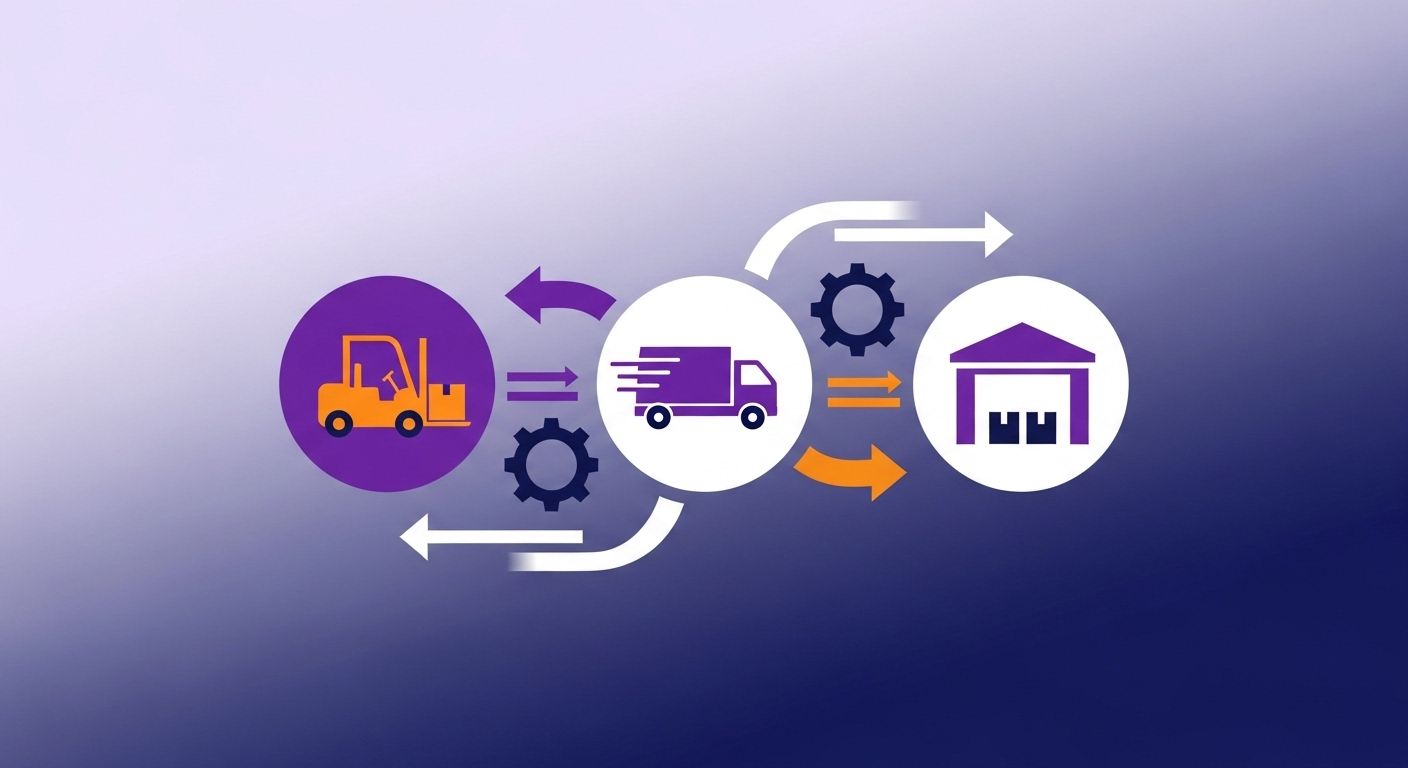
What Meu Rastreio Automations do in practice Meu Rastreio Automations (https://meurastreio.app/pt-BR/automacoes) operate as a rules engine that connects tracking events, delivery statuses, fleet data, and integrations with external systems. You set triggers, conditions, and actions. The system executes within seconds, 24/7.
Triggers (when to start)
- Status changes (picked up, out for delivery, delivered, attempt, exception)
- Telemetry and geofencing events (entering/leaving zones)
- Approaching SLA deadline
- Data received via API/webhook (order created, label printed)
- Inactivity or missing updates for a defined period
Conditions (how to decide)
- Service type, region, customer, order value, priority
- Delivery window, vehicle type/capacity, driver profile
- Segmentation by sales channel or partner carrier
Actions (what to execute)
- Send automated notifications via supported channels (e.g., email, SMS)
- Update statuses and ETAs at scale, consistently
- Escalate exceptions for supervision or trigger redelivery
- Fire webhooks to TMS/WMS/ERP or CRMs
- Create tasks for drivers and support teams
- Open workflows for freight audit and reconciliation
Expected outcomes
- Fewer support contacts
- More predictable On-Time Delivery (OTD)
- Lower costs by eliminating manual activities
- Better customer experience with proactive communication
Strategies to maximize results
- Start small, scale fast
- Pick 1–2 critical workflows (e.g., delay alerts and delivery confirmation)
- Run a pilot in one region/customer for 2–4 weeks
- Capture before/after metrics, then expand
- Map the end-to-end flow
- Sketch the current process from order to delivery
- Identify bottlenecks (e.g., late updates, spreadsheet dependency)
- List required data and systems involved (TMS, WMS, ERP, routing engine)
- Define clear KPIs
- OTD, first-attempt delivery success, cost per delivery
- Support contact rate per order (WISMO)
- ETA accuracy and time between status changes
- Rules by segment and SLA
- Create automations by customer type, order value, and delivery window
- Prioritize sensitive loads and orders with differentiated SLAs
- Tune notification cadence by audience to avoid spam
- Proactive communication that adds value
- Send only useful information: ETA, rescheduling, instructions
- A/B test messages and send times to boost open and engagement rates
- Include tracking links and self-service options
- Orchestration across systems
- Use APIs and webhooks to sync statuses and events in real time
- Auto-update ERPs, TMS, and CRMs to reduce rework
- Standardize status dictionaries to avoid mismatches
- Governance, security, and data privacy
- Restrict access by role and log rule executions
- Avoid personal data in free-text fields; use tokens and link expirations
- Version your rules and implement peer review/approvals
- High-impact exception management
- Escalate critical delays before the SLA breaks
- Trigger automatic route re-optimization after a failed attempt
- Create human follow-up tasks only when truly needed
- Data-driven continuous improvement
- Monitor metrics, spot outliers, and tune rules
- Review playbooks quarterly for seasonality
- Decommission what doesn’t add value; simplify to move faster
Practical use cases
-
Reduce WISMO and increase NPS Scenario: a high volume of “Where Is My Order?” calls. Strategy: automated notifications at critical milestones (pickup, out for delivery, and any delay) with tracking link and ETA. Typical results: a significant drop in support contacts and stronger customer perception of transparency.
-
Recover delays before SLA breach Scenario: deliveries at risk due to distance/time-window constraints. Strategy: a rule that combines geofencing events, predicted ETA, and SLA; if at risk, trigger route re-optimization and escalate to a supervisor. Typical results: higher on-time rates and lower redelivery costs.
-
Automated freight audit and billing Scenario: discrepancies between the contracted rate card and final charge. Strategy: upon delivery completion, validate distance, weight/volume, and add-ons (tolls, wait time); if there’s a discrepancy, open a ticket with evidence. Typical results: revenue recovery and a standardized audit process.
-
Smart redelivery Scenario: first attempt failed. Strategy: automatically schedule a new attempt based on customer preferences and available windows, updating all connected systems. Typical results: fewer idle attempts and higher second-visit success.
Metrics that matter
- OTD (On-Time Delivery) and OTIF
- First Attempt Delivery Rate
- Stage cycle times (lead time between statuses)
- Cost per delivery and cost per support contact
- Exception rate and time to resolution
- ETA accuracy and variance by region/route
- Post-delivery NPS/CSAT and response rate
- Productivity per vehicle/driver and utilization
Meu Rastreio Automations feed dashboards and let you correlate rule changes with indicator shifts—making prioritization and decisions easier.
Trends that amplify your automations
- Predictive ETAs and AI-assisted prioritization
- IoT/telemetry integration for geofencing and safety events
- Intelligent document processing (proofs and damage claims)
- Omnichannel orchestration and customer self-service
- Dynamic routing with real-time constraints
- Privacy-by-design and data governance for compliance (e.g., LGPD/GDPR)
How to get started with Meu Rastreio
- Connect your data sources
- Integrate TMS, WMS, ERP, and your routing engine via API and webhooks
- Normalize statuses and master data (carriers, branches, regions)
- Choose high-impact playbooks
- Proactive notifications, SLA management, freight audit, redelivery
- Tailor rules by customer, operation, and SLA
- Configure triggers, conditions, and actions
- Start simple and evolve to finer segmentations
- Define escalation policies and per-channel send limits
- Test in a controlled environment
- Pilot with a subset of orders/regions
- Validate metrics and refine messages and timing
- Go live and monitor
- Track dashboards and execution logs
- Set routines for reviews and continuous improvement
- Scale safely
- Version rules, document changes, and use approvals
- Expand to new routes, branches, and partners
Conclusion Automation is the fastest, safest way to gain efficiency, reduce costs, and improve customer experience in logistics. With a flexible rules engine, simple integrations, and KPI focus, you can turn fragmented processes into an orchestrated, predictable, and scalable operation.
Meu Rastreio Automations were built for logistics teams that need speed without sacrificing governance and visibility. From real-time tracking to SLA oversight and proactive communication, you get a hub to execute, measure, and continuously improve.
Next step
- Book a free demo with a specialist and see how automations can accelerate your results in practice: https://meurastreio.app/pt-BR/automacoes