
In an increasingly competitive and volatile logistics landscape, fleet managers, operators, and analysts must make data-driven, low-risk decisions. That’s where case studies become a powerful lever: beyond social proof, they are a practical playbook of what works, how to implement it, and which results to expect.
In this article, we show how to use case studies to guide your operation, justify investments, and accelerate gains in delivery tracking, real-time visibility, and operational efficiency. You’ll find tactical recommendations and an illustrative example. You’ll also see how Meu Rastreio helps companies turn real-world learnings into scalable results. To explore client stories, visit: https://meurastreio.app/pt-BR/cases
Why case studies matter in logistics
- Reduce uncertainty: reveal the path taken by companies facing challenges similar to yours.
- Accelerate internal buy-in: help convince leadership, procurement, and field teams with clear evidence.
- Serve as benchmarks: bring relevant logistics KPIs (OTIF, SLA, redelivery rate, cost per delivery).
- Increase execution speed: present step-by-step guidance, shortcuts, and warnings about common pitfalls.
- Elevate customer experience: highlight practices that reduce “Where’s my order?” (WISMO) and raise NPS/CSAT.
How to build a persuasive logistics case study Use a simple, repeatable structure. A proven approach is the STAR framework adapted for operations:
- Situation and context
- Industry, volume (deliveries/day or month), modes, service regions, and seasonality.
- Example: mid-size e-commerce, 20,000 deliveries/month, last mile in metro areas and upcountry.
- Challenge (the “before”)
- Specific pain points: lack of visibility, many exceptions, high redelivery cost, missed SLAs.
- Baseline KPIs: OTIF, lead time, WISMO contacts, cost per delivery.
- Action (the “how”)
- Implementation plan: integrations (TMS/ERP via API), regional pilots, notification automations.
- People and processes: ownership, governance, training, and internal SLAs.
- Technology: adopted capabilities (real-time tracking, exception management, KPI dashboards).
- Result (the “after”)
- KPI improvements: better OTIF, fewer redeliveries and support contacts, higher productivity.
- Customer impact: clear tracking pages, proactive communication, less friction.
- Lessons learned and next steps
- What worked, what to avoid, and how to scale to new routes, carriers, and regions.
Practical tips
- Be specific: describe the before-and-after with the same metric and time window.
- Show the path, not just the destination: detail processes, integrations, and key decisions.
- Include voices from the field: quotes from operations management, route planners, and support increase credibility.
- Prove scalability: show how to replicate gains across branches or carrier partners.
Strategies to use case studies and maximize results
In day-to-day operations
- Turn case studies into playbooks: create SOPs based on what worked.
- Standardize KPIs: define branch/carrier dashboards with targets aligned to the case.
- Use exception checklists: how to act on delays, failed attempts, or incomplete addresses.
In management and planning
- Project prioritization: select initiatives with the highest impact observed in case studies.
- Partner negotiations: use evidence to agree on SLAs and penalties/bonuses.
- Budget allocation: robust cases help prioritize investments in logistics SaaS and integrations.
In the end-customer experience
- Proactive communication: send status notifications through preferred channels (SMS, WhatsApp, email).
- White-label tracking page: standardize the tracking experience to reduce reactive contacts.
- Structured feedback: collect NPS/CSAT by journey stage (order, out for delivery, delivered).
In training and onboarding
- Micro-cases by role: short, role-based content for route planners, drivers, and support teams.
- Exception simulators: train on common issues based on real events.
- Recurring refreshers: reinforce monthly the practices that sustain results.
In sales and partnerships
- Decks and one-pagers: show cases by vertical (pharma, foodservice, e-commerce) to build trust.
- Proof by geography and mode: highlight results in urban, regional, and long-haul routes.
Essential metrics to assess and tell your case
- OTIF (On Time In Full): percentage of on-time, complete deliveries.
- Delivery SLA: adherence to contracted time windows.
- End-to-end lead time: time from order to delivery completion.
- First-attempt success rate: prevents redelivery costs.
- Redelivery and return rate: direct impact on cost per delivery.
- WISMO contacts: indicator of low visibility/friction.
- Cost per delivery and per mile: operational efficiency and routing.
- Productivity per vehicle/driver: stops, windows, and idle time.
- NPS/CSAT by stage: customer perception of the experience.
- Data fitness (completeness and accuracy): quality of tracking data.
Common mistakes and how to avoid them
- Focusing only on technology while ignoring processes and people.
- Skipping the baseline: without a before-and-after, the case loses power.
- Overgeneralizing: results need context and a clear scope.
- Ignoring exceptions: failing to detail how delays, failures, and incidents were handled.
- Under-measuring: without operational and CX KPIs, value remains invisible.
Trends that amplify your logistics case studies
- Real-time transportation visibility (RTTVP): reliable data across the chain, from hub to last mile.
- AI-powered predictive ETAs: more accurate delivery promises and smaller time windows.
- Automated communications: omnichannel orchestration that reduces friction and support cost.
- Deep API and webhook integrations: lower event latency and eliminate data duplication.
- ESG in logistics: optimized routes to cut CO₂ and waste.
- Data governance and privacy (LGPD/GDPR): consent, security, and data traceability.
How Meu Rastreio accelerates your success stories Meu Rastreio is a logistics SaaS focused on visibility and operational efficiency. By centralizing delivery tracking and standardizing end-customer communications, the platform makes it easier to create robust, repeatable case studies.
Differentiators that accelerate results
- End-to-end visibility: real-time status across all steps and partners.
- Customizable tracking pages: a consistent, on-brand experience.
- Smart notifications: SMS, WhatsApp, and email, configurable by event and SLA.
- Exception management: clear workflows for delays, returns, and redeliveries.
- Dashboards and KPIs: monitor OTIF, lead time, redelivery rate, and WISMO contacts.
- API and webhook integrations: connect TMS, ERP, WMS, and carriers without friction.
- Customer success and fast onboarding: advisory support to reach outcomes faster.
Want to see it in action? Explore our case studies: https://meurastreio.app/pt-BR/cases
Illustrative example: from WISMO chaos to a predictable operation Context: a regional home-goods e-commerce, 20,000 deliveries/month, seasonal peaks. Challenge: high volume of support calls, frequent delays on urban routes, and a below-target first-attempt success rate. Action with Meu Rastreio:
- API integration with ERP and carriers to consolidate real-time events.
- Custom tracking pages and proactive notifications at critical milestones (pickup, out for delivery, attempt, delivered).
- SLA dashboards by region and carrier; automated deviation alerts.
- Exception workflows for incomplete addresses and redeliveries, with proactive customer outreach. Observed results:
- Fewer reactive support contacts thanks to visibility and proactive notifications.
- Higher first-attempt success driven by better time-window confirmation and recipient data quality.
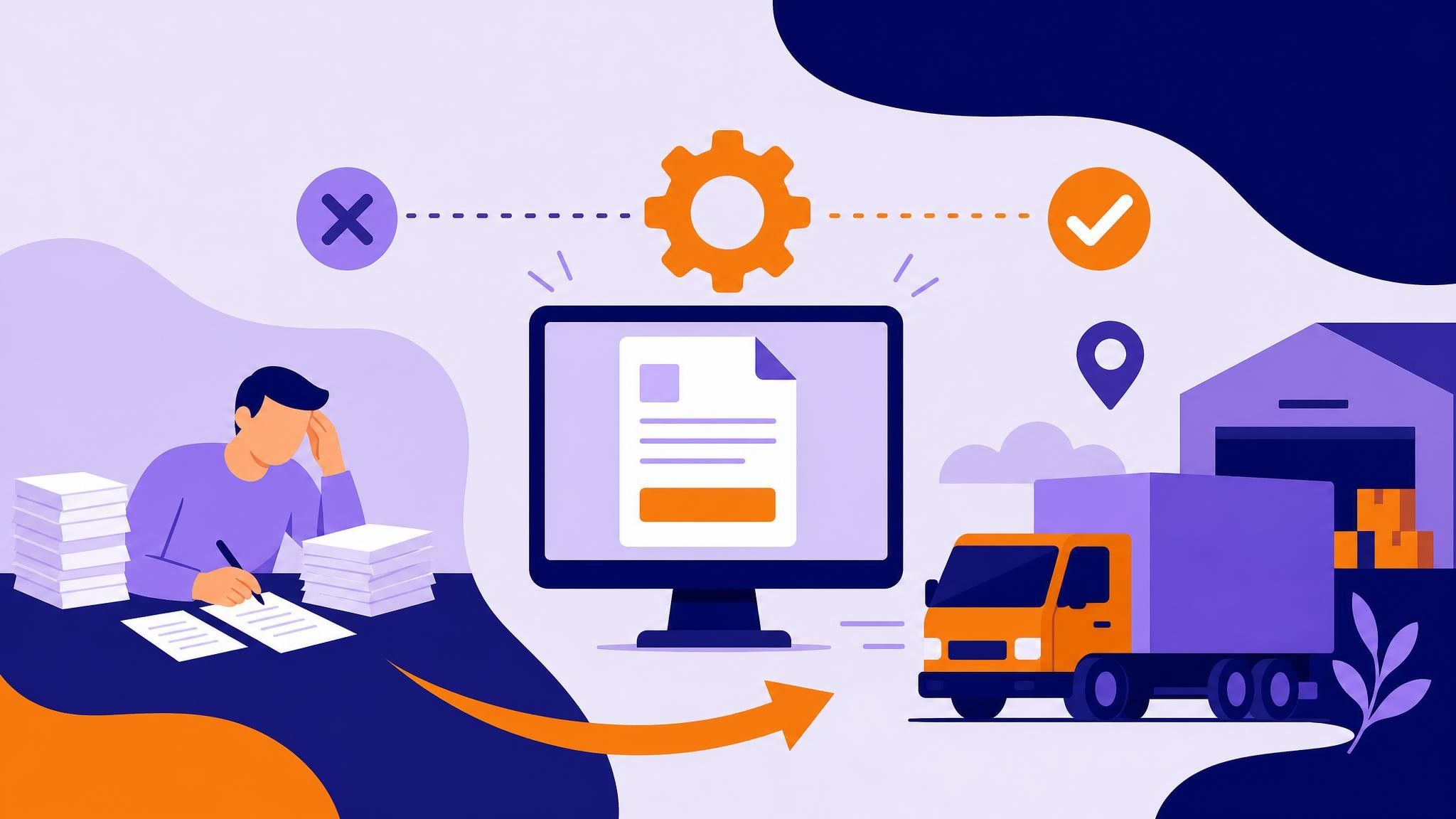
- A more predictable operation, shifting from spreadsheet firefighting to exception-based management.
- Better perceived customer experience, reflected in positive feedback. Note: this example is illustrative and reflects recommended practices in operations that adopt real-time visibility and proactive communications.
Quick checklist for a winning logistics case study
- Define objectives and baseline KPIs.
- Gather evidence (dashboard snapshots, flows, integrations).
- Document the step-by-step (team, processes, automations).
- Bring in the voice of operations (managers, planners, drivers, support).
- Show the “after” using the same measurement yardstick as the “before.”
- Capture lessons learned and the scale-up plan.
Conclusion and next step Case studies are not just stories—they are strategic tools to reduce risk, gain speed, and invest confidently in solutions that drive operational efficiency, lower logistics costs, and improve customer experience. With real-time visibility, proactive communications, and business-aligned KPIs, your operation evolves from reactive to predictable.
Meu Rastreio helps your company turn these best practices into measurable results with fast implementation and consultative support.
- See real transformation stories: https://meurastreio.app/pt-BR/cases
- Book a free demo to talk with a specialist and map opportunities in your operation.