Route Planning with an Automatic Route Planner: Innovation and Efficiency for Your Operation
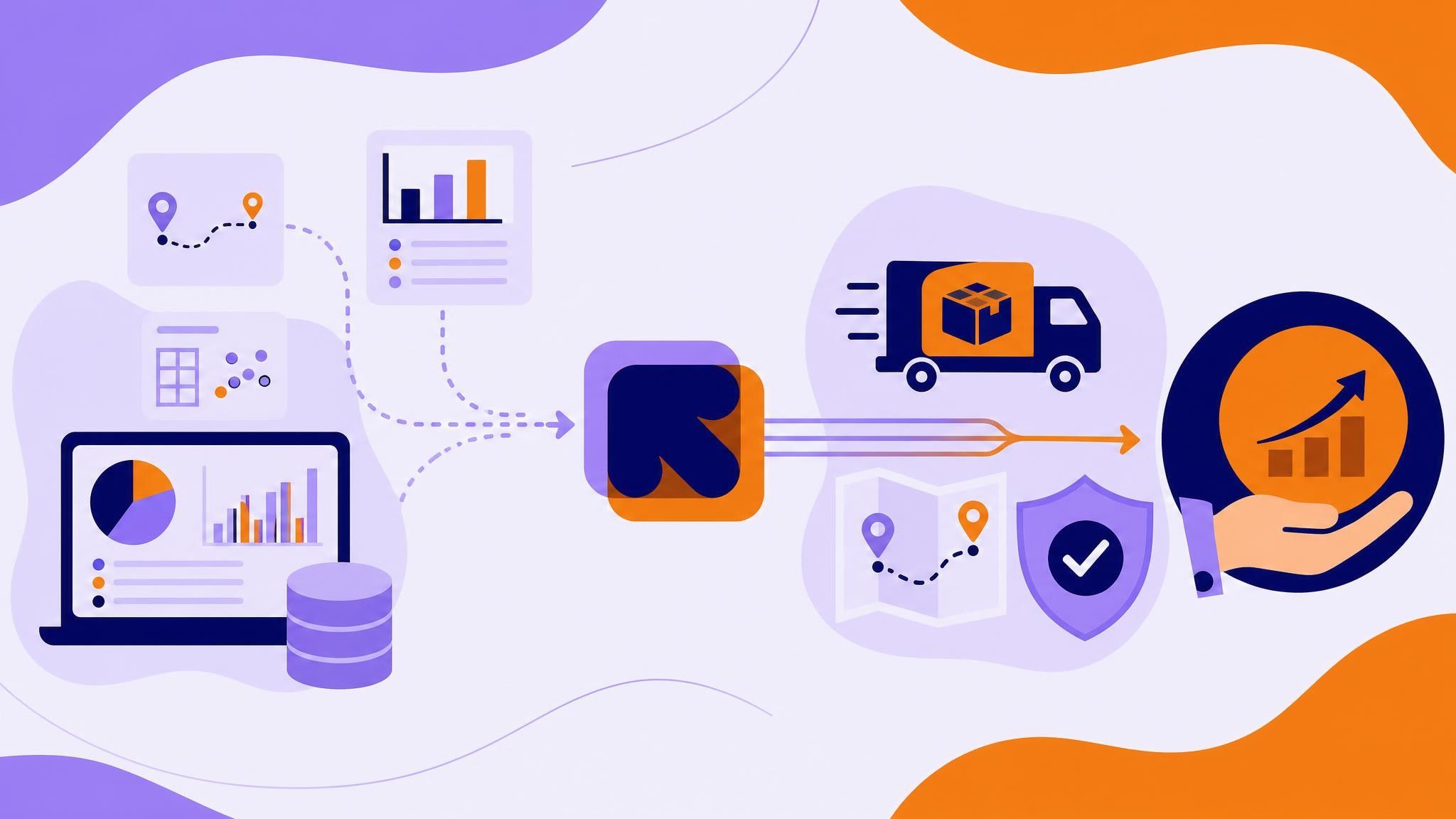
In modern logistics, the time from order to delivery is a decisive competitive lever. The challenge: turn delivery windows, capacity limits, traffic, multiple depots, and customer priorities into feasible, cost‑effective routes—every single day. This is where automated route planning proves its value: fewer miles, more on‑time deliveries, and a predictable operation.
This article explains how an automatic route planner can boost operational efficiency and how Meu Rastreio’s Route Planning helps your team do more with less—using data‑driven, SaaS technology ready to integrate with your logistics stack.
Why route planning is mission‑critical
Planning routes manually with spreadsheets or paper maps is labor‑intensive and doesn’t scale. As volume grows, complexity explodes: each additional stop multiplies the number of possible combinations. The results are often:
- High fuel and overtime costs
- Delays and SLA breaches due to conflicting delivery windows
- Unbalanced load distribution across vehicles and drivers
- Lack of real‑time visibility and difficulty replanning
- Daily rework and reliance on “heroes” to make routing happen
Without a robust process, logistics becomes a bottleneck for sales and service. An automatic route planner solves the equation with optimized algorithms, up‑to‑date data, and end‑to‑end automation.
What an automatic route planner is and how it works
An automatic route planner turns your pickup/delivery list and operational constraints into optimized routes. It considers:
- Vehicle capacity (weight, volume, cube)
- Delivery windows and service times at each stop
- Origins (DCs, hubs, stores) and multiple depots
- Fleet rules (shifts, regions, access restrictions, preferences)
- Costs (per mile, per hour, overnight) and order priorities
- Traffic and real‑world distances via geocoding and time‑distance matrices
Combining heuristics and optimization, the system finds the best trade‑off among cost, time, and SLA compliance—in minutes, not hours.
Practical, measurable benefits
Operations that adopt automated route planning typically see:
- Fewer miles and lower fuel consumption: commonly 10–25%, depending on the scenario
- Daily planning time cut from hours to minutes
- More on‑time deliveries: better adherence to delivery windows
- Less overtime and idle time: smarter resource allocation
- Predictability: standardized routes, clear KPIs, and SLA‑first execution
- Scalability: from seasonal peaks to steady growth without losing control
Results vary by operation profile, but the pattern is clear: data‑driven decisions lift efficiency and enhance the end‑customer experience.
How Meu Rastreio’s Route Planning elevates your operation
Meu Rastreio offers a Route Planning solution built for real‑world fleets, with simplicity, integration, and performance at the core.
Key capabilities
- Automatic multi‑stop routing
- Delivery windows, service times, and priority handling
- Fleet constraints: capacity by weight/volume, vehicle type, shifts
- Multiple depots, service areas, and load balancing across vehicles
- Optimization for cost, time, and SLA compliance
- Fast re‑optimization to handle exceptions (rescheduling and no‑shows)
- Automatic geocoding and address fine‑tuning
- What‑if scenario simulation before releasing routes
- Driver app with navigation and proof of delivery (photo/signature)
- Real‑time monitoring and plan vs. actual comparison
- Dashboards and KPIs: OTIF (On Time In Full), miles per delivery, cost per route, window adherence
- Customer notifications on delivery status
- Import/export (CSV) and API integrations with ERP, TMS, and WMS
The goal is simple: take the heavy lifting off your team and deliver solid routes aligned to your business rules and objectives.
Typical use cases
Last mile for e‑commerce and omnichannel retail
- Short delivery windows and high volume
- Demand for visibility and communication with the end customer
- Daily routes recalculated with a few clicks
Expected outcome: fewer miles driven, better regional distribution, SLA compliance, and higher customer satisfaction.
B2B distribution (food, beverage, pharma)
- Receiving schedules, dock constraints, and appointments
- Vehicles with specific capacities and requirements
- Need to balance routes for both cost and time
Expected outcome: higher vehicle utilization, more stable routes, and fewer returns due to missed windows.
Field services and technicians
- Jobs with variable service times
- Prioritization by urgency and technician skill
- Optimization by regions and visit windows
Expected outcome: more jobs completed per day, less travel time, and preserved SLAs.
Hypothetical example
A regional distributor with 10 vehicles and 220 deliveries per day, operating with 2‑hour time windows, migrated from manual planning to Meu Rastreio’s automatic route planner. After setting up rules and three weeks of calibration, they observed:
- Daily planning reduced from 2h30 to 20 minutes
- A noticeable drop in miles per delivery and better load balance across drivers
- Higher window‑adherence rates, reducing re‑deliveries
Exact numbers vary by operation, but the pattern of gains in efficiency and reliability is recurrent.
How to implement successfully
Adopting an automatic route planner is both a technology and process shift. Best practices include:
- Structure your data
- Standardize addresses and customer records
- Capture service times, windows, and constraints
- Validate fleet capacities (weight, volume, cube)
- Set clear objectives
- Minimize cost? Maximize window adherence? Balance the fleet?
- Define success metrics (OTIF, miles per delivery, cost per route)
- Start simple, evolve fast
- Begin with essential rules
- Run short improvement cycles as you learn from results
- Engage frontline teams
- Train drivers and supervisors on the app and SLA policies
- Gather feedback on routes and improvement opportunities
- Integrate systems
- Connect ERP, TMS, and WMS via API to reduce retyping and errors
- Use events and webhooks for real‑time updates
- Measure and adjust continuously
- Compare plan vs. actual
- Act on KPIs and exceptions (delays, deviations, re‑deliveries)
Meu Rastreio offers consultative support throughout the transition, shortening time‑to‑value and aligning to your operational context.
Trends shaping routing
- Real‑time dynamic routing: automatic replanning when exceptions occur
- AI and machine learning: demand, traffic, and service‑time predictions
- Sustainability and ESG: optimization to cut CO2, EV‑friendly routing, and greener trips
- Collaborative logistics and micro‑hubs: shortening the final mile and boosting urban efficiency
- Customer experience: proactive notifications and more precise delivery windows
Operations aligned with these trends gain competitive advantage, efficiency, and brand reputation.
Why choose Meu Rastreio
- Built for operational reality: configurable rules without needless complexity
- Speed and reliability: a robust optimization engine with consistent results
- Easy integration: open API to connect your stack (ERP, TMS, WMS, and marketplaces)
- End‑to‑end visibility: from planning to proof of delivery
- Expert team: guided onboarding and field‑tested best practices
By combining technology with logistics know‑how, Meu Rastreio removes friction and accelerates results.
Conclusion: transform your logistics with intelligent planning
Automated route planning is a game‑changer for operations of any size. It reduces costs, shortens lead times, improves customer experience, and scales your growth. With Meu Rastreio’s Route Planning, your team plans in minutes, executes with precision, and course‑corrects in real time—all in one place.
Ready to see it in your context? Book a free demo and discover how Meu Rastreio can boost your operational efficiency:
- Meu Rastreio Route Planning: https://meurastreio.app/pt-BR/planejamento-de-roteiros
- Talk to a specialist and get started today.