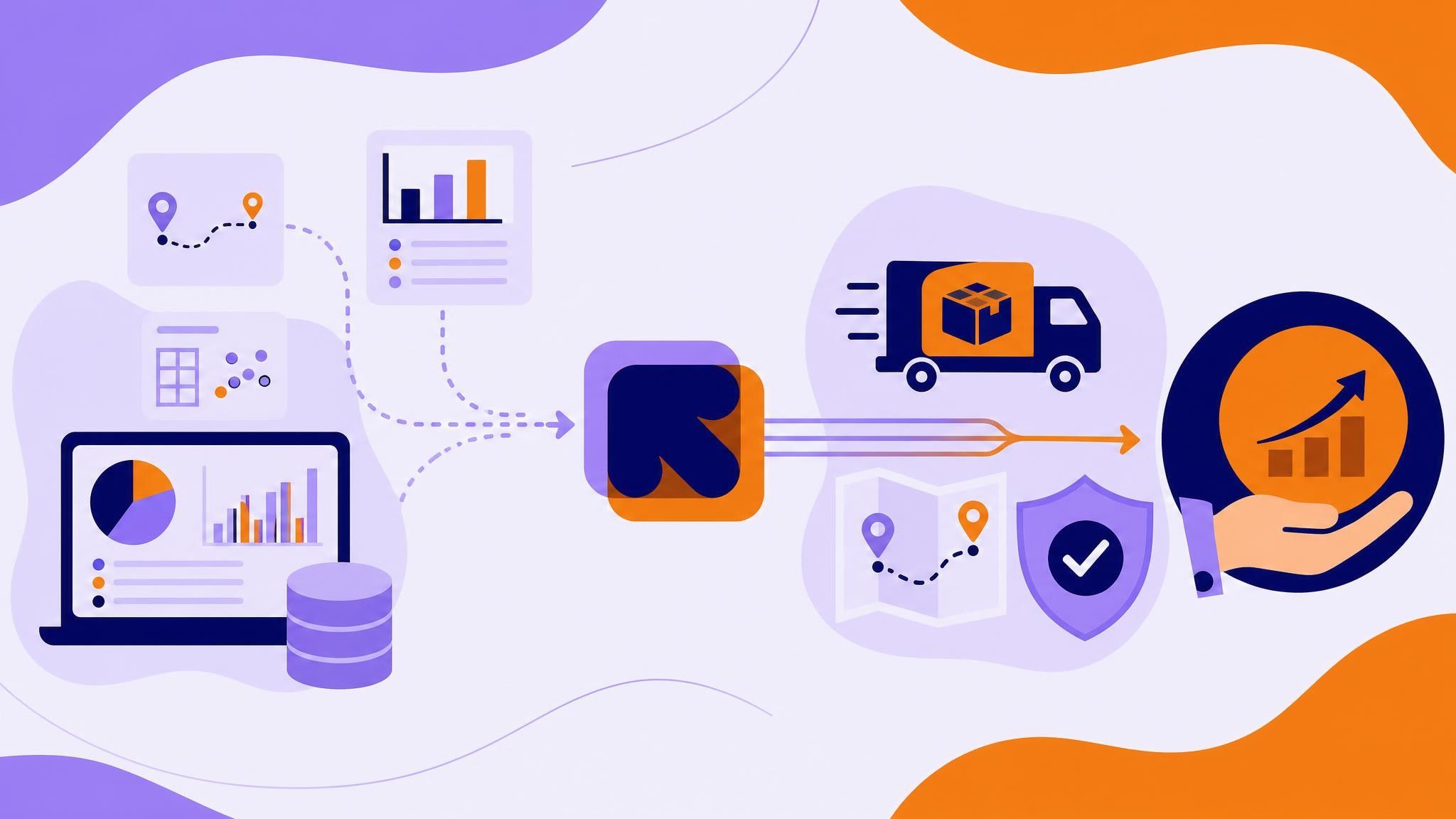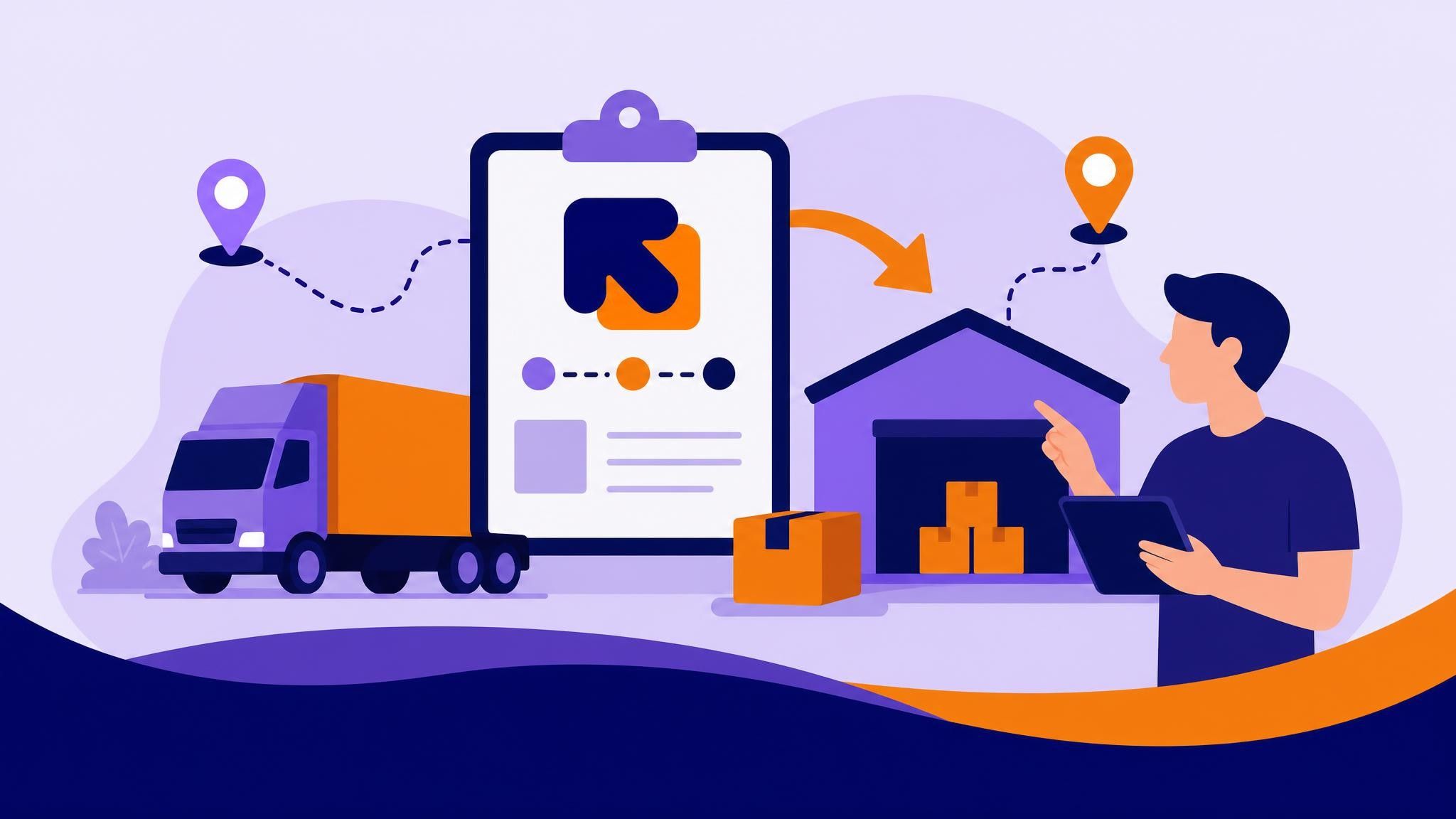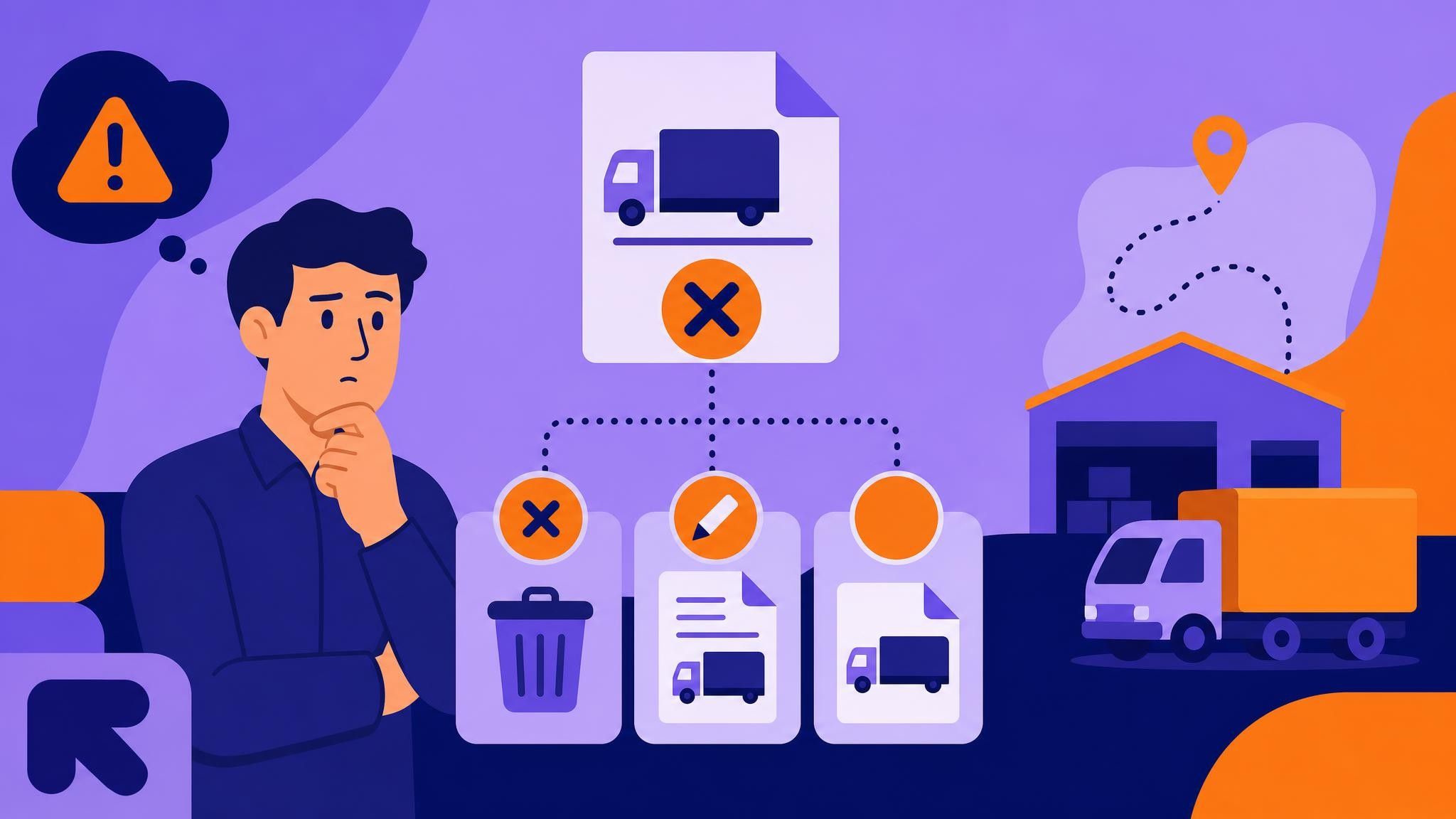
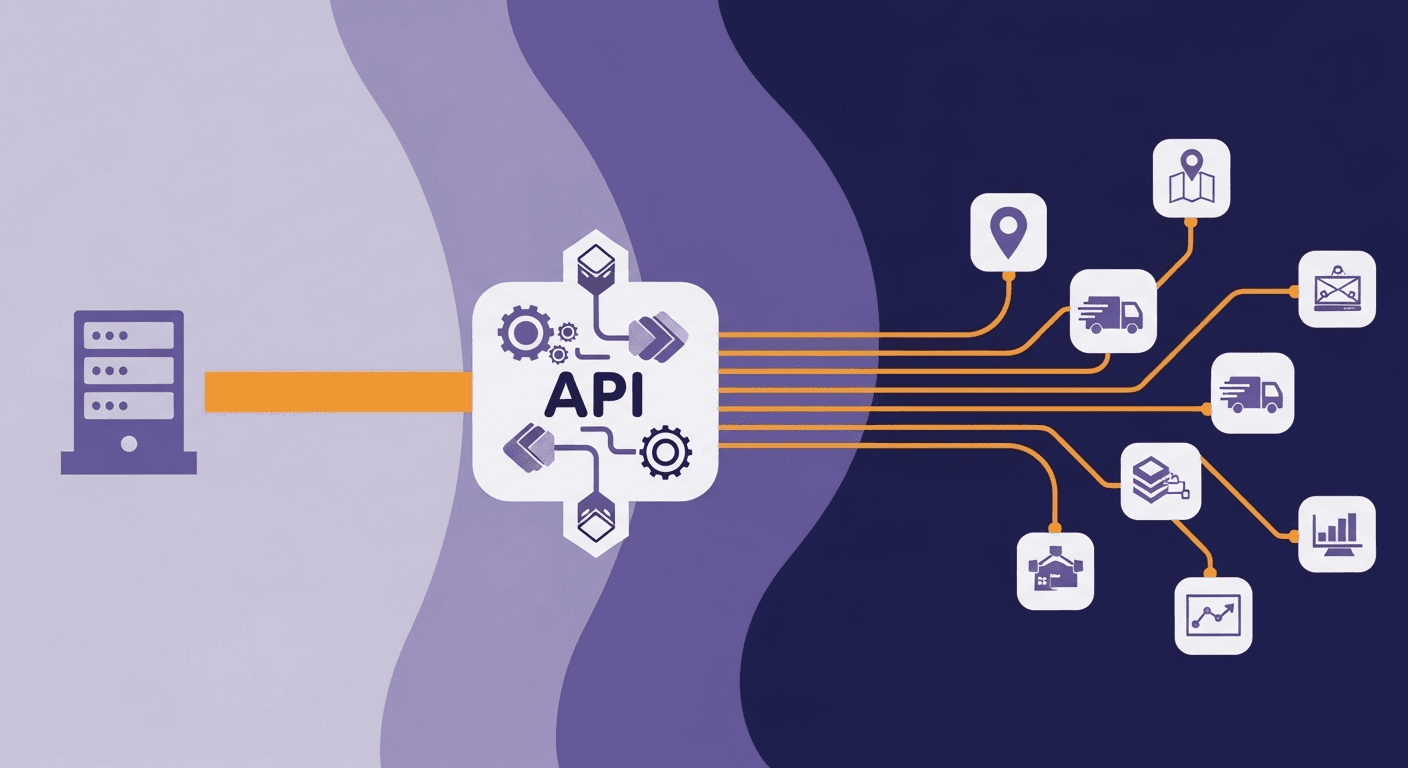
The pressure for shorter lead times, lower costs, and higher predictability has turned routing into the heart of modern logistics. Spreadsheets and “gut-feel” routes don’t scale. To unlock real efficiency, you need to connect your ERP, TMS, WMS, or custom app to a Route Optimizer API—automating end-to-end route planning and optimization.
In this guide, you’ll learn how a routing API integration works, the main technical and operational challenges, practical use cases, and the best practices to extract maximum value. Along the way, we show where Meu Rastreio’s Route Optimizer API fits and how it accelerates your optimization journey without friction.
What a Route Optimizer API is and why it matters A Route Optimizer API is a cloud service that receives delivery/pickup data, constraints, and fleet information and returns optimized routes. Instead of planning manually, your system sends an HTTP/REST request and receives the best sequence of visits for each vehicle, considering rules like:
- Time windows and SLA per customer
- Vehicle capacities (weight/volume/items)
- Start/end points (hubs, multiple depots)
- Service duration at each stop
- Traffic constraints, priorities, and vehicle profiles
Why this matters:
- Scale: plan hundreds or thousands of stops in minutes, consistently.
- Efficiency: cut distance driven, idle time, and re-deliveries.
- Predictability: improve time-window compliance and customer satisfaction.
- Flexibility: replan quickly in the face of cancellations, absences, or traffic.
Common integration challenges (and how to overcome them)
- Data quality: incomplete or unstandardized addresses produce poor routes. Use geocoding and pre-validation.
- Constraint modeling: turning business rules (SLA, priorities, multi-depot, heterogeneous fleets) into technical parameters requires careful mapping.
- Latency and async flows: routing is complex and often asynchronous. Handle queues, callbacks (webhooks), and polling.
- Observability: without logs, metrics, and alerts, you’re flying blind. Monitor optimization time, success rate, and route quality (km/stop, OTIF).
- Error handling: implement exponential backoff retries, idempotency, and fallbacks (e.g., simplified routing if the API is unavailable).
- Cultural change: operators and drivers must trust the new route; communicate benefits and collect feedback to calibrate rules.
How the integration works in practice
- Prerequisites and architecture
- Source systems: ERP/TMS/WMS or a custom app with orders and service windows.
- Routing service: secure, scalable REST API (e.g., Meu Rastreio’s Route Optimizer API: https://meurastreio.app/pt-BR/api-roteirizador).
- Asynchronous mechanism: webhook to receive the solution or a scheduler to check status.
- Data layer: address normalization, geocoding, and enrichment (weight/volume/service time).
- Authentication and security
- Use HTTPS, API tokens, and scoped access.
- Store secrets in vaults and rotate them periodically.
- Comply with data protection laws (e.g., LGPD/GDPR): minimize personal data, anonymize when possible, and define clear retention policies.
- Essential data structures
- Stops (jobs): id, lat/lng (or address), time windows, service duration, demand (weight/volume), priority.
- Vehicles: id, capacity, shift hours, start/end location, cost per hour/km, constraints.
- Problem parameters: objective (minimize km/time/cost), route limits, balancing policy, late penalties.
- Typical routing flow
- Your system consolidates orders for the shift.
- It sends a POST request to create a “routing problem.”
- You receive the result.
- You distribute routes to the driver app and monitor execution.
Practical, measurable benefits
- Fewer kilometers and less fuel: lower variable cost per delivery.
- Fewer unproductive hours: better driver time allocation and dock window usage.
- SLA compliance: higher on-time delivery rates within promised windows.
- Vehicle productivity: more stops per day without expanding the fleet.
- Visibility and predictability: consistent ETAs and proactive customer communication.
- Scalability: absorb peaks (Black Friday, harvest, campaigns) without chaos.
Use cases (real and hypothetical)
- E-commerce last mile: consolidate orders by micro-region, respect AM/PM windows, optimize multi-vehicle fleets, and reoptimize upon no-show detection.
- B2B distribution: multiple depots, dock constraints, and pickup & delivery (returns) on the same route.
- Reverse logistics: pickup schedules with short windows and variable volumes, maximizing fleet utilization.
- Field service: technical teams with specific skills and critical SLAs—routing accounts for skill matching and service times.
Best practices for a high-impact integration
- Standardize addresses and pre-geocode; keep a high geocoding accuracy rate.
- Model constraints in stages: start simple (capacity + time windows), then add priorities, multiple depots, and costs.
- Use idempotency keys on create requests to avoid duplicates.
- Implement exponential backoff with jitter and handle rate limits.
- Version your integrations: pin an API version and plan upgrades.
- Logging and observability: correlate the routing problem to batch/order; monitor solve time and route quality.
- Operational A/B: pilot new routes in part of the fleet and compare KPIs (km/stop, OTIF—On-Time In-Full, cost per delivery).
- Sandbox first: validate in a test environment before going to production.
- Telemetry and reality: feed the planner with real data (service times, average speed) to refine the model.
Routing trends to watch
- Dynamic re-optimization: routes adjust in real time for disruptions (cancellations, traffic, breakdowns).
- Data-driven optimization: machine learning to estimate ETAs, service times, and road profiles by region.
- Sustainability and TCO: CO₂ reduction per km saved and EV route simulation (range, charging).
- API-first and microservices: loose coupling, scalability, and continuous evolution without downtime.
- Telemetry integration: GPS and delivery events close the plan–execute–learn loop.
Why choose Meu Rastreio’s Route Optimizer API Meu Rastreio’s Route Optimizer API was built for teams that need to put route optimization in production quickly and reliably:
- Simple REST integration, with documentation in Portuguese and hands-on examples.
- Flexible modeling of operational constraints (windows, capacities, multiple depots, priorities).
- Full async support with webhooks and status polling.
- Elastic scale for peaks, with high availability and monitoring.
- Expert team to help design rules and best practices.
- Results-focused: operational efficiency, predictability, and a superior end-customer experience.
Quick FAQ
- Do I need to send coordinates? Not necessarily. You can send addresses for geocoding, but clean coordinates improve accuracy and performance.
- How long does optimization take? It varies by complexity (number of stops/vehicles and constraints). The flow is async, with an ETA and webhook notification.
- Can I prioritize customers or orders? Yes. The model supports priorities, specific SLAs, and late penalties.
- Does it work with multiple depots? Yes. Multi-depot and pickup & delivery scenarios are supported via the right parameters.
Conclusion: take the next step toward efficiency Connecting your system to a Route Optimizer API is the fastest path to turn routing into a competitive advantage. You’ll cut costs, boost productivity, improve customer experience, and gain the predictability you need to scale safely.
Ready to see it in action? Book a free demo with our specialists and discover how Meu Rastreio’s Route Optimizer API can accelerate your operation:
- Schedule a demo: https://meurastreio.app/pt-BR/api-roteirizador
- Talk to a specialist and assess the fit for your scenario
Optimize today. Deliver better tomorrow.