The logistics routine is relentless: tight deadlines, demanding customers, lean teams, and a flood of data to process. In this context, repetitive manual tasks eat up valuable hours, raise the risk of errors, and block scalability. That’s where automations become a game changer.
In this complete guide, you’ll learn how to automate critical processes in your operation—from delivery tracking to exception management—and how Meu Rastreio Automations helps your team gain speed, predictability, and control, without technical complexity.
What logistics automations are (and why they matter now)
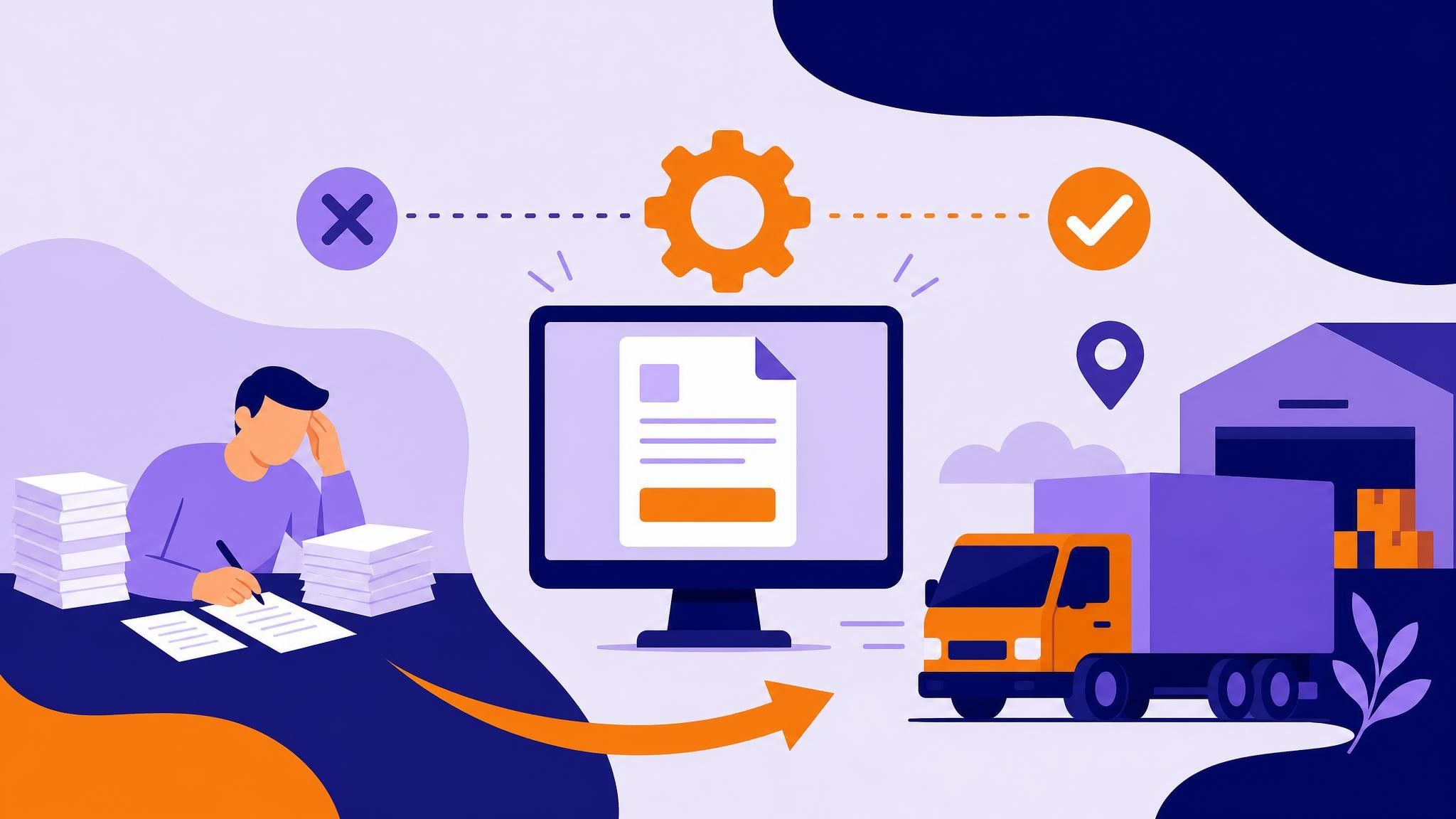
Logistics automation lets you configure smart rules that perform tasks automatically based on predefined events, conditions, and actions. In other words, you turn “if X happens, do Y” into workflows that run 24/7—without relying on spreadsheets, phone calls, or someone remembering to notify others.
- Events: something happens in the operation (e.g., a vehicle enters the customer’s area, a delivery is late, a document is about to expire, temperature goes out of range).
- Conditions: checks that refine the logic (e.g., VIP customer, delivery window, city, mode, order value).
- Actions: what will be executed (e.g., notify the customer on WhatsApp, open a task for field teams, flag priority, update status, send an email to Customer Support).
Why does this matter now? Because modern operations compete in real time. Visibility, proactive communication, and standardized processes are no longer differentiators—they’re the new baseline to protect customer satisfaction and healthy margins.
The most common pains without automation
- Rework and spreadsheet dependency to follow up on exceptions.
- Reactive communication: the customer finds out about the problem before your team does.
- Lack of standardization across shifts, branches, and partners.
- Slow decision-making due to scattered data.
- High operating costs from repetitive tasks and manual errors.
- Difficulty scaling without adding headcount.
- Low SLA predictability and service-level performance.
How Meu Rastreio Automations solves it in practice
Meu Rastreio Automations lets you build no-code flows, driven by tracking events and business rules, to orchestrate your operation end to end. Here’s how that translates into day-to-day results.
- Intelligent alerts and proactive communication
- Predicted or actual delays trigger automatic messages to customers with a new ETA and clear instructions.
- Drivers receive the right guidance at the right moment (e.g., customer contact, landmark, item check) to reduce rework and failed attempts.
- Customer Support (CS) gets instant visibility into exceptions and acts with the proper context, avoiding queues and repeated questions.
- SLAs under control and exception management
- Configure SLA clocks by stage (pickup, in-transit, dock, delivery) and set triggers to escalate critical cases to leadership.
- Classify exceptions (no one at home, wrong address, damage, access restriction) and launch the appropriate flow automatically.
- Standardize deadlines and actions by customer profile (VIP, marketplace, B2B/B2C) to ensure consistency.
- Orchestration across teams and partners
- When a redelivery event is detected, the system creates the task, assigns an available route, and notifies the responsible partner or branch—no manual steps.
- During congested unloading windows, the dock receives an early check-in alert, avoiding lines and cutting yard dwell time.
- Operational standardization and compliance
- Digital checklists, photos, and proof of delivery are requested automatically at key stages, improving quality and traceability.
- Sensitive items (temperature, seal, documents) are monitored with alerts and audit trails, simplifying compliance and dispute resolution.
- Seamless integration with your ecosystem
- Connect Meu Rastreio to your TMS/ERP and communication channels (email, SMS, WhatsApp) to keep systems and people in sync.
- Use real-time tracking data to feed dashboards and prioritize the highest-impact cases.
The result: less friction, more predictability, data-backed decisions, and a premium experience for both customers and your operation.
Practical benefits you can expect
- Lower operating costs by eliminating repetitive manual tasks.
- Fewer calls and reactive support tickets.
- Higher productivity per operator and per driver.
- Better SLA attainment with just-in-time actions.
- Fewer communication errors and less rework across teams and partners.
- Greater end-to-end visibility for managers and support areas.
- A scalable operation ready for seasonal peaks without rushed hiring.
Real-world examples of automation flows
To visualize the potential, here are four common scenarios and how Meu Rastreio Automations can act.
Scenario 1: Predicted delay on route
- Event: the system detects the ETA will exceed the agreed delivery window.
- Conditions: B2C order, customer prefers WhatsApp, metro area.
- Actions:
- Sends a proactive message to the customer with the new ETA and an option to reschedule.
- Notifies Customer Support with route history and a recommended script.
- Flags the order as “priority attention” on the operator’s dashboard.
- If the delay exceeds a limit, escalates to the coordinator.
Impact: lowers customer frustration, prevents inbound calls, and improves NPS.
Scenario 2: Failed delivery due to absence
- Event: the driver records “recipient unavailable.”
- Conditions: first attempt and a high-value order.
- Actions:
- Sends an automatic email requesting a new delivery window.
- Creates a redelivery task and blocks invoicing until completion.
- Guides the driver to the next best stop to optimize the day’s route.
Impact: faster redeliveries and lower cost per mile.
Scenario 3: Dock check-in and yard control
- Event: the vehicle enters the customer’s geofence.
- Conditions: dock with limited capacity.
- Actions:
- Starts a unloading SLA timer.
- Notifies dock and security teams with vehicle and load details.
- When the vehicle exits the geofence, stops the SLA and automatically logs cycle times.
Impact: yard time under control and shorter queues.
Scenario 4: Cold chain and cargo integrity
- Event: a reading shows temperature out of range.
- Conditions: perishable product and a destination that requires auditing.
- Actions:
- Sends an immediate alert to the driver with corrective procedures.
- Notifies the fleet manager and opens an incident record with mandatory photos.
- Generates an automatic report for the customer’s audit.
Impact: preserves quality, reduces losses, and simplifies compliance.
Bonus: Preventive maintenance
- Event: odometer reaches the service threshold.
- Actions:
- Opens a maintenance order, schedules a date, and informs the driver.
- Blocks the vehicle from being assigned to new routes after the due date.
Impact: fewer unexpected breakdowns and higher fleet availability.
How to get started: steps and best practices
- Map critical processes: where you see the most rework, delay, or error.
- Set clear goals: response time, redelivery rate, SLA, cost per delivery.
- Start simple: prioritize high-impact, low-complexity flows.
- Standardize rules: naming, exception categories, and communication scripts.
- Involve teams: drivers, Support, Operations, and Sales to validate flows.
- Run a pilot: test with one branch, region, or customer portfolio and iterate.
- Measure and evolve: track KPIs and refine conditions and actions as you learn.
- Ensure governance: permissions control, audit, and documentation of flows.
Meu Rastreio provides ready-made automation templates, guided onboarding, and specialized support to accelerate a secure, high-quality rollout.
Trends shaping your strategy
- Real-time operations: decisions based on minute-by-minute tracking data.
- No-code/low-code: give operations teams autonomy to adjust rules without IT.
- Conversational communication: native integration with channels like WhatsApp to reduce friction.
- Prediction and prioritization: models that anticipate delays and focus on what impacts the customer most.
- Compliance and ESG: digitized evidence, less paper, and energy efficiency through operational optimization.
- Connected ecosystems: fluid integrations among TMS, ERP, WMS, and partner platforms.
Conclusion: from reaction to orchestration
Automation is not “putting your operation on autopilot.” It’s adding intelligence, cadence, and predictability so your team can focus on what matters: resolving exceptions, delighting customers, and scaling with quality. Meu Rastreio Automations connects tracking events, business rules, and omnichannel communication in flows that are simple to configure and robust in production.
Ready to transform your operation?
- Centralize visibility and standardize processes.
- Reduce costs and speed up decisions with reliable data.
- Deliver a proactive experience for customers and teams.
Book a free demo and see, in practice, how Meu Rastreio Automations can raise the bar for your operation: https://meurastreio.app/pt-BR/automacoes
Or talk to a specialist to design your first flows around your goals.