Unpacking Success Stories: Everything You Need to Know
For leaders running logistics and fleet operations, every day is a balance of speed, cost, quality, and customer satisfaction. With tighter deadlines, rising volumes, and higher expectations, the question is: how can you do more with less while keeping end-to-end control? That’s where logistics case studies become practical shortcuts for smarter decisions.
By analyzing logistics success stories—especially those from Meu Rastreio—you access real-world learnings, before-and-after metrics, and validated playbooks from teams that have already solved challenges like yours. More than a showcase, these stories act as a guide to transform processes, reduce costs, and elevate the end-customer experience.
In this article, we’ll unpack how to read, interpret, and apply case studies strategically, highlighting Meu Rastreio’s role throughout.
What a Case Study Is—and Why It Matters in Logistics
A case study is the structured story of a real operation that implemented a solution (technology, method, or service), including context, challenges, rollout steps, and measurable outcomes.
In logistics and fleet management, strong case studies help you:
- Compare your reality with market benchmarks.
- See which levers create quick wins.
- Anticipate risks and accelerate best-practice adoption.
- Engage executives and frontline teams with concrete proof of results.
Common Pain Points Addressed by Meu Rastreio’s Case Studies
Meu Rastreio’s curated cases reflect recurring issues across operations of different sizes and segments, such as:
- Lack of end-to-end visibility: difficulty seeing each delivery’s status in real time.
- SLA breaks and rework: delays, re-deliveries, and unreliable lead time.
- High “where is my order?” (WISMO) contact volume: pressure on customer support and operations.
- Fragmented communication with drivers and customers: missing alerts and no standardization.
- Weak proof of delivery: missing records, photos, or signatures, leading to disputes and chargebacks/deductions.
- Low process standardization: each branch or partner operates differently.
- Lack of data and KPIs: decisions made on gut feel, with no view by route, region, channel, or partner.
- Limited scalability: peaks and seasonality disrupt the entire network.
These pains are expensive. That’s why the case studies focus not only on what was done, but also on the operational and financial impact of each improvement.
How Meu Rastreio Structures Its Case Studies
These cases bring real stories from customers who used Meu Rastreio to elevate their operations. In general, you’ll find:
- Customer context: segment, operation size, complexities, and goals.
- Initial challenges: where bottlenecks and risks were.
- The solution applied: which modules and features were adopted.
- Before and after: comparable indicators and evolution over time.
- Practical learnings: lessons that speed up adoption in other operations.
Metrics That Matter in the Evaluation
When analyzing any case, pay close attention to indicators like:
- Delivery SLA and OTIF (On Time In Full).
- Lead time by stage and by route.
- Re-delivery rate/first-attempt success rate.
- Cost per delivery and per mile.
- Volume of customer support calls (WISMO).
- Final customer NPS/CSAT and complaint rate.
- Team productivity (deliveries per driver per day).
- Proof of delivery completion rate with evidence (photos, signature, checklist).
What Meu Rastreio Delivers in Practice
While each case has its own context, several pillars repeat among operations that adopt Meu Rastreio:
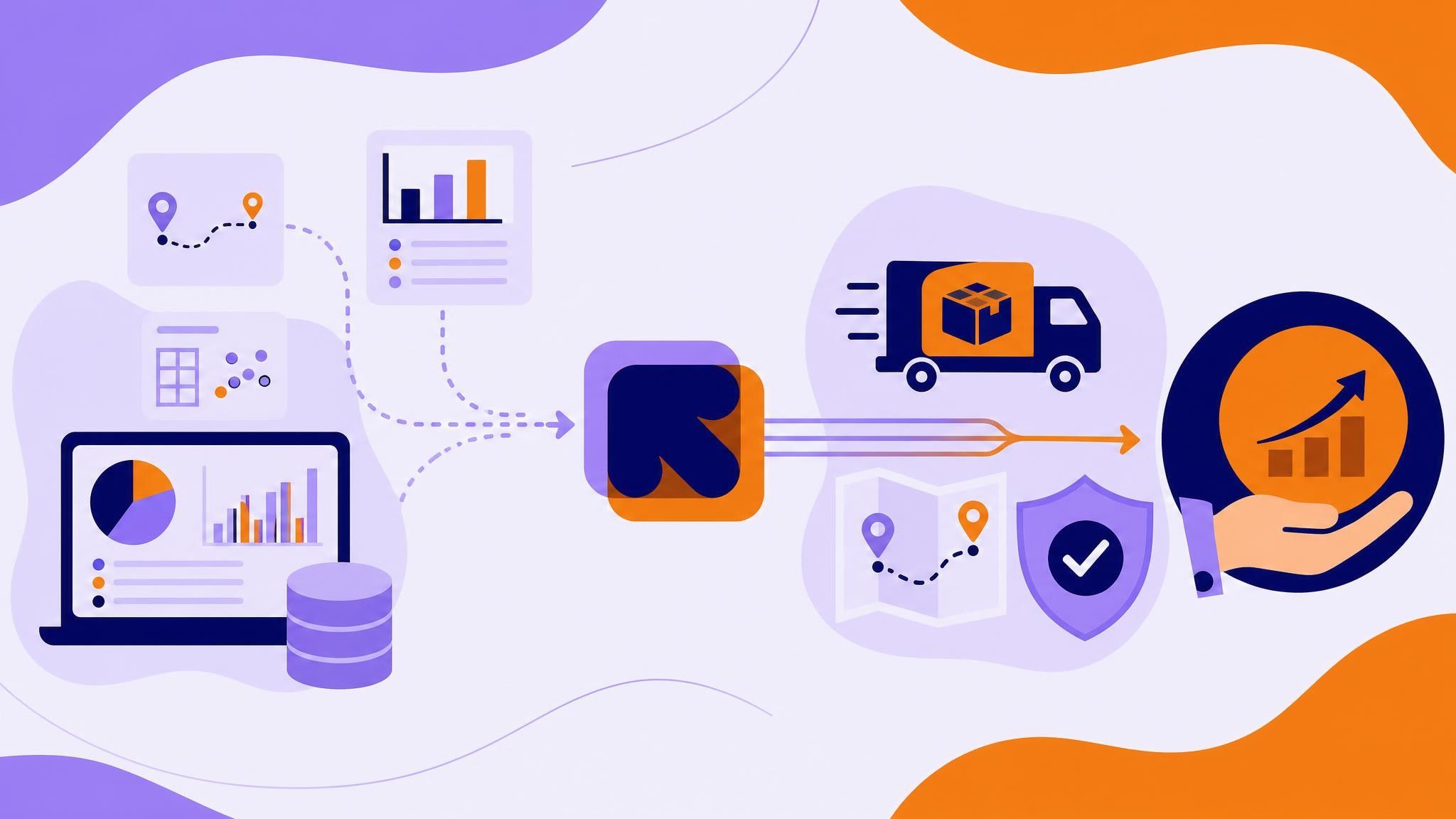
- Real-time visibility: a centralized control panel with live status and proactive alerts.
- Integrated communication: automated notifications for end customers and a communication channel with drivers in the field.
- Robust proof of delivery: photos, e-signature, and standardized checklists at delivery completion.
- Route planning and prioritization: support for time windows and sequencing to reduce miles and delays.
- Branded tracking portal: a consistent, professional end-customer experience.
- KPIs and reports: analytics by route, region, partner, load type, and sales channel.
- Integration with the logistics ecosystem: smooth alignment with TMS/ERP and carrier partners while you stay in control.
The typical outcome? Fewer hidden costs, fewer daily fires, and more predictability—the foundation of operational excellence.
Practical, Measurable Benefits Revealed by the Cases
Companies that adopt delivery tracking and management solutions like Meu Rastreio typically report:
- Fewer WISMO calls: with real-time tracking and proactive notifications, customers self-serve status.
- Improved SLA/OTIF: predictability and alerts enable course correction before delays.
- Lower re-delivery rates: clearer recipient communication and availability confirmation.
- Operational savings: fewer unnecessary miles and less rework.
- Higher productivity: more deliveries per driver per day without losing quality.
- Fewer disputes and deductions: complete proof-of-delivery evidence.
- Better NPS/CSAT: a transparent, reliable customer experience.
Three Practical (Hypothetical) Scenarios to Visualize Results
- Mid-sized e-commerce – last mile
- Before: 35% of support calls were WISMO; SLA at 85% for next-day (D+1).
- Action: implemented real-time tracking, branded tracking portal, and stage-based notifications.
- After: sharp drop in WISMO calls, SLA above 95%, and fewer re-deliveries thanks to proactive day-of-delivery outreach.
- B2B distributor – multichannel with fixed routes
- Before: manual planning, blown time windows, and poor PoD standardization.
- Action: route planning with priorities, digital checklist by customer type, and mandatory evidence.
- After: stabilized lead time by route, fewer billing discrepancies, and higher productivity per vehicle.
- Manufacturer with carrier partners – end-to-end visibility
- Before: multiple partners with no communication standard and unreliable reports.
- Action: centralized tracking in Meu Rastreio, standardized events, and SLA-based alerts.
- After: single-pane-of-glass visibility, partner benchmarking, and contract renegotiation based on real performance.
Note: exact numbers vary by context, maturity, and execution discipline. Meu Rastreio’s case studies call these factors out to keep analysis fair and actionable.
How to Critically Analyze a Case Study
Use this checklist when reading any case:
- Comparable context: similar size, segment, channel, and geography?
- Timeline: what was a quick win vs. what required process change?
- Consistent metrics: clear before-and-after with time period and sample?
- Technology stack: which Meu Rastreio modules drove the biggest impact?
- Operational engagement: which areas had to be in the room (support, transportation, IT, sales)?
- Change management: how were drivers and internal teams trained?
- Scalability: did the solution hold up during peaks and seasonality?
- ROI: where did the financial gains actually land (freight, rework, support, reputation)?
Trends and Insights That Reinforce Adoption
- Customer experience as a competitive edge: transparency and self-serve tracking reduce friction and build loyalty.
- Data-driven operations: decisions anchored in KPIs outperform guesswork and stabilize performance.
- Last mile expansion: with growing parcel volumes, efficiency and standardization become top priorities.
- Sustainability and cost: fewer re-deliveries and smarter routes cut emissions and expenses.
- Supply chain collaboration: integrating partners under a single pane of glass improves governance and response times.
How to Use Meu Rastreio’s Case Studies Day to Day
- Benchmark: select 2–3 cases from your segment and compare key indicators to yours.
- Prioritize levers: choose 1–2 quick wins (e.g., notifications and proof of delivery) to start.
- Design a pilot: define a region/route, 60–90 day targets, and success metrics.
- Engage the team: align drivers, support, and route planners on new routines and KPIs.
- Scale methodically: validate the pilot, document learnings, and expand to other routes/units.
Next Steps
Want to see how operations like yours raise service levels with data, visibility, and standardization? Explore Meu Rastreio’s real cases:
- Visit: https://meurastreio.app/pt-BR/cases
Conclusion: well-analyzed case studies shorten paths, reduce risk, and help transform operations by focusing on what truly moves the needle. Meu Rastreio brings stories and metrics that show the step-by-step evolution—from real-time visibility to proof of delivery and data-driven decisions.
Ready to level up your operation?
- Book a free demo and see how Meu Rastreio adapts to your scenario.
- Talk to a specialist to map quick wins and define your rollout plan.