Route Optimization API: everything you need to know to optimize your deliveries with intelligence
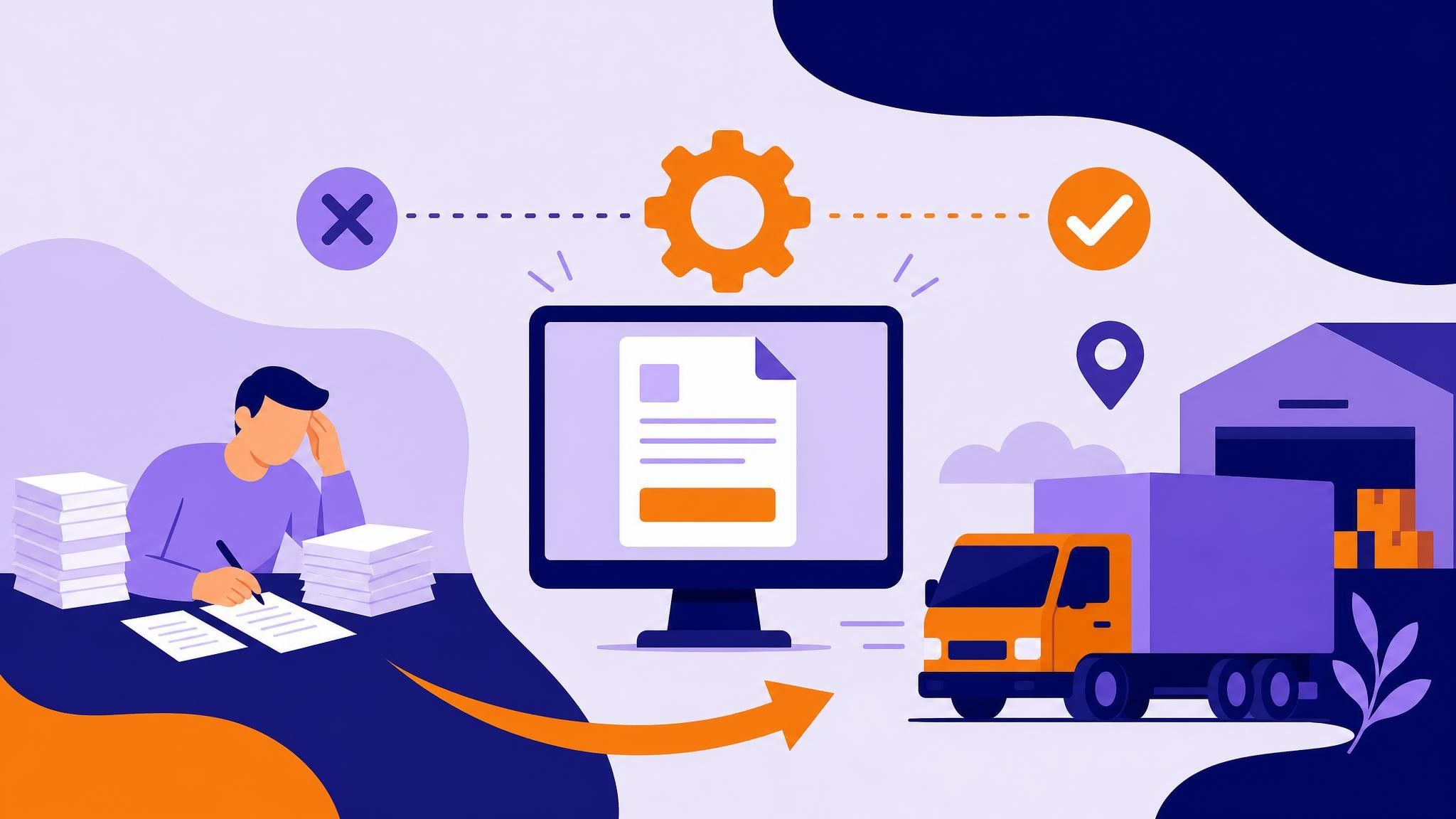
Tighter deadlines, lower costs, and end-to-end visibility have turned route planning into a pillar of modern logistics. In a world where the last mile often concentrates the largest share of operating costs, relying on spreadsheets, printed maps, or manual decisions is no longer enough. That’s where a Routing API comes in: an intelligent layer that connects your systems, order data, and operational constraints to generate optimized, real-time routes that are ready for execution in the field.
In this article, you’ll learn why a delivery optimization API is decisive, which features truly matter, how to measure impact on your fleet’s day-to-day, and how Meu Rastreio’s Route Planner API accelerates your efficiency without friction.
Why delivery optimization became critical
- E-commerce and omnichannel growth: more orders, more delivery points, and more complex service windows.
- Urban traffic and local restrictions: driving bans, restricted zones, unloading hours, and municipal rules.
- Customer expectations: accurate ETAs, proactive communication, and SLA compliance.
- Cost and ESG pressure: reducing miles driven and CO2 per delivery is a strategic priority.
In practice, great routing is not just “finding the shortest path.” It’s balancing multiple variables—vehicle capacity, customer priority, delivery windows, each driver’s profile, and dynamic street conditions—to do more with less.
What is an intelligent Routing API
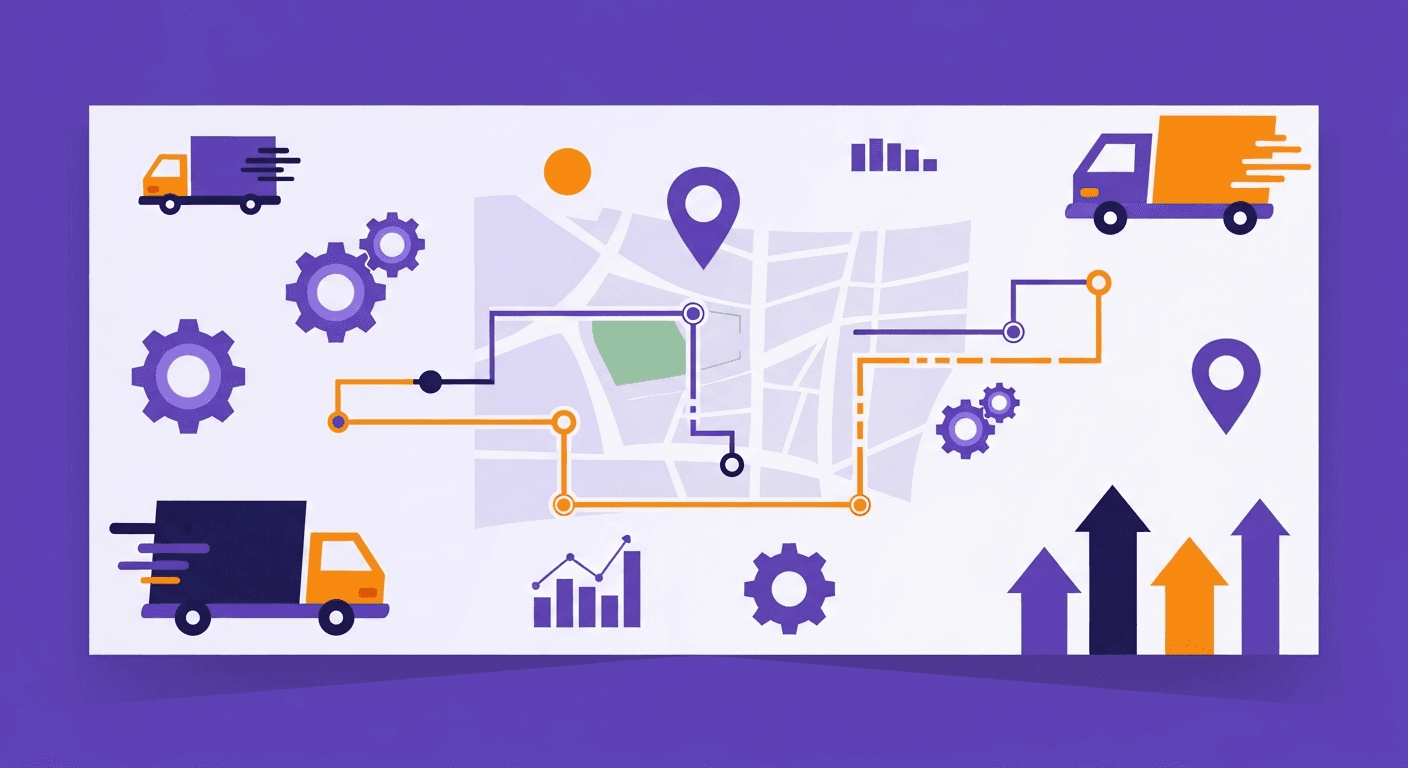
A Routing API is a software service that calculates, optimizes, and re-optimizes routes automatically using data from your systems (ERP, TMS, OMS) and the real world (geolocation, traffic, constraints). Instead of manual operations, you integrate the API into your workflow and can:
- Turn orders and addresses into feasible, efficient routes.
- Consider dozens of concurrent constraints.
- Update routes when disruptions occur.
- Sync drivers, customers, and back office with reliable ETAs.
Essential capabilities of a Routing API
- High-accuracy geocoding and address validation.
- Delivery windows and per-customer priority.
- Vehicle capacity and constraints (weight, volume, temperature, urban/highway profile).
- Multiple depots and pick-up & delivery.
- Load balancing across drivers and shifts.
- ETA calculation with live traffic and historical data.
- Real-time re-optimization for incidents (delays, new pickups, cancellations).
- Execution monitoring, proof of delivery, and evidence capture.
- Performance metrics and operational KPIs.
Practical, measurable benefits
Organizations that adopt an intelligent route planner often observe, depending on their context:
- Fewer miles driven and lower fuel consumption.
- More stops per vehicle per day.
- More consistent on-time, in-window deliveries (OTIF).
- Less fleet idleness and overtime.
- Fewer re-deliveries and fewer reactive support calls.
- Lower carbon footprint per order.
The impact directly improves cost per delivery and the end-customer experience.
Real-world (hypothetical) optimization examples
- Urban distribution with tight windows A beverage distributor in major cities must serve supermarkets with short unloading windows, vehicle tonnage limits, and routes affected by local driving bans. By adopting a Routing API:
- Routes respect axle limits and restricted hours.
- Sequencing prioritizes premium customers in the earliest windows.
- With re-optimization, delays at one stop don’t compromise the whole route. Result: total miles down and a higher share of on-time, in-window deliveries.
- E-commerce last mile An e-commerce operator processes orders until a 12 p.m. cutoff for same-day delivery. With the API:
- Orders are routed in waves every 15–30 minutes.
- Vehicles are allocated by region and residual capacity.
- ETAs are recalculated in real time and shared with customers. Result: more deliveries per shift, shorter DC queues, and fewer reschedules.
- B2B with pick-up and delivery A manufacturer needs to collect returnable packaging and deliver inputs. With pick-up & delivery:
- The API slots compatible pickups into the delivery route.
- Capacity is managed dynamically. Result: fewer empty miles and better fleet utilization.
How Meu Rastreio’s Route Planner API powers your operation
Meu Rastreio’s Route Planner API is built for teams living the daily operational grind and needing quick results with simple integration and close support.
Key differentiators in real operations:
- Intelligent routing with multiple constraints: delivery windows, capacity, vehicle types, and priorities.
- Real-time re-optimization: adapts routes as field events occur, preserving SLA and reliable ETAs.
- Precise geocoding and address validation: fewer location errors and less rework.
- Multi-depot and multi-shift: supports centralized or decentralized networks.
- Native integration with Meu Rastreio’s ecosystem: tracking, end-customer visibility, proof of delivery, and operational dashboards.
- Scalability and reliability: ready for volume spikes without losing performance.
- Specialized support: guided onboarding, best practices, and hands-on help to accelerate your go-live.
In short, connect your systems to the Route Planner API and turn order data into executable, measurable plans—from planning to proof of delivery.
How to estimate the ROI of route optimization
A simple way to project returns:
- Establish your baseline:
- Miles/day and average fuel consumption.
- Deliveries per vehicle/day and re-delivery rate.
- OTIF (On Time, In Full) and cost per delivery.
- Apply conservative gains:
- E.g., 10–15% fewer miles and 5–10% more stops/vehicle.
- Convert into value:
- Monthly savings in fuel and maintenance.
- Reduction in overtime and per diems.
- Fewer re-deliveries and less rework.
- Add revenue effects:
- Better experience lifts repeat purchases and NPS.
- Fewer delays reduce cancellations.
Even modest improvements, multiplied by your operation’s volume, create significant cash impact.
Step-by-step for a successful implementation
- Align objectives: set clear targets (e.g., -12% miles, +8% OTIF).
- Prepare the data: standardize addresses, ZIP codes, delivery windows, and capacities.
- Parameterize constraints: shifts, vehicle profiles, priorities, and SLAs.
- Run a pilot: pick a region, compare baseline vs. optimized, and tune the rules.
- Train the team: supervisors and drivers should understand the “why” behind the changes.
- Monitor KPIs: miles/delivery, cost per order, OTIF, re-delivery, and fleet utilization.
- Scale in waves: expand gradually to new regions and channels.
What to evaluate when choosing a logistics API
- Optimization quality: does it handle windows, capacity, and multiple depots?
- Performance and latency: does it respond well during peak hours?
- Reliability: high availability and fault tolerance.
- Integration: clear documentation, stable endpoints, and easy connection to ERP/TMS and driver apps.
- Observability: logs and metrics for auditing and continuous improvement.
- Security and compliance: data protection and adherence to regulations (LGPD/GDPR).
- Support and roadmap: access to specialists and a product evolution aligned with your business.
- Cost model: transparent and predictable as you scale.
Trends shaping route planning
- Predictive ETAs and learning from history: routes that learn from your own operation.
- Continuous re-optimization: dynamic planning instead of fixed batches.
- Emissions-aware routing: prioritizing paths and vehicles with a lower carbon footprint.
- End-to-end integration: from order to proof of delivery, all connected via APIs.
Frequently asked questions from operations teams
- Does the API work with fixed routes and dynamic operations? Yes—both can be consolidated and re-optimized when needed.
- Can I prioritize strategic customers? Yes—you can assign weights and windows to meet differentiated SLAs.
- What if a customer requests a re-delivery? Re-optimization fits the new visit into the best available driver/route.
- Do new drivers struggle more? With clear routes and reliable ETAs, the learning curve shortens and productivity rises.
Conclusion: applied intelligence, concrete results
Optimizing deliveries with a Routing API moves you from trial-and-error to a predictable, scalable, data-driven operation. By combining business rules, traffic data, and real-time re-optimization, you cut costs, increase productivity, and elevate the customer experience.
Meu Rastreio’s Route Planner API delivers this intelligence with simple integration, specialized support, and end-to-end visibility—from planning to proof of delivery.
Ready to see it in action? Book a free demo and discover how to supercharge your routes and results:
- Book now: https://meurastreio.app/pt-BR/api-roteirizador
- Or talk to a Meu Rastreio specialist for a quick health check of your operation.