Who needs to issue CT-e in 2026? Understand when the document is mandatory
Logistics has changed fast, and 2026 brings even more digital processes and tighter audits. Amid NF-e, MDF-e, CIOT, and countless obligations, one question remains for managers, carriers, and operators: who must issue the CT-e, and in which scenarios is the Electronic Transport Knowledge document mandatory?
In this guide, you will clearly learn when CT-e is required, when it is not, how to handle specific cases (subcontracting, re-dispatch, LTL and FTL), and how to simplify tax compliance without slowing operations.
If you want to cut errors, speed up issuance, and automatically reconcile NF-e, MDF-e, and CT-e, meet Meu Rastreio’s CT-e module—built for real operations of any size.
What CT-e is and why it exists
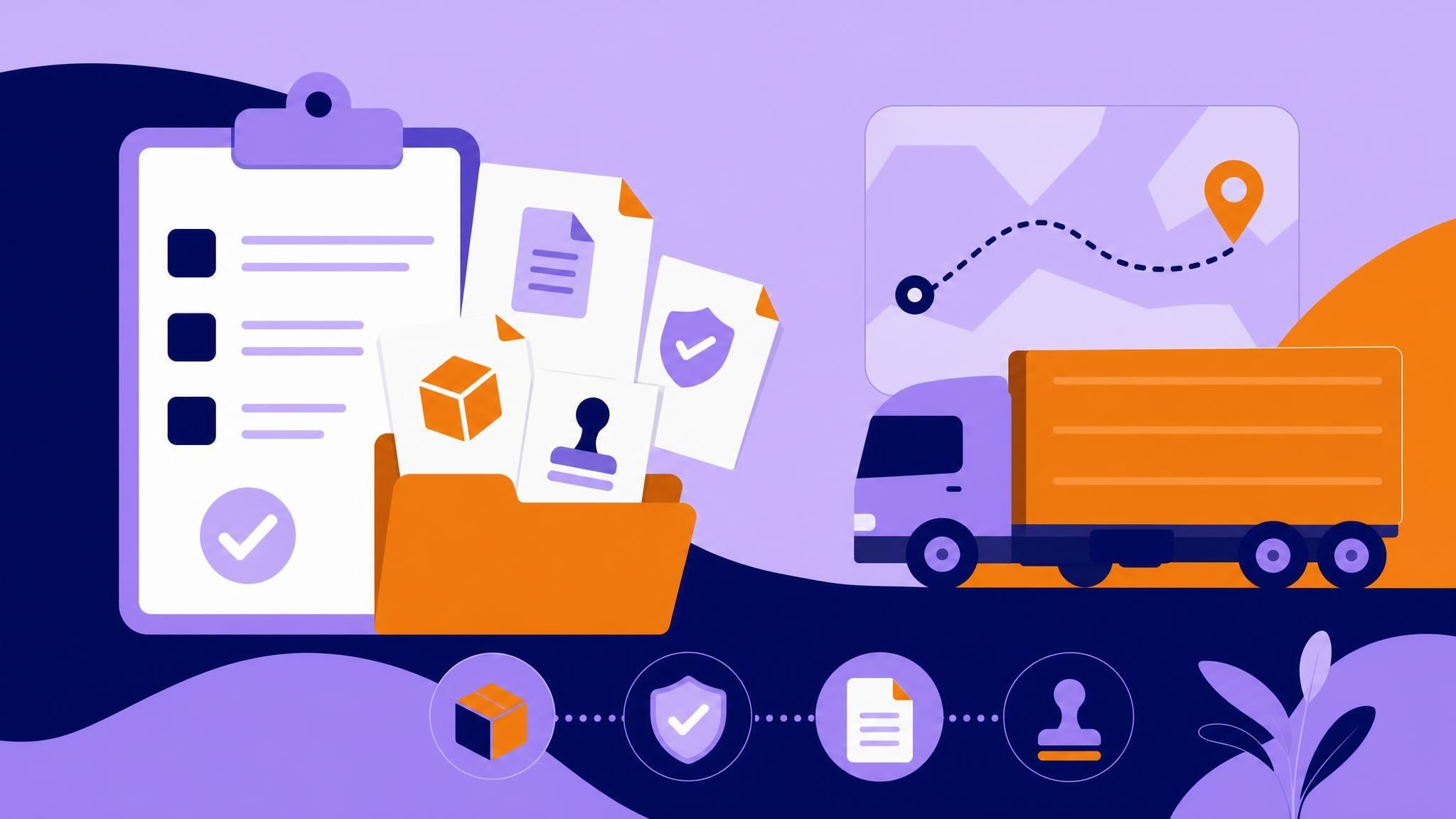
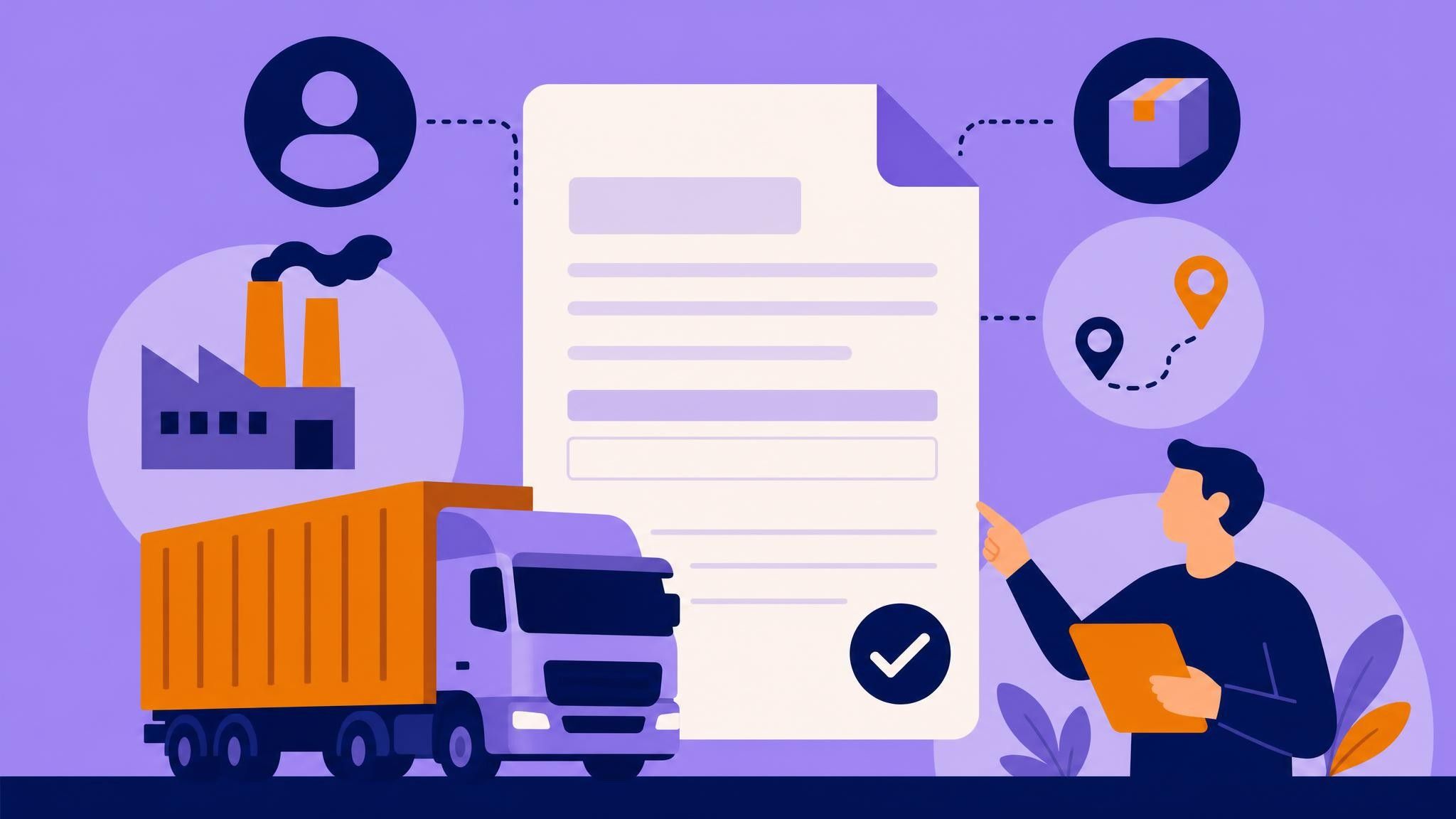
CT-e (Conhecimento de Transporte Eletrônico, model 57) is the digital tax document that records the provision of cargo transport services to third parties, replacing paper documents like the CTRC and similar forms. It:
- Is authorized by the state tax authority (Sefaz) in real time and linked to the service’s ICMS.
- Integrates with NF-e (which documents the goods) and MDF-e (the load/route manifest).
- Generates the DACTE (a simplified printed representation) to accompany the shipment. There is also CT-e OS (model 67), focused on “Other Services” (such as transport of people/valuables). This article focuses on cargo CT-e.
Who must issue CT-e in 2026
The core rule holds: CT-e is mandatory for those providing cargo transport services to third parties when the service is subject to ICMS, especially in:
- Intermunicipal (between municipalities) and interstate (between states) moves.
- Road, rail, waterway, air, and pipeline modes.
- Services rendered by ICMS taxpayers (legal entities)—carriers, logistics operators, cooperatives, and similar.
In practical terms, must issue CT-e:
- Carriers and logistics operators that bill freight for third parties.
- Companies under the Simples Nacional that provide third-party cargo transport (ICMS taxpayers).
- Transport cooperatives that execute and bill the service.
- Companies acting as intermediaries/takers (e.g., subcontracting/re-dispatch) when the law requires issuance for their role in the chain.
Important: tax specifics may vary by Brazilian state (UF). Always validate with your accountant and the Sefaz of the state where your company is registered.
Subcontracting and re-dispatch: who issues what
- Subcontracting: carrier A sells freight to the customer and subcontracts carrier B to execute it. In general:
- A issues the CT-e to the final taker (indicating subcontracting).
- B issues a CT-e to A (with A as the service taker).
- Re-dispatch (redespacho): carrier A transfers part of the route to carrier B.
- Each carrier issues its CT-e to the taker of the respective leg/service, as negotiated. These scenarios must correctly reflect the service taker, taxation, and linked NF-e information—common mistakes trigger rejections and fines.
LTL vs FTL (carga fracionada vs lotação)
- LTL (carga fracionada): typically, issue one CT-e per customer/service taker (multiple NF-e from different shippers can ride in the same vehicle).
- FTL (carga lotação, dedicated to one customer): one CT-e can cover all NF-e for that service, provided the taker and tax conditions are consistent.
Geographical scope of the service
- Intermunicipal and interstate: as a rule, requires CT-e.
- International: CT-e may be required for the portion of the service performed within Brazilian territory.
- Municipal (within the same municipality): generally not subject to ICMS; see exceptions.
When CT-e is not mandatory
Not every goods movement requires a CT-e. Common dispensations include:
- Own-account transport (shipper’s or consignee’s own fleet):
- There is no third-party service, so no ICMS on transport.
- The movement is supported by the goods’ NF-e. In some cases, MDF-e may be required (e.g., interstate trips with own or third-party vehicles), even without CT-e.
- Exclusively municipal transport:
- Service within the same municipality, governed by ISS (municipal tax).
- In these cases, CT-e does not apply; a municipal NFS-e may be required (per local rules).
- Independent trucker (individual) not registered as an ICMS taxpayer:
- Does not issue CT-e. The operation must follow applicable fiscal/regulatory requirements (e.g., CIOT/RNTRC for road transport) and any obligations of the taker. Rules can vary by state—confirm with your tax advisor/accountant.
Note: exceptions have nuances. In 2026, inspections increasingly cross-check NF-e, CT-e, MDF-e, and CIOT. When in doubt, verify your state’s rules and record services consistently.
Practical scenarios (to avoid CT-e mistakes)
- Urban pickup + intermunicipal transfer: if the urban pickup is a separate service (municipal, taxed by ISS) and the transfer is intermunicipal, you will have distinct documents: NFS-e (municipal) for the pickup and CT-e for the transfer. If the sale is a single intermunicipal service, the CT-e must reflect the whole service.
- E-commerce with own fleet: the retailer uses its trucks to deliver to another state. No CT-e, but MDF-e may be required; the NF-e travels with the load.
- Subcontracting during peak demand: carrier A owns the customer relationship but outsources part of the leg. A issues the CT-e to the final taker (indicating the subcontractor), and subcontractor B issues CT-e to A. The MDF-e must reflect the documents actually on the vehicle.
What to expect—and prepare for—in 2026
- More electronic cross-checks: Sefaz and regulators are expanding data use to spot inconsistencies among NF-e, CT-e, MDF-e, and CIOT.
- Stricter validation rules: rejections for CFOP/CST, wrong taker, start/end UF, plates, RNTRC (for road), and MDF-e links tend to be tougher.
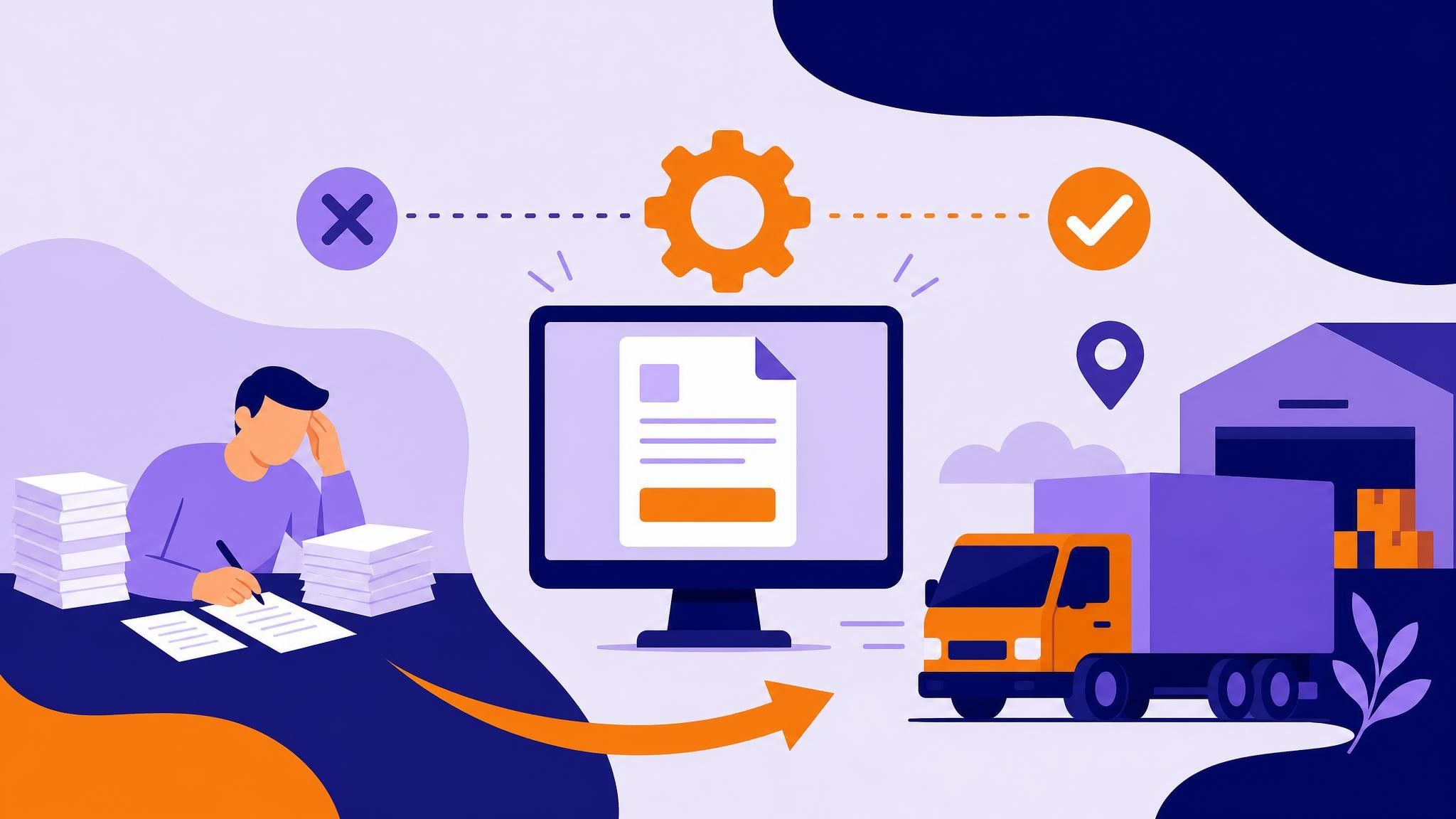
- Lean processes and automation: standardizing master data, setting tax rules by state/mode, and integrating operations reduce risk, time, and cost.
Bottom line: standardization, reliable data, and automation are competitive—and compliance—advantages.
How Meu Rastreio simplifies CT-e issuance
Meu Rastreio offers a complete CT-e module for companies of any size that need scale, control, and compliance. Highlights include:
- Guided issuance and real-time validations:
- Tax rules by UF, CFOP, CST, and mode to reduce rejections.
- Inconsistency alerts before authorization.
- Operational integration:
- Reuse NF-e data and auto-generate DACTE.
- Integrated MDF-e issuance and document linking in a single flow.
- Event management and compliance:
- Cancellations and Correction Letters (CC-e) with full audit trail.
- XML storage and organization by branch/CNPJ with smart search.
- Scalability and productivity:
- Templates by customer/route (LTL and FTL).
- Role-based access for billing, ops, and tax teams.
- Freight, ICMS, and rejection reports for continuous improvement.
Tangible day-to-day benefits
- Less time per document: in a typical scenario, cut from 15 to 6 minutes per CT-e; at 500 issuances/month, that frees about 75 work hours.
- Less rework: pre-send validations prevent rejections and freight billing delays.
- More control: documents, deadlines, and events in one place, with full history.
Want to see it in action? Learn more: https://meurastreio.app/pt-BR/cte
Quick checklist: do you need to issue CT-e?
If you check “yes” for most questions below, CT-e is likely mandatory in your operation:
- Do you provide cargo transport services to third parties?
- Is the service intermunicipal, interstate, or does it include a leg within Brazil (road, air, waterway, rail, or pipeline)?
- Is your company an ICMS taxpayer (legal entity)?
- Do you bill freight (even when you subcontract part of the route)?
- Do you perform re-dispatch or act as an intermediary/taker in the transport chain?
- Is your operation not exclusively municipal and not own-account? When in doubt, validate with your tax advisor/accountant; states may have specifics.
Conclusion: master CT-e obligations and gain efficiency
- CT-e is mandatory for third-party cargo transport providers that are ICMS taxpayers, for intermunicipal, interstate, and domestic legs of international moves.
- It does not apply to own-account transport and services exclusively within one municipality (subject to ISS).
- Cases such as subcontracting, re-dispatch, and LTL/FTL require attention to the taker, taxation, and correct links to NF-e and MDF-e.
- In 2026, automation and data cross-checking make compliance even more strategic.
Ready to cut rejections, speed up issuance, and gain end-to-end control of your fiscal documents? Book a free CT-e demo with Meu Rastreio and see how to simplify your operation.