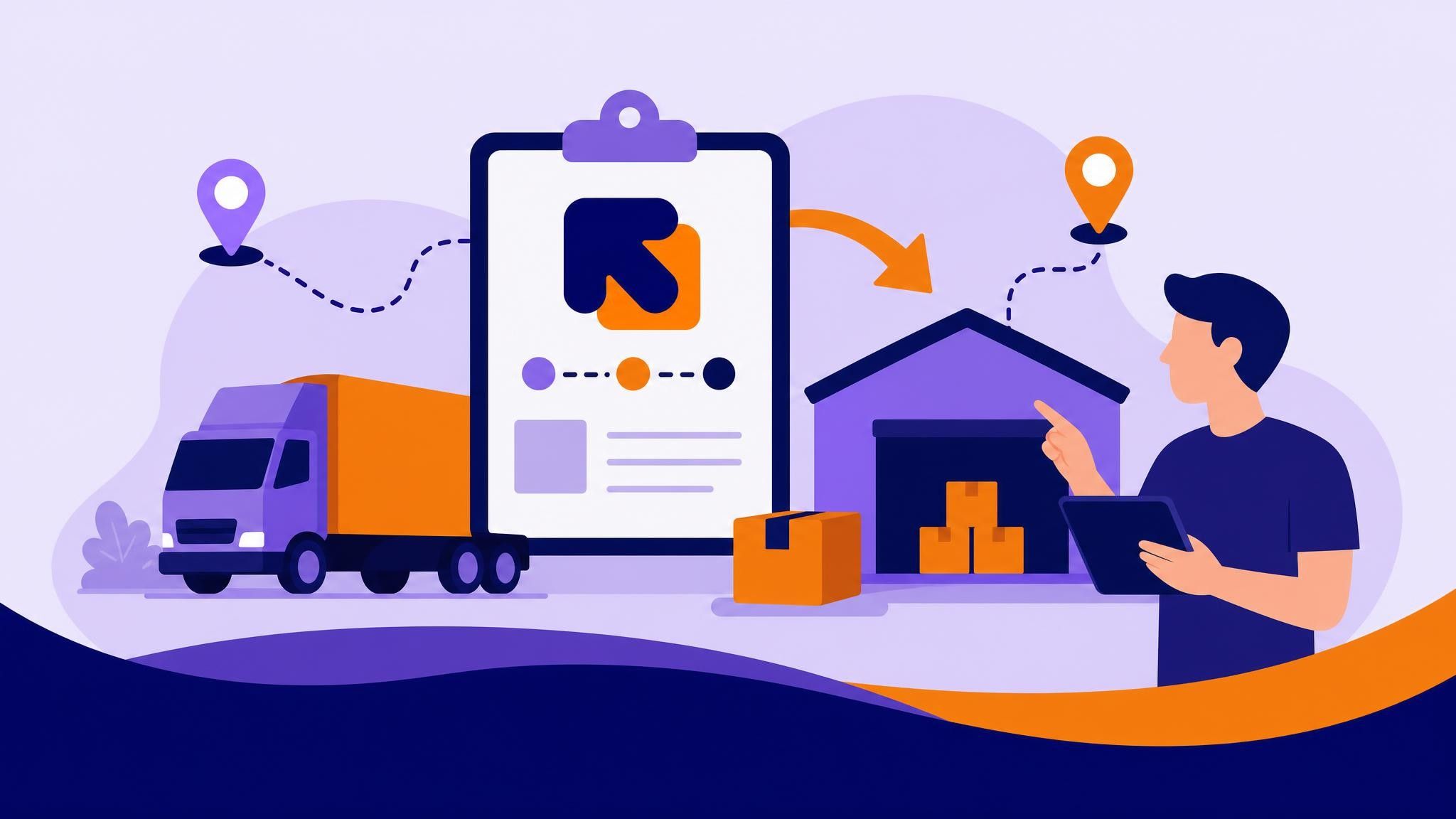
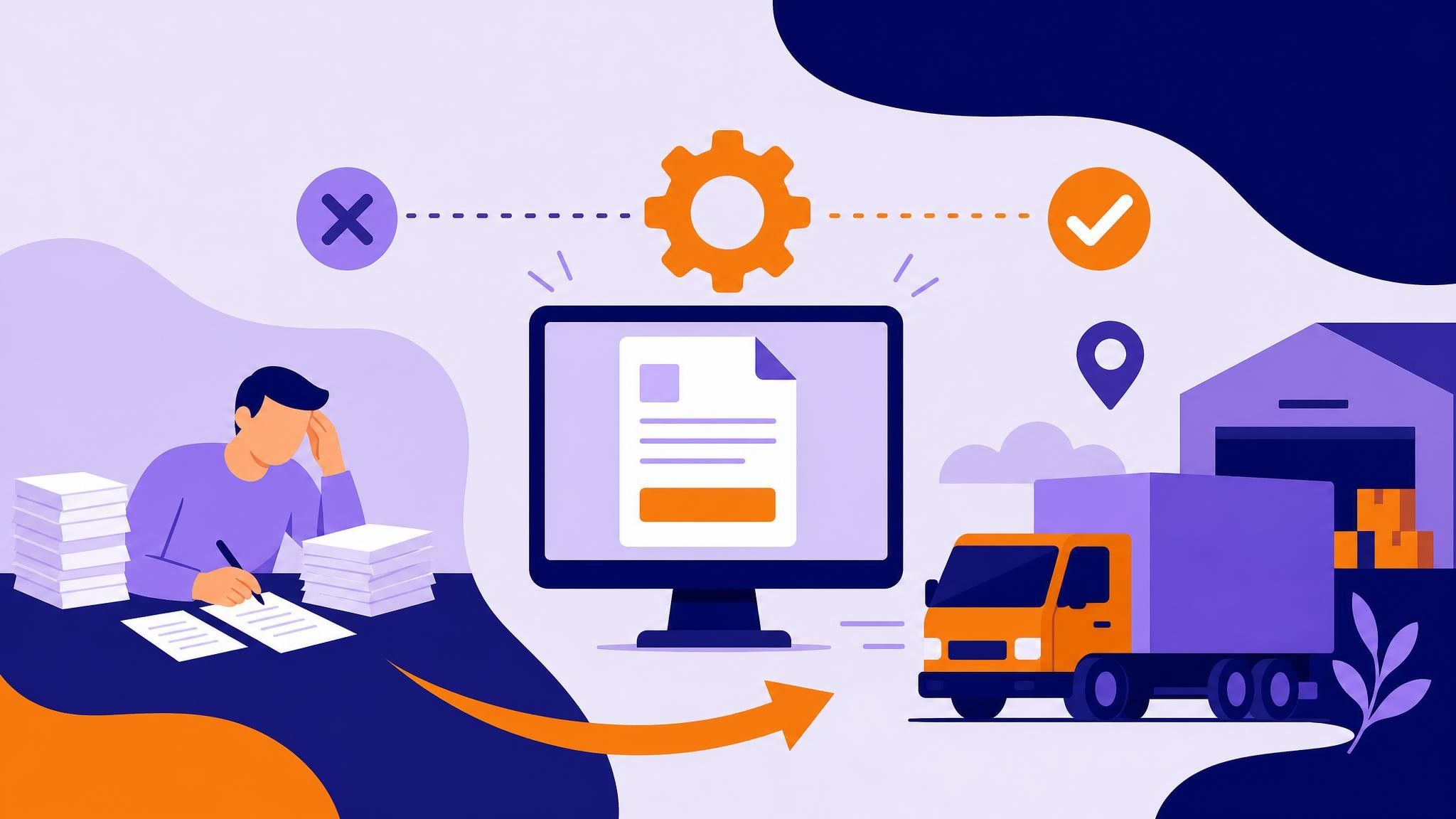
Managing the issuance of the MDF-e (Electronic Manifest of Fiscal Documents) in complex logistics operations is still a bottleneck for many carriers and shippers. Duplicate forms, rework, typing errors, and SEFAZ authorization delays generate costs, audit risks, and lost productivity. The good news: automatic MDF-e issuance eliminates manual steps, standardizes tax compliance, and frees your team to focus on what matters most — the operation.
In this article, you’ll understand how MDF-e automation works, which pain points it solves in day-to-day transport, and why adopting a specialized solution like Meu Rastreio accelerates your logistics’ digital transformation.
What the MDF-e is and why it’s critical to operations The MDF-e consolidates the information from the fiscal documents that accompany transport — such as CT-e and NF-e — and is required to support cargo circulation, especially in interstate operations and, in several Brazilian states, also for intrastate transport (according to state legislation). It connects your trip to enforcement, ensuring traceability and compliance.
Key elements of the MDF-e:
- Vehicle data (tractor, trailers), driver, and RNTRC.
- List of CT-es and/or NF-es onboard.
- Loading and unloading states (UFs).
- CIOT (when applicable) and toll vouchers (vale-pedágio).
- Events such as cancellation, driver inclusion, and closure.
In short: without a correct, on-time MDF-e, the risk of fines, detentions, and delays rises significantly.
The problem with manual processes in issuance Even with internal systems, many companies still depend on spreadsheets, data reentry, and manual checks. This often leads to:
- Typing errors (license plate, RNTRC, states, volumes).
- Mismatches between CT-e, NF-e, and MDF-e.
- Failure to close within the deadline.
- Difficulty handling last-minute changes (vehicle/driver swap).
- Low visibility into authorization status and events.
- Rework due to cancellations and reissuance.
- Wasted time for the administrative team.
The result shows up as higher operating costs, tax risk, and low scalability during peak windows.
How automatic MDF-e issuance works Automation connects your data sources, validates tax and operational rules, and completes issuance without manual intervention — with real-time monitoring and a full audit trail.
- Data capture and operational triggers
- Integration with your TMS/ERP plus fleet, driver, and route master data.
- Reading CT-es/NF-es eligible for a manifest.
- Triggers by operational status (e.g., “ready for loading,” “shipping completed”).
- Instant updates when a vehicle is replaced, a trailer is added, or a driver changes.
- Tax and business validations
- Consistency across CT-e/NF-e and MDF-e (states, weights, recipients).
- RNTRC checks, vehicle type, plate combinations, and axle limits.
- CIOT and toll voucher validations when applicable.
- State-level requirements and modal-specific rules.
- Prevention of duplicates and conflicts across trips.
- SEFAZ authorization and contingency
- Automated transmission and return tracking.
- Smart retries and alerts in case of rejection.
- Use of SEFAZ contingency environments (SVC), when available and applicable.
- Automatic management of cancellation and closure deadlines.
- Post-dispatch events and closure
- Inclusion/alteration of driver when needed.
- Alerts to close based on route and deadlines.
- Assisted automatic closure using operational checkpoints.
- Complete audit record and secure XML storage.
Practical, measurable benefits By replacing manual processes with automatic MDF-e issuance, carriers and shippers typically see:
- Significant time savings per trip: from minutes to seconds, depending on the operation.
- Fewer rejections due to data-entry mistakes.
- Fewer fines and issues in inspections due to documentation failures.
- Scalability during peak periods without increasing headcount.
- End-to-end visibility: status, pending items, deadlines, and centralized documents.
- Standardization and governance: audit trail, access profiles, KPIs, and reports.
- Deep integration with operations: issuance as a natural part of your logistics flow.
Real-world use cases Operation with multiple notes and CT-es (LTL/cross-docking) Scenario: cross-docking with dozens of CT-es per route. Without automation, each MDF-e requires manual checks and consolidation. With automation, eligible CT-es are loaded into the manifest automatically; checking becomes the exception, not the rule. The operator validates only specific divergences and the route departs without delays.
Outsourced fleet and subcontracting Scenario: part of the trips are handled by contractors and third parties. Automation validates RNTRC, CIOT (when applicable), and vehicle data before issuance. If there’s a mismatch, the system blocks authorization and notifies the owner, preventing rejections and fines.
Interstate trips with vehicle swaps Scenario: tractor swap mid-journey. The system issues the necessary event to change/include driver/vehicle and keeps the manifest compliant — without excessive rework or losing visibility.
Why choose Meu Rastreio for automatic MDF-e issuance Meu Rastreio combines usability, tax robustness, and operational intelligence to make MDF-e issuance invisible to the user — it happens in the flow, with safety and control.
Differentials that move the needle:
- Rules engine kept current with tax legislation and state-specific nuances.
- Native TMS/ERP integration and easy setup for routes, branches, and profiles.
- RNTRC, CIOT, toll voucher, and CT-e/NF-e/MDF-e consistency validations.
- Real-time monitoring of SEFAZ authorization and contingency management (SVC, when applicable).
- Smart alerts for cancellation and closure deadlines.
- Full audit trail, secure XML storage, and LGPD compliance.
- Management dashboards and KPIs: rejections, time per issuance, pending items, and SLA.
- Specialized support and fast onboarding to get your operation live without friction.
Learn more about Meu Rastreio’s MDF-e solution: https://meurastreio.app/pt-BR/mdfe
How to implement in 5 steps
-
Assess your current scenario Map flows, integrations, recurring exceptions, and critical deadlines by route/state.
-
Connect systems Integrate TMS/ERP, fleet/driver master data, and document sources (CT-e/NF-e).
-
Configure rules Define issuance triggers, branch policies, validation rules, and alerts.
-
Run a controlled pilot Execute a pilot on representative routes, adjust rules, and validate KPIs (time, rejections, pending items).
-
Go live and keep improving Scale to the entire operation, monitor indicators, and refine processes based on data.
Best practices to eliminate rework for good
- Centralize data sources and avoid shadow spreadsheets.
- Standardize master data (plates, RNTRC, drivers) and validate periodically.
- Define decision ownership: clear block/alert policies.
- Use closure and deadline alerts for linked CT-es.
- Keep an accessible audit trail for inspections and compliance.
- Stay current with state regulatory changes.
FAQ When is the MDF-e mandatory? As a rule, for interstate transport and, in several states, also for intrastate transport as regulated by each state. Consult your accounting/tax advisor for your specific case.
Do I need a TMS to automate the MDF-e? TMS/ERP integration boosts automation, but you can start with what you have today as long as the essential information is available in a structured way.
How does contingency work if SEFAZ is down? The system retries, notifies the responsible parties, and, when applicable, uses contingency environments (SVC). Everything is logged with transparency and a full audit trail.
Can the system handle last-minute changes (vehicle/driver)? Yes. Automation issues the required events (such as driver inclusion) and keeps the MDF-e compliant without restarting the process from scratch.
Does the system store XMLs and simplify audits? Yes. XMLs are stored securely with a complete record of who did what and when, streamlining inspections and internal audits.
Conclusion: automate the MDF-e to gain speed, compliance, and scale Automatic MDF-e issuance eliminates repetitive tasks, reduces errors, and standardizes compliance — turning a critical point in operations into a competitive advantage. By integrating data, validating rules, and monitoring everything in real time, your team leaves firefighting mode and takes control of the transport tax journey.
If you want to cut costs, avoid rework, and scale safely, Meu Rastreio is the right partner. Book a free demo and see in practice how to simplify your MDF-e issuance — from the first to the last mile.