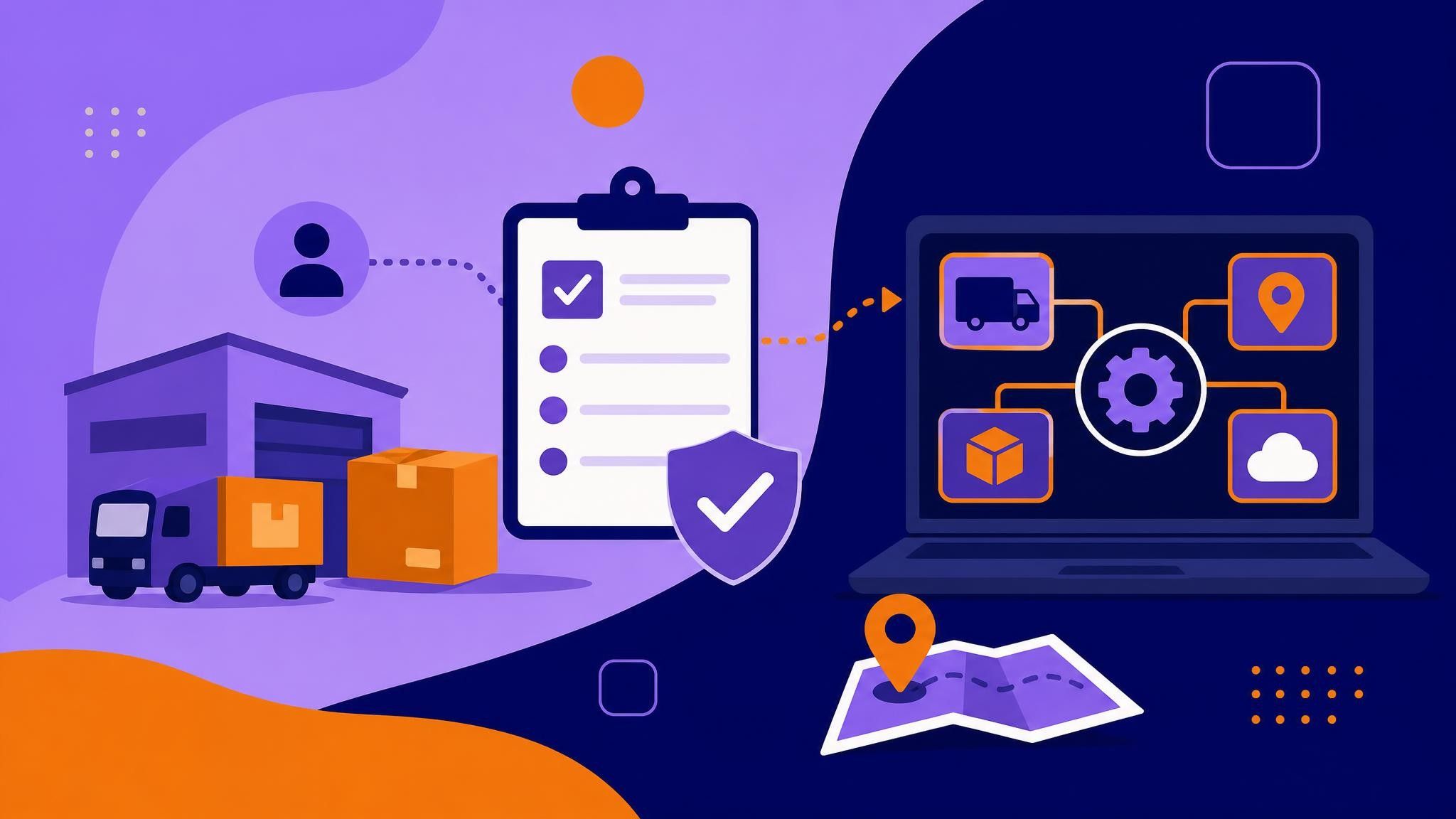
The pressure for ever-shorter lead times, cost control, and flawless delivery experiences demands more than the basics from logistics operations. Real-time visibility, partner orchestration, and rapid decision-making are now critical success factors. This is where a Logistics Control Tower becomes the brain of your operation—connecting data, people, and processes to turn information into action.
In this article, you’ll learn how to maximize results with a Control Tower, explore practical strategies to capture value from day one, and see how Meu Rastreio’s Control Tower can accelerate your performance indicators with efficiency and scale.
What is a Logistics Control Tower? A Control Tower is an operational hub that centralizes monitoring of the logistics cycle—from pickup to delivery—integrating data from owned and third-party fleets, TMS/ERP/WMS, and multiple carriers. In a single pane of glass, managers and operations teams track shipment status, receive risk alerts, handle exceptions, measure KPIs (such as SLA and OTIF), and coordinate actions to keep end-to-end flow on track.
More than just seeing where a vehicle is, the Control Tower standardizes events, prioritizes exceptions, and enables fast, data-driven decisions.
Key challenges a Control Tower solves
- Fragmented visibility: multiple spreadsheets, portals, and apps slow down operational insight and increase errors.
- Late reaction to problems: delays, missed time windows, and damages only surface when the customer complains—too late to act.
- Hidden costs: re-deliveries, failed attempts, and empty miles increase cost per delivery with no clear root cause.
- Dispersed communication: customer service, dispatch, routing, and carriers work off different information.
- SLA and customer satisfaction: unreliable delivery promises drive low OTIF and hurt recipient experience.
- Compliance and risk: lack of standardization complicates auditability, traceability, and data governance.
Strategies to maximize results with a Control Tower
- Start with the right objectives and KPIs Define clear goals by route, region, and delivery profile:
- OTIF (On Time In Full) and SLA adherence
- First-attempt delivery success rate
- End-to-end lead time
- Cost per delivery and cost per kilometer
- Time to respond and resolve exceptions
- Logistics NPS/CSAT (customer perception) With prioritized metrics, your Control Tower configuration focuses on what truly moves the needle.
- Design exception-management processes A well-handled exception becomes a competitive advantage. Structure:
- Exception categories (wrong address, recipient absent, damage, missed time window)
- Internal SLAs per exception type
- Automatic escalations and clear action plans
- Owners by stage (operations, carrier, customer service)
- Deadlines and logged resolutions for auditability
-
Standardize events and integrations Standardized events (picked up, in transit, out for delivery, delivered, returned) and integrations with ERPs, TMS, WMS, and partners are the foundation of end-to-end visibility. The more consistent the data, the more reliable the alerts, KPIs, and analytics.
-
Configure smart alerts and priorities Not every delay is critical. Classify alerts by risk and impact:
- Critical delays on high-value orders or tight delivery windows
- Routes prone to traffic spikes
- Recurring exceptions (a sign of structural issues)
- Events affecting strategic customers Avoid alert fatigue and focus the team on exceptions that truly impact SLA, cost, or experience.
- Use predictive data to plan better With consolidated history, refine:
- Predictive ETAs and more realistic delivery promises
- Delivery windows by region and time of day
- Resource allocation (vehicles and drivers) based on seasonality
- Cut-off policies based on actual lead time Better forecast accuracy improves operational efficiency and reduces friction with the end customer.
- Engage your team and partners A Control Tower is a team sport:
- Short daily stand-ups to review the dashboard and set priorities
- Exception playbooks accessible to everyone
- Clear service-level agreements with carriers
- Training and continuous-improvement rituals Transparency and operational cadence speed up problem resolution.
- Close the loop with analytics and continuous improvement Use weekly and monthly reports to:
- Identify routes/carriers with below-expected performance
- Analyze root causes (addressing, time windows, routing, capacity)
- Run A/B tests on windows, recipient confirmation, and proactive communication
- Update goals and incentives based on seasonality
- Security and compliance from day one Implement best practices:
- Role-based access (manager, operator, partner)
- Activity logs for audit
- LGPD-compliant data governance
- Document and proof-of-delivery retention policies
How Meu Rastreio’s Control Tower supercharges your operation Meu Rastreio’s Control Tower is designed to simplify day-to-day logistics complexity with a focus on outcomes. Highlights include:
- Unified real-time visibility: consolidate orders, pickups, and deliveries from multiple sources and carriers in one place.
- Exception management with workflows: handle exceptions with SLAs, ownership, and standardized logs, ensuring end-to-end traceability.
- Proactive alerts and ETA: anticipate delay risks and replan before the issue reaches the customer.
- Operational dashboards and reports: track critical KPIs such as OTIF, first-attempt rate, lead time, and cost per delivery.
- Integrations across your ecosystem: connect ERP/TMS/WMS, logistics partners, and sales channels to standardize events and automate updates.
- Operational communication: centralize updates and notifications, elevating information quality across operations, drivers, carriers, and customers.
- Digital proof of delivery: capture evidence (photos and notes) to reduce disputes and speed up audits. Outcome: faster decisions, lower operating costs, and a consistent delivery experience—at scale.
Practical use cases
- Omnichannel retail with seasonal peaks
- Challenge: high re-delivery rate due to recipient unavailability.
- Strategy: early-arrival alert + delivery-window confirmation via SMS/WhatsApp + prioritization of urgent orders on the dashboard.
- Expected result: higher first-attempt success and lower cost per delivery.
- B2B industry with fixed windows
- Challenge: penalties for late receiving and low predictability for customers.
- Strategy: predictive ETA and cut-off policies based on historical lead time, with auto-escalation for critical delays.
- Expected result: improved OTIF and fewer window noncompliance penalties.
- Multi-carrier 3PL/4PL operator
- Challenge: decentralized visibility, manual reporting, and hard-to-compare performance.
- Strategy: standardized events and KPIs per partner, comparative dashboard, and joint improvement plans.
- Expected result: efficiency gains in orchestration and data-driven renegotiations.
Metrics that prove value When you implement and mature your Control Tower, track indicators that directly impact the business:
- SLA/OTIF adherence: percentage of orders delivered on time and in agreed condition
- First-attempt rate: success on the first visit reduces re-deliveries and cost
- End-to-end lead time: from order to delivery, by channel and region
- Cost per delivery: consolidate fuel, tolls, overtime, and re-deliveries
- Exception response time: minutes from alert to first effective action
- ETA accuracy: gap between promised and actual
- Recurrence of exceptions: monitor problematic addresses, routes, and carriers Practical tip: set quarterly incremental targets (e.g., +2 to +5 percentage points in OTIF, -10% in re-deliveries) and run focused sprints on the highest-impact causes.
Trends that amplify the Control Tower’s power
- Analytics and AI applied to ETA and exception prioritization
- Telematics and IoT integrations for safety, eco-driving, and predictive maintenance
- Operational sustainability: measuring and reducing emissions per route/delivery
- Customer experience as a differentiator: proactive communication and tighter windows
- Expanded partner collaboration: shared data and joint targets Combined with operational discipline, these fronts turn the Control Tower into an engine of competitiveness.
Quick-start checklist
- Define 3–5 priority KPIs by channel/region
- Standardize events and statuses with all partners
- Configure alerts with clear criticality and ownership
- Structure workflows for the top 5 frequent exceptions
- Train the team and establish daily dashboard rituals
- Run a 30-day sprint focused on one KPI (e.g., first-attempt rate)
- Revisit contracts and SLAs based on month-one data
Conclusion: visibility that turns into performance Maximizing results with a Control Tower is not just about tracking deliveries. It’s aligning people, data, and processes to act at the right moment—with priority, predictability, and customer focus. By consolidating information, standardizing exception management, and measuring what matters, your operation gains speed, reduces costs, and delivers a superior experience.
Ready to see it in action? Book a free demo of Meu Rastreio’s Control Tower (https://meurastreio.app/pt-BR/torre-de-controle) and speak with a specialist to design the ideal plan for your operation.