Complete Guide: Maximize your delivery efficiency and streamline operations
Shorter deadlines, lower costs, and rising customer expectations have turned last‑mile logistics into a chess match. For fleet managers, operations coordinators, and route planners, the daily challenge is balancing delivery windows, vehicle capacity, urban traffic, and SLAs—while keeping service quality high. The good news: with a modern route planner, you can turn this complexity into a predictable, lean, and scalable operation.
In this guide, you’ll learn how to boost delivery efficiency, cut costs, and move faster with Meu Rastreio’s Route Planner—without jargon and with practical examples.
Why route planning is critical in the last mile
- Competing on efficiency: tight margins demand fewer miles per order and better fleet utilization.
- Customer experience: predictability and on‑time delivery within windows (OTIF) are now true differentiators.
- Growing complexity: multiple stops, urban restrictions, and variable volumes make manual planning unviable.
Operations that stick to spreadsheets and static maps end up paying more for fuel, risking delays, and wasting time building routes.
Top pain points when routing “by hand”
- Time‑consuming planning: hours spent every day deciding stop sequences.
- Unbalanced routes: some drivers overloaded, others underutilized.
- Excess mileage: redundant paths and unnecessary detours.
- Poor window adherence: delays that hurt customer satisfaction.
- Hard to scale: more orders mean more chaos and rework.
What a delivery route planner is and how it works
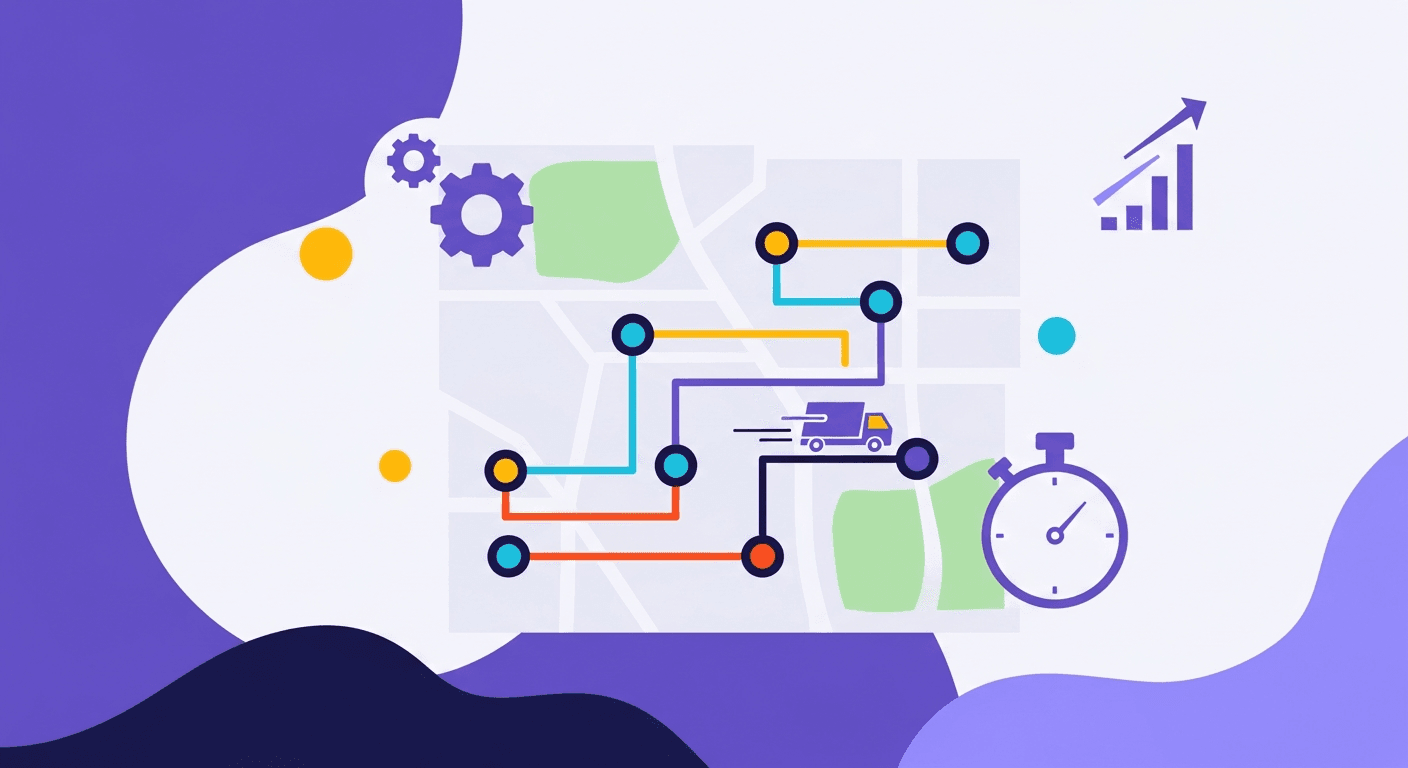
A delivery route planner is software that calculates the best combination of routes and stop sequences while honoring operational constraints and business goals. In practice, it:
- Geocodes addresses and fixes inconsistencies.
- Groups orders by proximity and priority.
- Balances vehicle capacity, delivery windows, and service times.
- Minimizes total distance, time, and cost (tolls, fuel, overtime).
- Generates detailed routes with optimized sequencing and ETA.
What sets Meu Rastreio’s Route Planner apart
- Intuitive interface for planning in minutes, not hours.
- Import orders via spreadsheet and auto‑organize them into routes.
- Flexible rules: delivery windows, per‑vehicle capacity, priorities, and operational constraints.
- Optimized sequencing with ETA and turn‑by‑turn guidance.
- Share routes with ops and drivers to simplify execution.
- Performance metrics for tracking and continuous improvement.
Learn more: https://meurastreio.app/pt-BR/roteirizador
Practical, measurable benefits
While every operation is unique, market averages show consistent gains after adopting a route planner:
- 10%–30% reduction in total mileage.
- 15%–25% savings on fuel and tolls.
- 50%–80% reduction in daily planning time.
- +5 to +15 percentage points in OTIF (On Time In Full).
- Better fleet utilization (more stops per vehicle, less idle time).
- Fewer overtime hours and lower team fatigue.
KPIs to monitor
- Cost per delivery.
- Miles per order and per route.
- Window adherence rate (SLA).
- OTIF.
- Driver productivity (stops/hour).
- Daily planning time.
How to implement a route planner in 5 steps
- Centralize your data
- Consolidate orders with addresses, time windows, and service times.
- Define vehicle capacities and characteristics.
- Configure rules and objectives
- Prioritize goals (e.g., lowest mileage, shortest time, window adherence).
- Set constraints like pickup/delivery hours and preferred sequences.
- Run simulation scenarios
- Compare plans by cost, distance, and route time.
- Tune parameters until you find the best balance between efficiency and SLAs.
- Standardize execution
- Generate and share clear routes with the team.
- Establish pre‑departure routines (checklist, manifest, materials).
- Optimize continuously
- Review KPIs weekly.
- Feed actual times back into the system to refine future routes.
Practical examples (hypothetical)
Regional distributor (B2B) — 12 vehicles, urban routes
- Situation: teams building routes in spreadsheets, tight windows, many deliveries per neighborhood.
- With the route planner: mileage dropped 22%; planning time fell from 2h to 20 min; OTIF rose from 83% to 91%.
- Key adjustment: geo‑clustering and capacity‑based balancing.
Local e‑commerce — 6 vans, seasonal peaks
- Situation: large daily variation in orders and windows of 9 a.m.–12 p.m. and 2 p.m.–6 p.m.
- With the route planner: planning started honoring windows and service times, reducing re‑deliveries.
- Result: −18% cost per delivery and +12 p.p. in window adherence.
Perishables — routes with temperature constraints
- Situation: refrigerated vehicles and need for short trips.
- With the route planner: dedicated routes by product type and maximum travel time per batch.
- Result: fewer losses and better vehicle fill without risking SLAs.
Quick ROI math: is it worth it?
Imagine 1,000 deliveries/month, an average cost of R$ 2.80 per km, and 18 km per delivery without optimization.
- With efficient routing, reducing to 14 km/delivery saves 4 km.
- Estimated monthly savings: 1,000 × 4 km × R$ 2.80 = R$ 11,200.
- If your team spends 8 hours/week planning and drops to 2 hours, that’s 24 hours/month freed for higher‑value work. Note: Adjust the calculation to your currency and per‑mile or per‑kilometer rate.
Best practices for more efficient routes
- Standardize addresses: keep ZIP codes and numbers in separate fields; review records frequently.
- Set realistic service times: pickup/delivery, checks, and potential queues.
- Group by density: cluster stops by area before crossing the city.
- Balance loads: avoid routes with too much idle time or too many stops.
- Keep the fleet ready: vehicle and materials checklists to reduce unplanned stops.
- Keep windows and priorities current: client changes must be reflected in the system.
- Post‑trip review: compare planned vs. actual ETA and adjust parameters.
Trends shaping route planning
- AI‑driven optimization: faster algorithms to handle peaks and multiple constraints.
- Dynamic re‑optimization: intelligent rescheduling when operations face disruptions.
- Sustainability: lower CO₂ per km targets influencing route and vehicle selection.
- Omnichannel: integrating pickups, deliveries, and exchanges in the same route with SLA‑based prioritization.
Why choose Meu Rastreio’s Route Planner
- Productivity first: route planning in minutes with clear, configurable criteria.
- Operational flexibility: windows, capacities, and priorities handled natively.
- Scalable: from small businesses to regional ops—without losing control.
- Visibility and control: organized, sequenced routes that are easy to share with the team.
- Hands‑on support: guided onboarding and best practices to accelerate results.
Conclusion: turn complexity into efficiency
Maximizing delivery efficiency means doing more with less: fewer miles, less planning time, and less rework—with more predictability, customer satisfaction, and margin. A modern route planner puts you in control from planning to execution and enables a culture of data‑driven continuous improvement.
Ready to see it in action? Schedule a free demo of Meu Rastreio’s Route Planner and start optimizing routes in your first week:
- Book a demo: https://meurastreio.app/pt-BR/roteirizador
- Talk to a specialist and get answers about your operation
Take the next step toward smarter routes, on‑time deliveries, and costs under control.