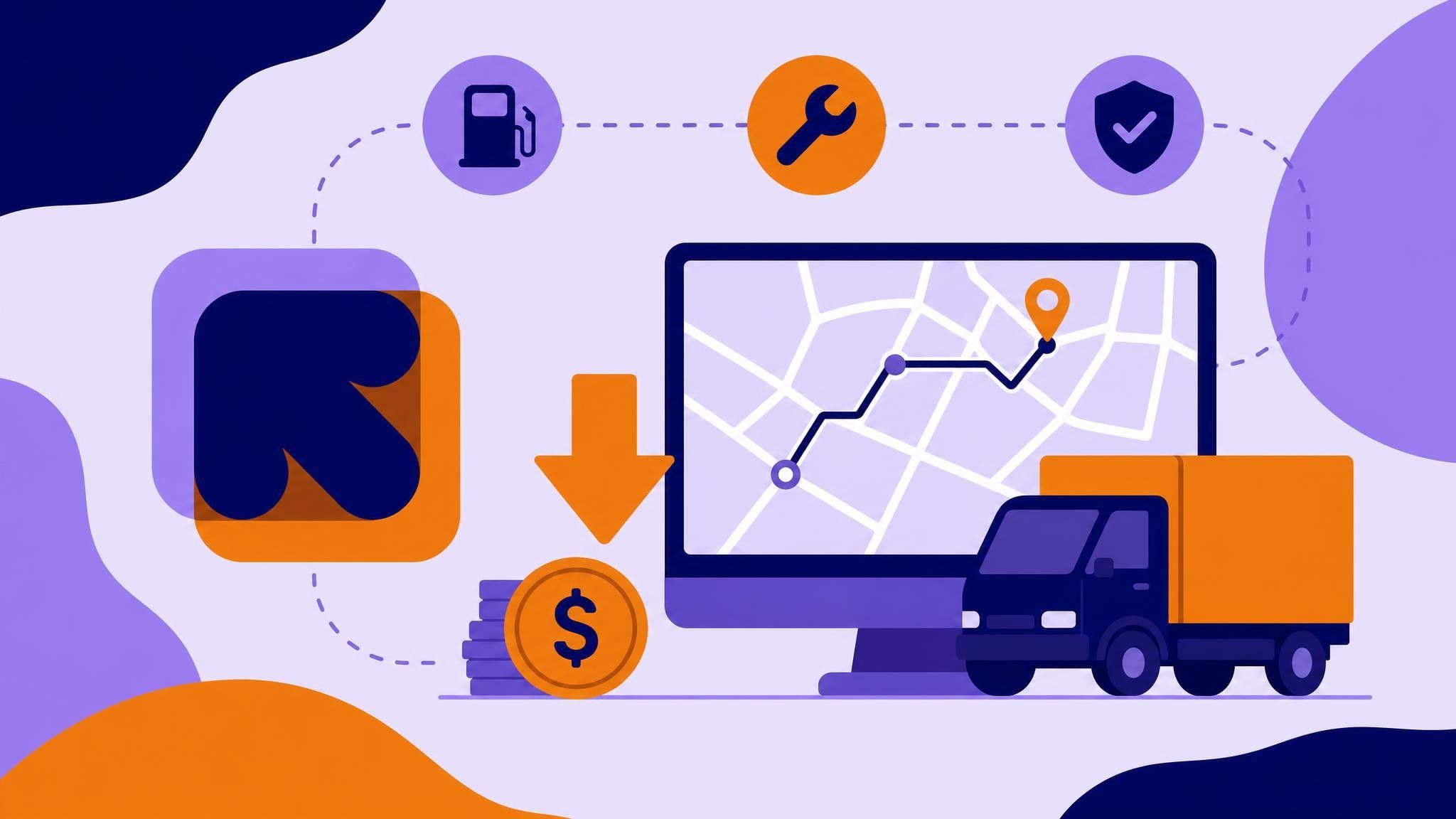
Pressure for tight delivery windows and competitive freight has intensified while fuel, tolls, and operating expenses keep rising. Many companies already centralize orders, inventory, and invoicing in Zuma ERP—but still lose money in the most expensive leg of logistics: routing. The good news is that, by integrating Zuma ERP with a routing and tracking platform like Meu Rastreio, you can turn operational data into smarter routes, drive fewer miles, cut overtime, and increase customer satisfaction.
Below, see how fleet managers, dispatchers, and admin teams can use the Zuma ERP + Meu Rastreio ecosystem to lower end-to-end costs without adding complexity.
Where money is lost in routing
- Unnecessary mileage: poorly sequenced routes, no zone clustering, returns to the depot.
- Idling and poor utilization: vehicles leave underloaded due to lack of order consolidation or misconfigured constraints.
- Redeliveries and missed windows: ignored appointments, dock queues, and inefficient recipient contact.
- Low address quality: inconsistent ZIP codes, inaccurate geocoding, and duplicate records.
- Slow manual planning: hours spent in spreadsheets and maps without considering multiple constraints.
- Lack of visibility: without real-time tracking, support suffers, customers cancel, and service costs increase.
Operations that evolve from manual planning to multi-constraint optimization often report 10%–25% reductions in miles driven and overtime, plus a meaningful drop in redeliveries.
How Zuma ERP + Meu Rastreio reduce costs in practice
- Automatic synchronization of orders and addresses
- Orders, invoices, and customer data flow from Zuma ERP to Meu Rastreio with no manual exports.
- Deduplication and enriched addresses with precise geocoding reduce errors and returns. Outcome: less administrative rework and a reliable address base.
- Route optimization with multiple constraints
- Vehicle capacities (weight, volume, cube) and profiles (box truck, city truck, refrigeration).
- Delivery windows, priorities, loading sequence, and required appointment points.
- Urban restrictions (traffic rotation, restricted zones, tolls) and zone preferences. Outcome: more stops per route with fewer miles while honoring operational and customer rules.
- Intelligent balancing and simulations
- Balanced load distribution across vehicles and regions.
- What-if scenarios to test adding/removing vehicles, changing cutoffs, or consolidating orders. Outcome: data-driven decisions to reduce fixed and variable costs.
- Field execution with the driver app
- Checklists, navigation, standardized events, and digital proof of delivery (photos, signature).
- Mid-day re-optimization when issues arise (traffic, recipient absent). Outcome: fewer redeliveries, less overtime, and shorter lines due to complete documentation.
- Real-time tracking and proactive communication
- A branded tracking link sent to the end customer.
- Automatic status updates flow back to Zuma ERP for invoicing, collections, and support. Outcome: fewer inbound calls and higher customer trust—without extra communication cost.
- Audit and performance measurement
- Consolidated KPIs for management: cost per stop, miles per delivery, utilization rate, OTIF, and redeliveries.
- Freight reconciliation and deviation detection (routes over plan, unauthorized stops). Outcome: continuous improvement and sustained savings over time.
Which indicators improve with integrated routing
- Miles per delivery: direct reduction in fuel consumption.
- Average cost per stop: better utilization and consolidation.
- Redelivery and return rate: validated addresses and active communication.
- OTIF (On Time, In Full): on-time, complete deliveries.
- Overtime and per-diem costs: better sequencing and window adherence.
- Planning time: from hours in spreadsheets to minutes in the optimizer.
- Customer satisfaction (NPS): fewer uncertainties and delays.
Practical examples of cost reduction Regional wholesaler with private fleet Scenario: 14 vehicles, 350 deliveries/day, multiple B2B windows.
- Action: Zuma ERP + Meu Rastreio integration, geocoding, and creation of fixed zones.
- Result in 90 days (illustrative yet common):
- -18% miles driven
- -12% overtime
- -28% planning time
- +15% average vehicle utilization
Last-mile e-commerce in a major city Scenario: 9 vehicles, 2-hour windows, high redelivery rate.
- Action: proactive confirmation via tracking link and dynamic route adjustments during the day.
- Result:
- Redeliveries drop from 9% to 4%
- Cost per order -11%
- Higher OTIF and better customer ratings
Manufacturer serving retail with dock appointments Scenario: scheduled receiving and dock restrictions.
- Action: routing prioritizing dock times and compatible vehicle profiles.
- Result:
- Late penalties nearly eliminated
- Reduced queues and idle time
- Better utilization of shifts and windows
Step-by-step to capture value quickly
- Audit data in Zuma ERP
- Fix ZIP codes, standardize street names, validate contacts.
- Classify customers by delivery window and service priority.
- Activate the integration with Meu Rastreio
- Import orders automatically and define routing rules.
- Configure vehicle profiles, capacities, and zones.
- Start with a controlled pilot
- Select 1–2 critical routes per region.
- Compare current vs. optimized for 2–4 weeks.
- Standardize field execution
- Train drivers on the app, capture events and proof of delivery.
- Enable re-optimization in case of disruptions.
- Measure and adjust continuously
- 90-day target KPIs: -10% to -20% miles/delivery, -25% planning time, -30% redeliveries.
- Review zones, windows, and capacity rules biweekly.
Advanced tips to reduce routing costs
- Consolidate orders by cutoff: small, controlled delays can improve utilization and reduce trips.
- “No route, no load” policy: no vehicle leaves without an optimized plan and configured POD.
- Address quality as a KPI: treat ZIP and geocoding as an asset—no validated address, no scheduling.
- PUDOs/lockers and pickup points: alternatives reduce rigid windows and redeliveries.
- Differentiate paid vs. free windows: offer premium times, subsidize broader windows—improves OTIF and margins.
- Green routes: favor paths with fewer stops and traffic—good for cost, SLA, and ESG.
- True per-mile and per-hour costs in the ERP: integrate allocations to see margin by customer and by route.
Trends that amplify savings
- Real-time data: traffic, weather, and urban restrictions incorporated into the route.
- Telematics and eco-driving: efficient driving lowers fuel and maintenance.
- AI for demand forecasting: better consolidation and fleet planning.
- Collaboration with 3PLs: flexible capacity in peaks without inflating fixed costs.
- Proactive customer tracking: fewer support calls and fewer redeliveries.
What does poor routing cost? A quick exercise Imagine 10 vehicles driving 125 miles per day, 22 days/month. Total: 27,500 miles/month. A conservative 5% improvement saves about 1,375 miles/month. At an average of 8 mpg and diesel at $4.00/gal, that’s roughly 172 gallons saved—or $688/month—on fuel alone. Add reduced overtime, tolls, and maintenance, and the annual impact grows quickly. Optimization pays for itself.
Why choose Meu Rastreio if you use Zuma ERP
- Ready-made integration with Zuma ERP: orders, invoices, and records flow without spreadsheets.
- Enterprise-grade routing: multiple constraints, simulations, and re-optimization.
- Driver app and digital POD: standardized execution and fewer redeliveries.
- Branded tracking link: proactive communication that slashes support costs.
- Security and privacy compliance: data protected and aligned with LGPD requirements.
- Fast rollout and expert support: a team focused on logistics and operations.
Conclusion If you already use Zuma ERP, you’re one step away from turning your data into smarter routes—with fewer miles, less overtime, and more on-time deliveries. The integration with Meu Rastreio removes manual bottlenecks, optimizes from planning to execution, and delivers full visibility of what happens on the road—all to reduce costs and elevate the customer experience.
Ready to see how this applies to your operation? Book a free demo with a Meu Rastreio specialist and discover how much you can save in the next few weeks.