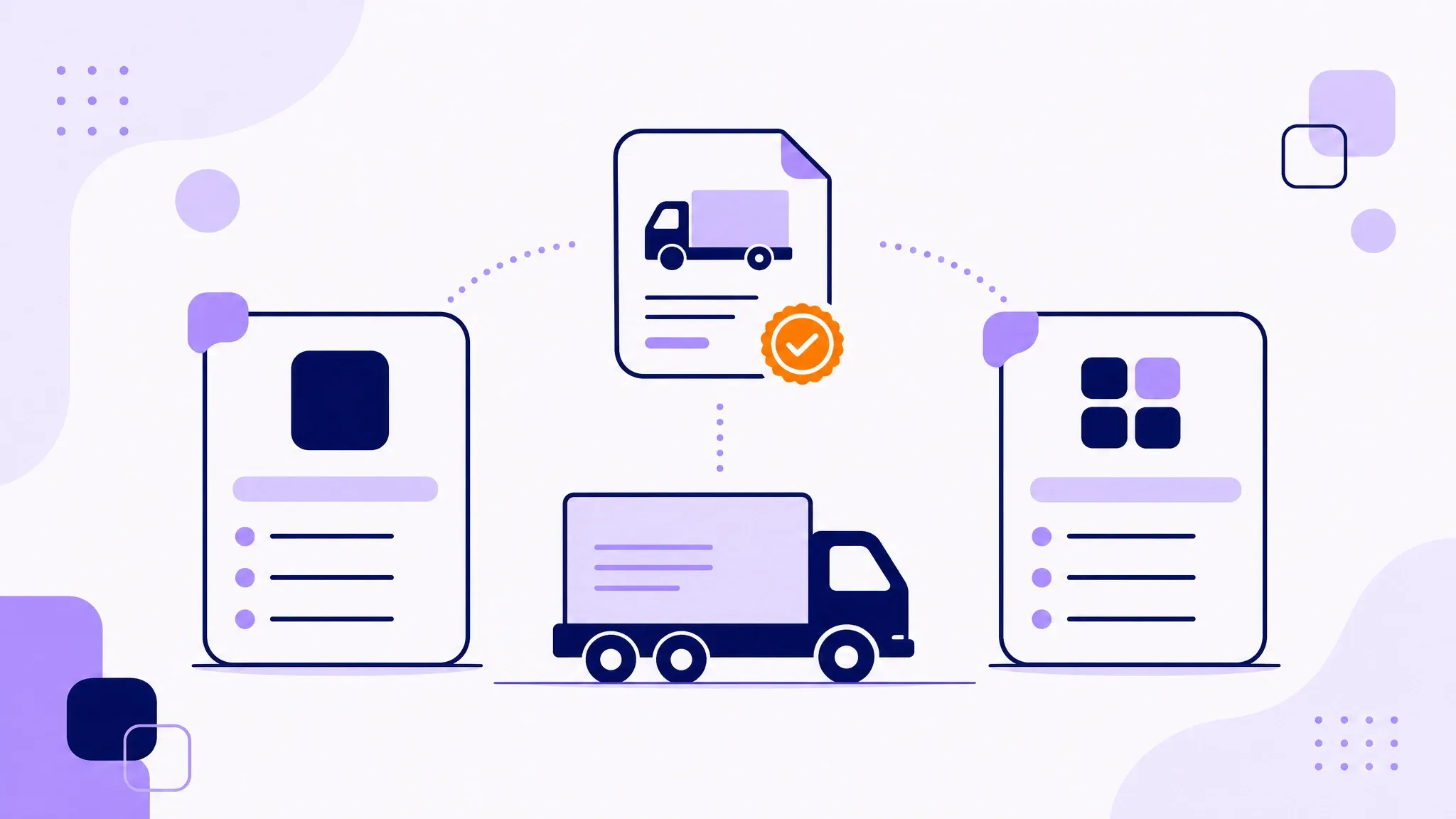
Issuing CT-e (Conhecimento de Transporte Eletrônico, Brazil’s Electronic Transport Invoice) correctly is mission-critical for any logistics operation that provides transportation services in Brazil. Beyond being mandatory for tax compliance, it directly impacts operational efficiency, cash flow, and customer experience. A common question is: does it make more sense to issue CT-e through your company’s ERP or via a specialized TMS?
In this article, we compare both approaches from the perspective of day-to-day operations—and show when a TMS with a CT-e module, like Meu Rastreio, can multiply efficiency gains, cut errors, and speed up decision-making.
ERP vs. TMS in CT-e issuance: what really changes
ERP: finance and tax first
- Advantages:
- Centralizes tax, accounting, and financial data.
- Maintains master data (customers, CFOPs, tax rules).
- Can be enough for few CT-es, with simple, low-variance operations.
- Typical limitations:
- Shallower coverage of transport operations rules (redispatch/redespacho, subcontracting, multiple legs, multiple bill-to/payers).
- Depends on integrations for tracking, MDF-e, and delivery management.
- Fewer logistics-specific automations (route pre-validations, toll calculations, pickup/delivery windows, SLA management).
TMS: operations-first, with airtight tax compliance
- Advantages:
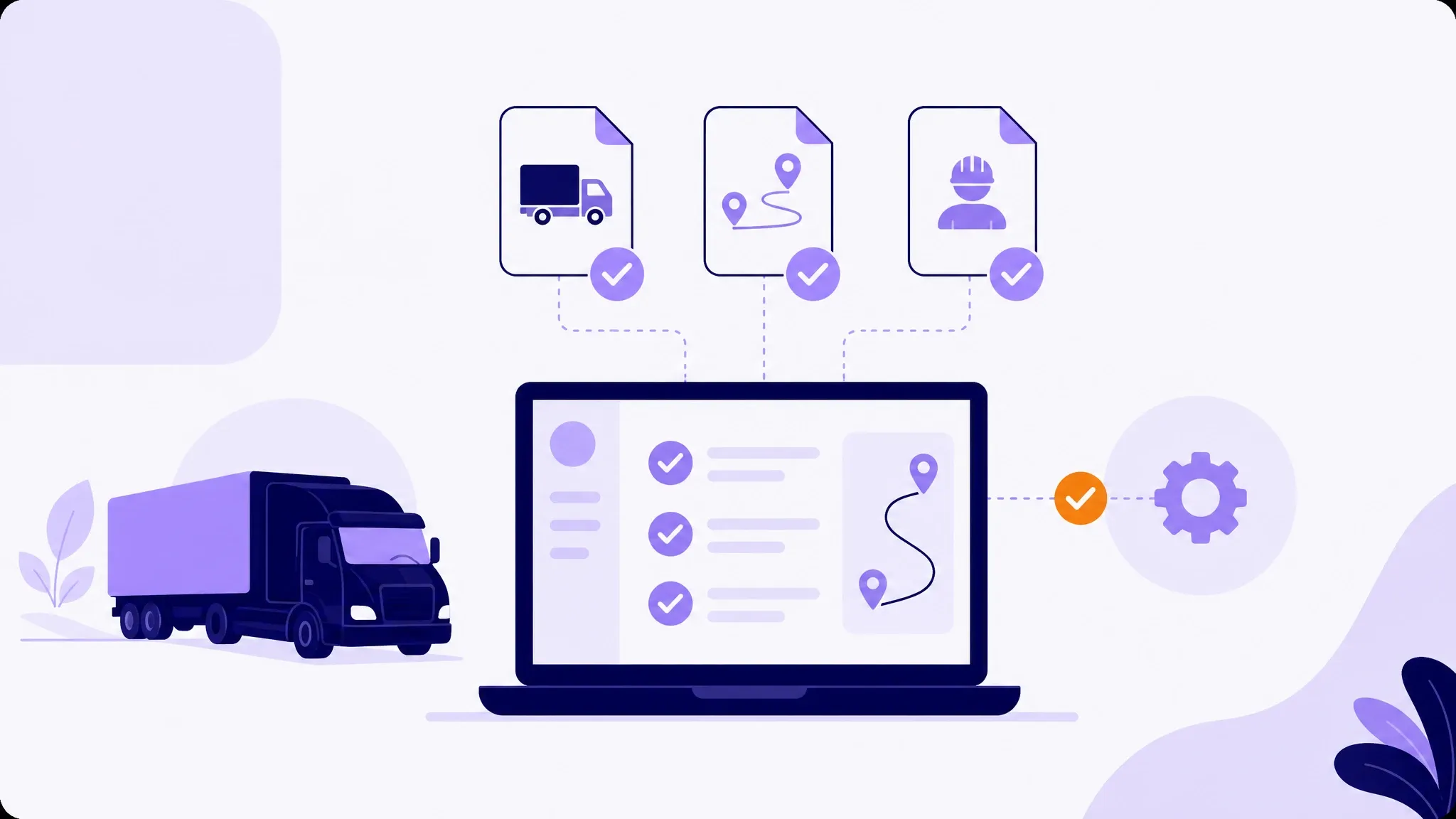
- Built for logistics: load planning, routing, driver connectivity, and delivery event consolidation.
- CT-e issuance driven by operational data (pickups, loading manifests/romaneios, full-truckload, redispatch), reducing discrepancies.
- More natural integrations with MDF-e, CIOT, toll prepayment (vale-pedágio), tracking, and digital proof of delivery.
- Stronger tax updates and pre-SEFAZ validations.
- Points to watch:
- Must integrate cleanly with the ERP for finance/accounting (billing, accounts receivable).
- Requires initial parameterization of logistics and fiscal rules.
In short: the ERP “knows how to bill,” the TMS “knows how to move freight.” For simple, low-volume operations, the ERP may suffice. As complexity and speed demands grow, the TMS tends to deliver more value.
Common pain points in CT-e issuance (and why they happen)
- Divergent data between operations and billing (weight, volumes, addresses): rework and SEFAZ rejections.
- Fiscal complexity by state (UF), modes, and CST/CFOP: risk of fines due to poor parameterization.
- Subcontracting and redispatch: multiple documents, bill-to parties, and freight splits.
- Tight timelines: the window between pickup, MDF-e issuance, and vehicle departure.
- Contingency (EPEC) and downtimes: the need for a plan B without stopping the operation.
- Sending DACTE to customers and managing digital confirmations: inefficient communication and delays.
- Integrations with CIOT/ANTT, tolls, and delivery SLAs: when not native, it becomes a patchwork of systems.
Many of these issues come from the gap between what happens in the field and what gets recorded in the back office. The path to fewer errors is to bring CT-e issuance closer to real operational events—something a TMS does by design.
How to decide: practical criteria for choosing ERP or TMS
- Volume and complexity
- Up to a few dozen CT-es per month, with simple routes and few bill-to parties: ERP can be enough.
- Hundreds or thousands of CT-es, multiple states (UFs), redispatch/subcontracting, several freight tables and modes: TMS recommended.
- Level of operational integration
- If your team uses loading manifests, tracking, delivery windows, digital proof of delivery, and needs MDF-e/CIOT integrated, a TMS reduces friction.
- Compliance and tax updates
- TMSs typically offer predictive validations, state-based fiscal rules, and continuous updates, minimizing rejections and corrections.
- Costs and ROI
- Compare solution cost with time spent per CT-e, rework, and potential penalties.
- Quick math: if your team spends 8 minutes per CT-e and you issue 1,000/month, that’s ~133 hours/month. Cutting to 3 minutes with automation saves ~83 hours/month—on top of fewer rejections, better SLAs, and happier customers.
- ERP integration
- The ideal setup is TMS + ERP working in sync: the CT-e is born in the TMS; finance, billing, and accounting continue in the ERP. Best of both worlds.
Real-world (hypothetical) scenarios to guide your choice
-
Manufacturer that ships occasionally
- Profile: few invoices, predictable routes, sporadic transports.
- Path: the ERP’s tax module can work—provided it’s well parameterized and digital certificates (A1/A3) are validated.
-
Regional carrier with redispatch
- Profile: high volume, multiple states, different bill-to parties, subcontracting.
- Path: TMS with CT-e issuance, MDF-e/CIOT integration, and advanced tax rules. Drastically reduces rejections and rework.
-
E-commerce with outsourced fleet and aggressive SLAs
- Profile: delivery tracking, customer communication, digital proofs of delivery.
- Path: a TMS where tracking and delivery events feed CT-e issuance and billing in the ERP.
Measurable benefits of a TMS with a CT-e module
- Operational agility
- Issue CT-e from operational data (pickup, manifest, TMS), eliminating double entry.
- Automatic DACTE generation and distribution to customers.
- Fewer rejections and contingencies
- Pre-validations and state-based fiscal rules before sending to SEFAZ.
- Support for complement, annulment, and correction letter (CC-e) scenarios.
- End-to-end compliance
- Integration with MDF-e and related processes, reducing dock holds and inspections.
- Freight auditing and management
- Consolidation of base rates, surcharges, and tolls, with an audit trail.
- Visibility and customer experience
- Transport events and digital proofs aligned with the fiscal document, improving SLAs and satisfaction.
Example gain: cutting issuance time from 10 to 3 minutes per CT-e, across 2,000 documents/month, frees ~233 hours/month—time you can reallocate to planning, customer service, and cost reduction.
Why consider Meu Rastreio for CT-e issuance Meu Rastreio is a SaaS logistics platform that unifies operations and tax compliance. In the CT-e module, you get:
- Streamlined CT-e issuance with automatic validations and DACTE generation.
- Deep integration with logistics operations: pickups, manifests (romaneios), and deliveries feed the fiscal document, reducing errors.
- Management of common transport scenarios: multiple bill-to/payers, redispatch (redespacho), and subcontracting.
- State-based fiscal parameters (by UF) and continuous updates to keep up with regulations.
- Automatic DACTE distribution and customer communications.
- Integration with related documents (like MDF-e) and trip processes, when applicable.
- Fast onboarding, intuitive UI, and specialized support for your team.
The result: less rework, more speed, more control—and a direct bridge between what happens in the yard and what must be right at SEFAZ.
Learn more: https://meurastreio.app/pt-BR/cte
Safe migration steps (checklist)
- Diagnostic
- Map volumes, states (UFs), modes, redispatch/subcontracting, and freight rules.
- Capture rejection rates, average time per CT-e, and current bottlenecks.
- Fiscal preparation
- Review CFOPs, CST, rates, and state exceptions.
- Validate digital certificates (A1/A3) and master data.
- Integration and master data
- Sync customer records, freight tables, and orders between TMS and ERP.
- Define the source of truth for each data domain (who creates, who updates).
- Controlled pilot
- Run a live cycle with part of the operation; measure time, rejections, and usability.
- Tune rules and validations before go-live.
- Training and governance
- Enable operational and tax teams.
- Establish audit routines and KPIs (time per CT-e, rejection rate, SLA).
Trends reinforcing a TMS-first approach
- Intelligent tax automation: predictive validations and dynamic parameters by state and operation type.
- End-to-end digitization: digital proofs, traceability, and events integrated with the fiscal document.
- Plug-and-play integrations: ERP, banks, tolls, CIOT, and partners connected to the same flow.
- Scalability: seasonal peaks absorbed by SaaS without speed loss or error spikes.
Conclusion: which solution makes more sense?
- If your volume is low and the operation is simple, the ERP may handle CT-e issuance with a good cost-benefit ratio.
- If you need efficiency at scale, fewer errors, MDF-e/CIOT integration, and end-to-end visibility, a TMS with a CT-e module is the natural path.
Meu Rastreio brings operational speed and tax compliance together in one platform, helping your team issue CT-e with fewer clicks, fewer rejections, and greater control.
Next step:
- Talk to a specialist: https://meurastreio.app/pt-BR/cte
- Book a personalized demo for your transportation and billing flow.