Issuing CT-e one by one can work for small operations. But when your carrier or 3PL needs to release hundreds of deliveries per dispatch window, every minute lost to data entry, validation, and fixing rejections impacts routes, costs, and customer satisfaction. The good news: with a structured process and the right technology, you can issue CT-e in batches with tax compliance, speed, and complete operational control.
In this guide, you will learn the step-by-step process to issue CT-e at scale, best practices to reduce rejections and rework, and how Meu Rastreio’s CT-e helps your team move faster, stay compliant, and scale operations.
What CT-e is and why batch issuance matters The Conhecimento de Transporte Eletrônico (CT-e) is Brazil’s electronic fiscal document that formalizes freight transportation services. It replaces paper, integrates with SEFAZ (state tax authority), and accompanies the cargo via the DACTE.
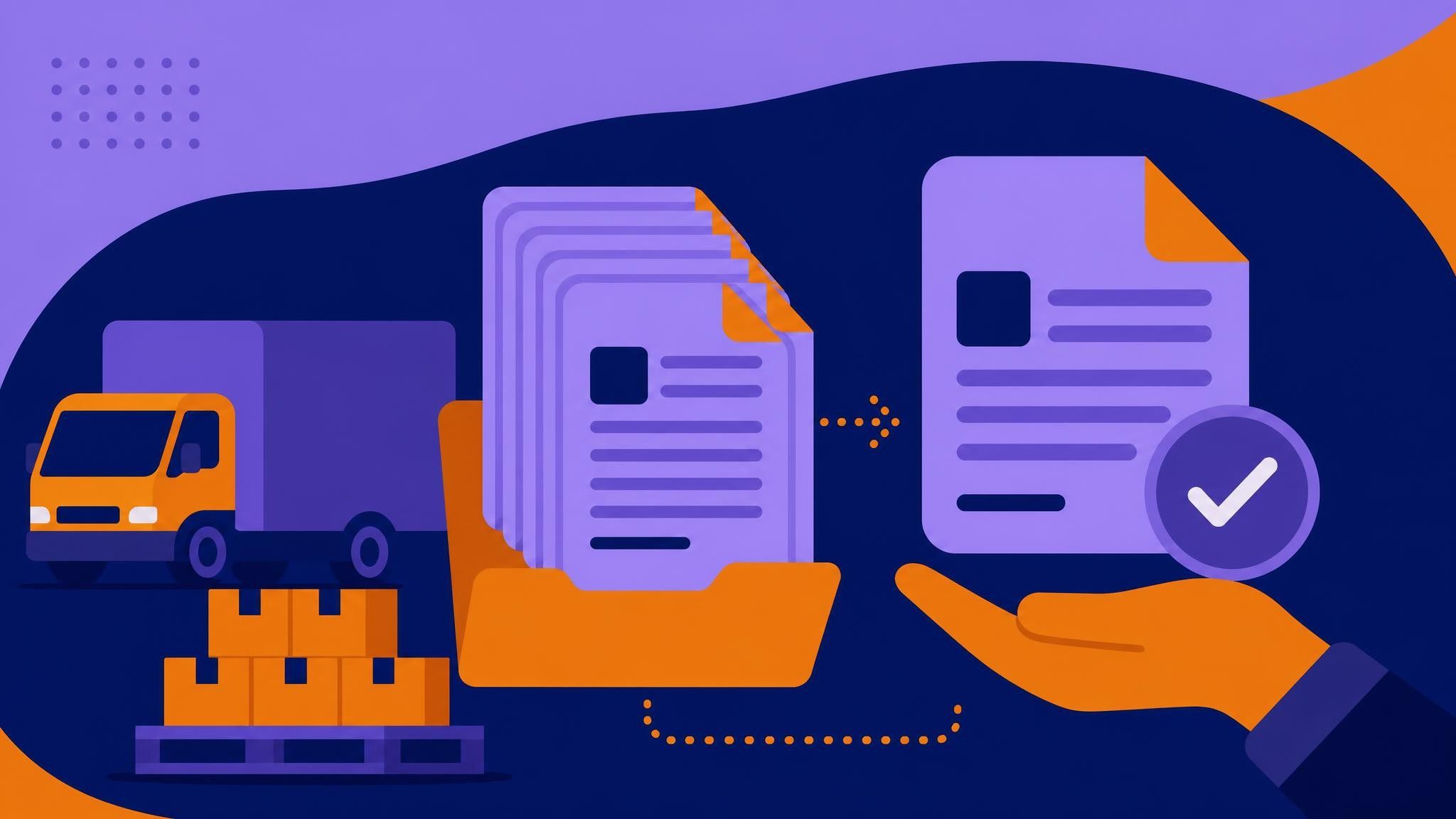
Batch CT-e issuance means processing dozens or hundreds of CT-es in a single run, with automatic validations, digital signatures, and simultaneous submission to SEFAZ. The result is faster dispatch, fewer human errors, and an operation ready for demand spikes.
Key gains:
- Faster cargo release
- Fewer rejections and fines due to fiscal inconsistencies
- Less rework and overtime on peak days
- Visibility of authorization status by trip, vehicle, or branch
- Direct integration with MDF-e and routes
Real-world challenges when issuing CT-e at high scale
- Dispersed data: shippers, consignees, payers, and NF-e keys spread across different spreadsheets
- Complex taxation: CFOP, CST/CSOSN, tax rates, and rules by state (UF) and payer type
- Recurring rejections: invalid keys, missing IE (state taxpayer registry), wrong city or ZIP code, duplicate numbering
- Dispatch bottlenecks: vehicles waiting for DACTE, missed loading windows
- Operational failures: expired digital certificate, SEFAZ connectivity issues, contingency not prepared
- Scalability: maintaining quality and speed with lean teams and high seasonality
How to issue CT-e in batches: step by step
- Prepare records and tax rules
- Register issuer, branches, vehicles, drivers, and service parties (shipper, consignee, dispatcher, receiver, or third parties)
- Validate CNPJ/CPF, IE, addresses, and IBGE municipality codes
- Fiscal parameterization:
- CFOP by origin/destination and operation type
- Tax regime (Simples Nacional, Presumed/Actual Profit) and proper CST/CSOSN
- ICMS responsibility and freight components (toll, insurance, expenses)
- Configure CT-e series and numbering by branch and mode (road, air, etc.) Tip: a clean master data base is the number one antidote to rejections at scale.
- Consolidate the deliveries
- Centralize cargo information: NF-e keys, volumes, weight, merchandise value, pickup/delivery locations, and payer
- Use standardized spreadsheets or ERP/TMS integration to import everything at once
- Group by route, vehicle, dispatch window, or customer to optimize your batch
- Validate automatically before sending
- Consistency checks: CFOP vs. state, required IE, valid ZIP and municipality, duplicate NF-e key, correct payer
- Tax simulation: calculate ICMS and freight components to avoid mismatches
- SEFAZ pre-validation: flag potential rejections before the official submission With an updated rules engine, you can cut common rejections by up to 90%.
- Digitally sign and transmit to SEFAZ
- Use an e-CNPJ digital certificate (A1 is recommended for batch operations)
- Mass signing with an intelligent queue to optimize authorization time
- Manage numbering by series/branch to avoid duplicates
- Track authorizations and handle rejections
- Real-time monitoring by batch, route, license plate, or branch
- Automatic reprocessing only for rejected CT-es, with suggested root-cause fixes
- Contingency ready (e.g., EPEC/SVC) when SEFAZ is unavailable
- Generate and distribute the DACTE
- Automatic DACTE issuance after authorization
- Send to customers and drivers via email and portal, with QR code and protocol
- Make it available to any audit/inspection during transit
- Link the MDF-e and release dispatch
- After CT-es are authorized, generate the MDF-e with the set of documents and vehicle/driver data
- Print the DAMDFE when applicable and greenlight the operation
Best practices for operations with hundreds of CT-es
- Standardize layouts: use a single spreadsheet to import all batch data
- Freeze windows: define cutoff times per route to avoid document “dripping”
- Audit master data weekly: focus on frequent payers and highest-volume states
- Keep schema versions current: ensure your system follows the latest SEFAZ rules
- Monitor digital certificates: validity alerts in advance (30/15/7 days)
- Plan B for contingency: clear processes for SEFAZ outages and later reconciliation
- Quality metrics: rejections by reason/state, CT-e per hour, average authorization time, cost per CT-e
Common errors and how to avoid them
- Wrong payer: confirm contract and tax responsibility in the freight order
- Invalid or mismatched NF-e key: validate the key at the source (ERP) before batching
- Incorrect city/ZIP: use updated IBGE data and assisted entry
- Duplicate numbering: centralized control by branch and series
- Expired certificate: early renewal policy and A1 preferred for servers/automation
Practical (hypothetical) example A regional carrier must release 240 deliveries across three windows (morning, afternoon, evening) for e-commerce. Previously, the team issued CT-e manually in the TMS, averaging 6 minutes per document with an 8% rejection rate.
After adopting a batch issuance process with automatic validation:
- Average time per CT-e dropped to 1m20s (import + signature + submission)
- Rejections fell to 0.7%, concentrated in new payer registrations
- The morning window opened 35 minutes earlier, reducing first-leg delays
- The team redirected 1.5 FTE to route planning and customer service Results like these are typical when standardized data, a reliable tax engine, and end-to-end automation work together.
Why use Meu Rastreio’s CT-e for batch issuance Meu Rastreio is a logistics SaaS built for high scale, with speed, compliance, and usability for frontline teams.
Day-to-day highlights that make a difference:
- End-to-end batch issuance:
- Import via standardized spreadsheet or integrate with your ERP/TMS
- Intelligent transmission queue and A1 digital signature
- Reprocess only rejected items, with suggested root cause
- Up-to-date tax engine:
- Rules by state, CFOP, CST/CSOSN, and pre-SEFAZ validations
- Inconsistency alerts before submission (IE, NF-e keys, IBGE)
- Audit-ready operation:
- Secure storage, audit trail, series and branch controls
- DACTE and reports available to customers and auditors
- Integrated logistics flow:
- Automatic link to MDF-e and dispatch by route/vehicle
- Status dashboards, SLAs, and KPIs (rejection rate, CT-e/hour, authorization time)
- Reliability and continuity:
- Digital certificate monitoring and validity notifications
- Contingency configured for SEFAZ downtime
Measurable benefits:
- Up to 70% reduction in issuance time per document
- Significant drop in rejections and rework
- Faster dispatch and better use of pickup/delivery windows
- Fiscal standardization and lower risk of penalties
Learn more about the solution: Meu Rastreio CT-e (https://meurastreio.app/pt-BR/cte).
Trends and insights for 2026
- Tax automation as a competitive edge: automated processes scale with fewer people and greater predictability
- Data quality as an asset: well-maintained master data and rules matter as much as fleet and warehouse for results
- End-to-end integration: CT-e, MDF-e, tracking, and proof of delivery connected to reduce disputes and speed up billing
- Real-time dashboards: operational decisions guided by indicators (rejection by state, CT-e by slot, vehicle queue time)
Conclusion: well-executed batching means scale, compliance, and speed Issuing CT-e in batches for hundreds of deliveries is not just “pressing a button.” It is about aligning data, tax rules, automation, and monitoring. When this engine runs smoothly, dispatch gains rhythm, rejections drop, and the end customer notices the difference.
Meu Rastreio’s CT-e is designed for intense operations, with smart validations, mass issuance, and full visibility from import to DACTE and MDF-e.
Ready to see it in action? Book a free demo and discover how to issue CT-e in batches with safety and high performance.