The end of spreadsheets for companies using Zuma ERP
When your operation scales, spreadsheets stop helping and start hurting. Delays from outdated information, rework from manual errors, and poor visibility into delivery status are everyday symptoms in fleets and DCs that still rely on scattered files. The good news: if you already use Zuma ERP, retiring spreadsheets is both possible and strategic by integrating your logistics with Meu Rastreio.
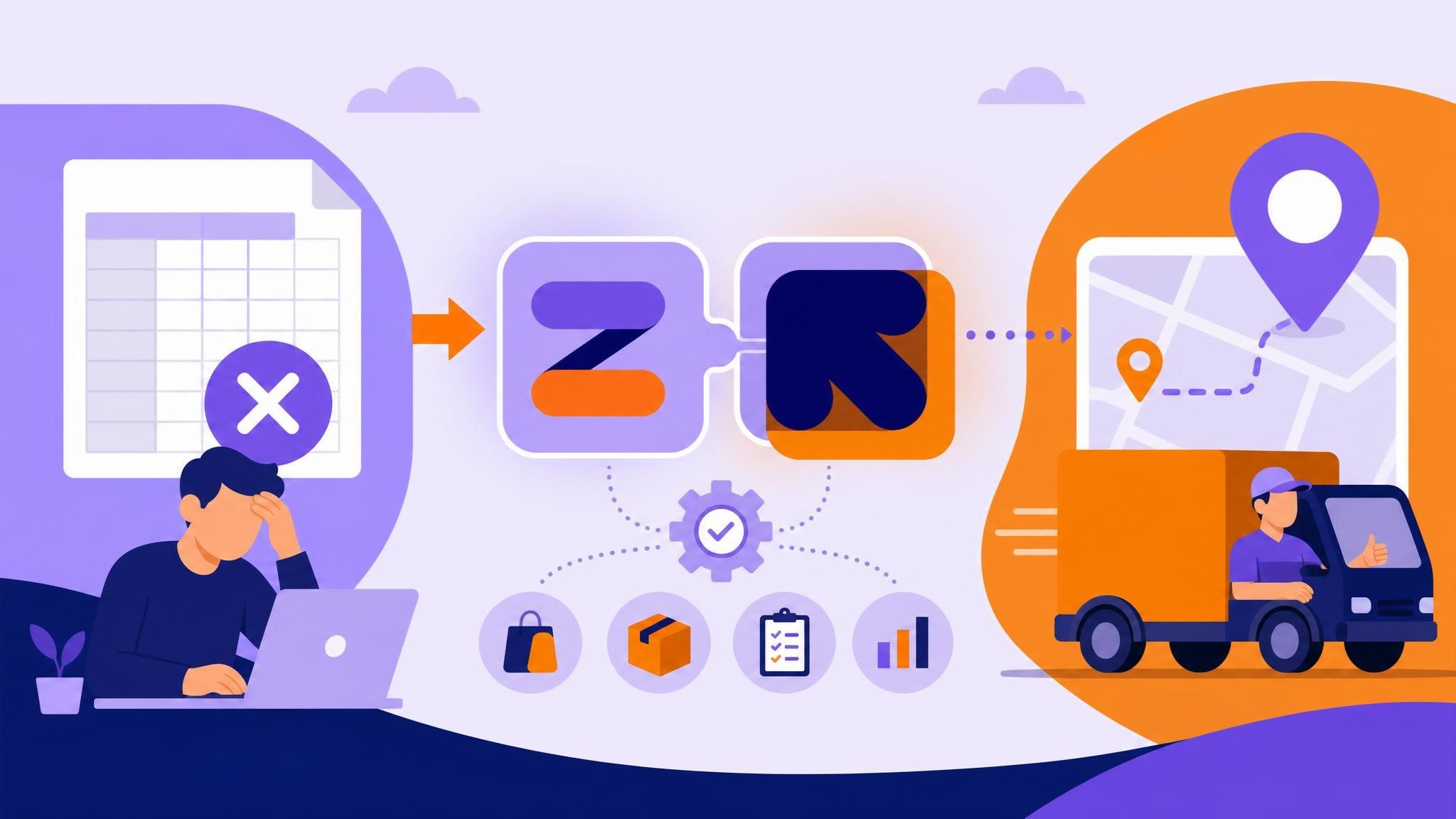
By connecting Zuma ERP to Meu Rastreio, you turn operational data into real-time decisions. Orders become routes in a few clicks, drivers receive tasks in the app, statuses flow automatically, and KPIs like OTIF (On-Time, In-Full), SLAs, and cost per delivery are clear in a single dashboard. Fewer spreadsheets. More control. Better customer service.
Why spreadsheets stall logistics growth
- Fragmented information: v1, v2, “final,” and “final_2.” The operation depends on key people and local files.
- Frequent manual errors: broken formulas, bad copy/paste, duplicate data, and delays for validations.
- Lack of traceability: hard to know who changed what and when, complicating audit and compliance.
- Late status visibility: you learn about issues after the customer has already complained.
- Low scalability: more orders mean more tabs, more macros, and more risk.
- Slow decisions: with stale data, teams fight fires instead of optimizing routes, costs, and SLAs.
In logistics, minutes matter. When the flow depends on manual updates, operational risk and cost rise—especially across multi-site, transfer, and last‑mile operations.
What changes with Zuma ERP + Meu Rastreio The integration between Zuma ERP and Meu Rastreio replaces manual controls with digital, auditable, real-time processes: https://www.meurastreio.app/pt-BR/integracoes/zuma-erp
- Unified data: from order to proof of delivery
- Orders and invoices from Zuma ERP sync to Meu Rastreio.
- Trip generation and load consolidation based on delivery windows, SLAs, volumes, and constraints.
- Automatic task dispatch to the driver app with instructions, stop sequence, and operational checklists.
- Digital proof of delivery (POD): signature, photos, geolocation, standardized exceptions.
- Automatic status back in the ERP and transparent customer communication.
Result: the email and spreadsheet back‑and‑forth disappears. The right information reaches the right person at the right moment.
- Automation of critical routines
- Intelligent routing: grouping orders by region, weight/volume, and priority.
- Delivery windows and SLAs: proactive alerts to prevent breaches.
- Audit and compliance: full history of every trip stage and every change performed.
- Logistics triggers: re-delivery, damage, and returns with predefined flows.
- Billing and cost per delivery: consolidated data for reconciliation and profitability.
Your team moves from repetitive ops (fill, copy, paste) to value creation (plan, optimize, serve better).
- Real-time visibility and the metrics that matter
- Dashboards for on-time rate (OTIF), deliveries by window, stops per driver, cost per mile/delivery, and service level by customer.
- Live map with telemetry and status for each vehicle/route.
- Alerts for deviations (delays, long stops, route off-plan).
- Comparative reports by period, region, and operation.
Without spreadsheets, decisions are driven by trustworthy data—and you can prove the results.
Practical, measurable benefits While every operation is unique, companies that retire spreadsheets and run an integrated ERP + delivery management flow typically see:
- Rework and manual adjustments reduced: 25% to 40%
- Avoidable delays down: 15% to 30%
- Fewer status calls and emails: 30% to 50%
- Logistics cost per delivery reduced: 8% to 20%
- Order–billing–POD cycle accelerated: hours become minutes
How to measure in your environment
- Before and after: compare OTIF, average lead time per route, cost per delivery, and re-delivery rate.
- Team time: measure hours spent updating spreadsheets vs. running the automated flow.
- Customer satisfaction: track NPS or complaint rate after enabling proactive tracking.
Day-to-day examples Logistics operator (DC or cross-docking)
- Before: updates a departures spreadsheet and emails transport and sales.
- After: creates the trip in Zuma ERP; Meu Rastreio ingests the orders, suggests routes, and sends tasks to the driver. At every stage (pickup, transfer, delivery) the status is registered automatically with visibility for all teams. Impact: fewer communication bottlenecks and shorter yard queues through better load sequencing.
Fleet manager
- Before: maintenance, fueling, and shifts across multiple spreadsheets; low predictability.
- After: real-time panels show routes, delivery windows, and deviations. Alerts guide reallocation to protect SLAs. Impact: higher on-time window adherence and better fleet utilization (less idling and backtracking).
Administrative or sales assistant
- Before: answers customers using several spreadsheets and calls to the driver.
- After: official status via a tracking link and ready-to-use reports by customer and period. Impact: fewer status requests and higher service productivity.
Meu Rastreio advantages for Zuma ERP users
- Native integration with Zuma ERP’s logistics flows—no spreadsheet workarounds.
- Simple, robust driver app: checklists, standardized exceptions, photos, digital signature, and route navigation.
- Routing with window and SLA priority to optimize cost and time.
- Executive dashboards for leadership and operational views for the shop floor.
- Implementation guided by specialists in Brazilian logistics and consultative support.
- Scalability: from regional to national without losing performance—and without hitting spreadsheet limits.
Trends accelerating the post-spreadsheet era in logistics
- Last mile under pressure: shorter delivery promises require real-time orchestration that spreadsheets can’t support.
- Customer at the center: transparent tracking lowers indirect CAC and increases retention.
- Compliance and audit: digital records and audit trails simplify inspections and SLAs.
- Data for continuous optimization: decisions driven by KPIs and A/B tests of routes and operational tactics.
Companies that embrace this shift cut costs, improve the customer experience, and gain room to scale.
How to migrate from spreadsheets to an integrated flow
- Quick diagnosis
- List critical spreadsheets (routes, delivery windows, exceptions, POD, cost per delivery).
- Map data inputs/outputs in Zuma ERP and which decisions rely on those spreadsheets.
- Integration and setup
- Connect Zuma ERP to Meu Rastreio and define routing rules, SLAs, exception types, and POD templates.
- Controlled pilot
- Pick one route/cell to validate; compare before/after metrics and collect team feedback.
- Training and standardization
- Train drivers and operations on the app and dashboards; standardize names and exception codes.
- Scale and continuous improvement
- Roll out to other routes/branches; use dashboards to spot deviations and savings opportunities.
Tip: keep a single “summary spreadsheet” only as contingency in the first month. As the digital flow matures, it will retire naturally.
Conclusion: the end of spreadsheets is the start of a smarter operation If you use Zuma ERP, retiring spreadsheets in logistics isn’t just possible—it’s the fastest path to lower costs, higher OTIF, and full visibility from order to delivery. With Meu Rastreio integrated, your team leaves rework behind and operates with trustworthy data, automation, and clear KPIs.
Next steps
- Book a free demo to see how the Zuma ERP + Meu Rastreio integration eliminates spreadsheets and accelerates your operation.
- Talk to a specialist to map quick wins for your scenario.
Explore the integration details: https://www.meurastreio.app/pt-BR/integracoes/zuma-erp