Shorter deadlines, tighter budgets, and end-to-end visibility have never been more critical. In many operations, repetitive tasks and manual decisions still consume hours from entire teams, opening the door to errors, rework, and delays. This is where logistics automation stops being a trend and becomes a true competitive edge.
Meu Rastreio Automations was built to transform operational processes into smart, rule-driven workflows. Instead of relying on phone calls, spreadsheets, and workarounds, you configure triggers and conditions — and the system executes the right actions at the right time. The result is a faster, more predictable, and scalable operation focused on performance and customer experience.
Common pain points in logistics operations
- Communication noise: misaligned information among route planning, yard, drivers, and customer support.
- Lack of visibility: slow to detect route deviations, excessive stops, or risk of missing the delivery window.
- Rework and human error: manual status updates, repetitive checks, and double entries across multiple systems.
- Slow decision-making: alerts arrive late; by the time the team acts, the cost has already gone up.
- Hard to scale: processes depend on “operational heroes” instead of standardized rules.
These challenges hurt OTD/OTIF, cost per delivery, fleet utilization, re-delivery rate, and customer NPS.
What is Meu Rastreio Automations Automations is a Meu Rastreio module that lets you build event- and condition-based workflows for your operation — without technical complexity. You define:
- Triggers: events such as “vehicle left the yard,” “delivery entered the customer area,” “delay over X minutes,” “unplanned stop,” “delivery completed,” and more.
- Conditions: rules such as cargo type, delivery window, VIP customer, region, driver, contracted SLA, or priority.
- Actions: notifications to teams and customers, task creation, status changes, internal ticketing, proof-of-delivery requests (photo/signature), incident escalation, or replanning.
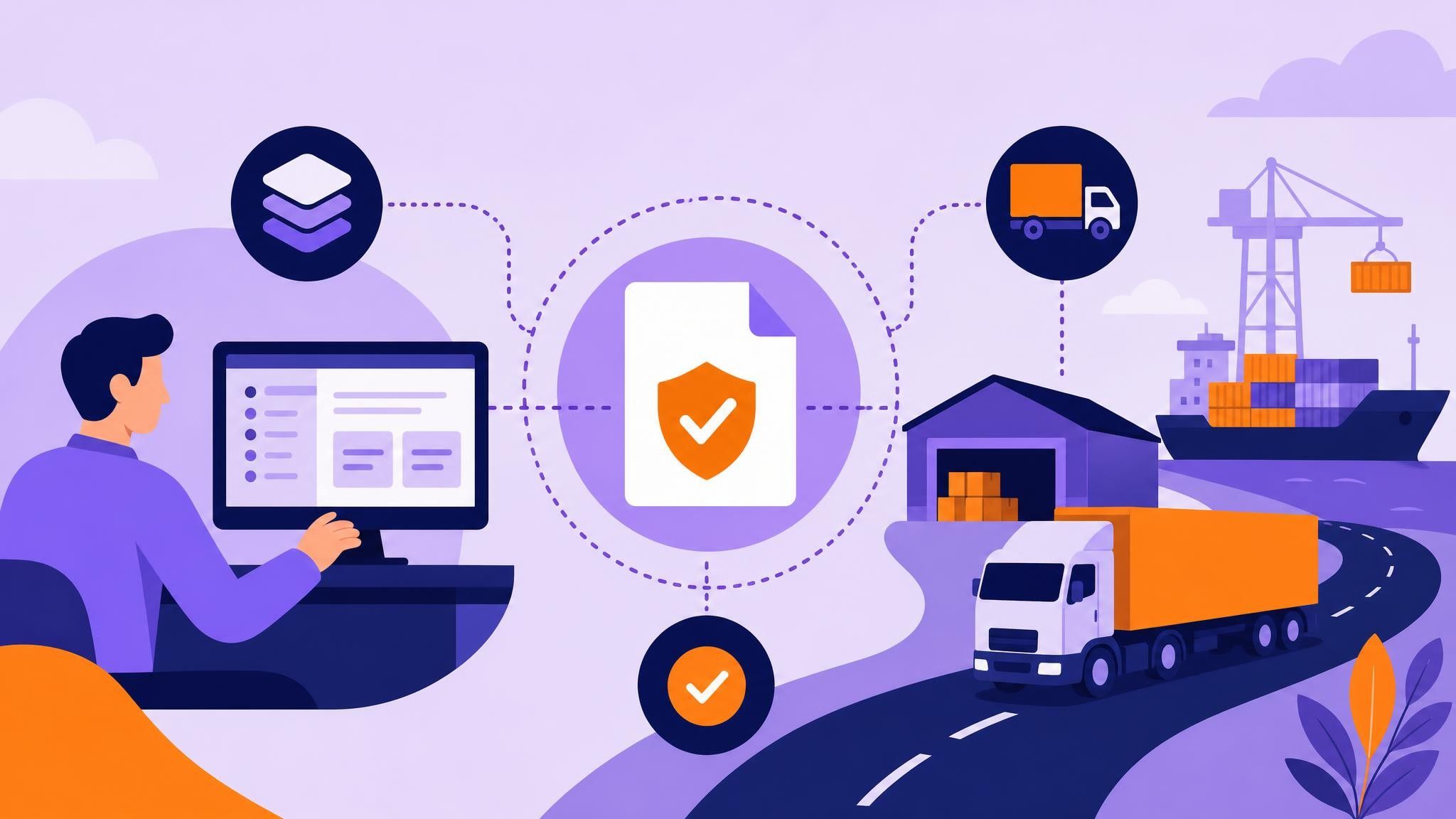
All of this is centralized in Meu Rastreio, with real-time tracking, event history, and KPI views.
How Automations works in practice
- Proactive route monitoring
- Trigger: vehicle deviates more than X% from the planned route.
- Action: instant alert to the route planner via corporate WhatsApp and automatic incident log for later analysis.
- Outcome: course correction in minutes, fuel savings, and fewer delays.
- Protecting delivery windows (SLA)
- Trigger: predicted delay of over Y minutes before arrival.
- Action: notification to the customer with a new ETA, message to the support team, and priority at the unloading dock when applicable.
- Outcome: fewer re-deliveries, transparent experience, and higher SLA compliance.
- Stop time and idleness control
- Trigger: stop time above the limit at unplanned locations.
- Action: automatic request for justification from the driver and alert to the supervisor.
- Outcome: higher productivity, better fleet utilization, and lower risk.
- Frictionless proof of delivery
- Trigger: delivery completion.
- Action: automatic request for photo/signature and storage of the POD on the order, enabling faster invoicing.
- Outcome: fewer disputes and a faster cash cycle.
- Predictive maintenance and safety
- Trigger: accumulated mileage or critical events (e.g., telemetry alert).
- Action: create a preventive maintenance task and block assignment of new routes to the vehicle until inspection.
- Outcome: fewer unplanned breakdowns and higher fleet availability.
Practical, measurable benefits
- Operational efficiency: repetitive tasks stop consuming your team’s time. The team focuses on exceptions and continuous improvement.
- Cost reduction: less rework, fewer re-deliveries, lower extra mileage, and smarter fleet usage.
- Scalability: standardized processes that work with 10 or 1,000 deliveries/day without losing governance.
- Visibility and governance: centralized history of decisions and events, making SLA-based actions, audits, and compliance easier.
- Customer experience: proactive communication, predictability, and transparency from pickup to delivery.
- Cross-team alignment: routing, yard, support, sales, and finance all see the same single source of truth for the operation.
Use cases by role
- Fleet manager: automations for preventive maintenance, control of critical stops, and safe driving compliance.
- Operations/logistics: delivery window management, automatic replanning under constraints, and incident escalation.
- Support/CS: proactive delay messages, delivery confirmations, and satisfaction surveys after completion.
- Drivers: digital checklists, timely proof-of-delivery requests, and clear communication of priorities.
- Route planners: alerts on deviations, critical congestion, and real-time opportunities to optimize sequences.
- Admin/finance: trigger invoicing after proof of delivery and validations to prevent incorrect charges.
Why automation is an inevitable trend Market reports and Logistics 4.0 point to a steady move toward hyperautomation: data-driven decisions, event-orchestrated workflows, and real-time collaboration between systems and people. Early adopters:
- Operate with lower unit costs.
- Respond faster to disruptions.
- Scale with predictability and quality.
- Build a clear competitive advantage perceived by customers.
KPIs to track with Automations
- OTIF/OTD and delivery window compliance.
- Cost per delivery and extra km per route.
- Cycle time (pickup, transit, delivery, and return).
- Re-delivery rate and incidents per thousand deliveries.
- Unplanned stop time per vehicle.
- Team productivity (deliveries per employee, automated tasks).
- NPS/CSAT by customer, region, or service type.
With well-defined rules, Automations helps you consistently move these KPIs and consolidate evidence for audits and strategic decisions.
How to get started with Automations in 5 steps
- Map critical processes
- Identify bottlenecks, rework, and repetitive decisions (e.g., window confirmations, stop control, proof of delivery).
- Define targets and SLAs
- Set clear limits and objectives for each stage (e.g., maximum tolerated delay, yard time, windows by customer).
- Start small and iterate
- Launch 2–3 high-impact, low-risk automations. Measure results and fine-tune your business rules.
- Scale with governance
- Expand to more flows and teams while maintaining naming standards, owners, and change audit trails.
- Embed the culture
- Train teams, align KPIs, and celebrate wins. Automation is about people and processes as much as technology.
Key differentiators of Meu Rastreio Automations
- Simple setup: build flows in minutes with no development required.
- Flexible rules: combine multiple triggers and conditions to reflect your operational reality.
- Real-time visibility: centralized tracking data for fast, well-founded decisions.
- Smart escalation: prioritize incidents by criticality, customer, or SLA.
- Unified experience: communication and event logging in one ecosystem, reducing noise and information loss.
Conclusion: from reactive to intelligent logistics Automation doesn’t replace people — it frees your team from repetitive work so they can focus on what matters most: preventing issues, delighting customers, and scaling operations with quality. With Meu Rastreio Automations, you turn business rules into daily results: lower costs, greater predictability, and a superior level of service.
Ready to see it in action? Book a free demo and discover how Automations can transform your operation: https://meurastreio.app/pt-BR/automacoes
Talk to a Meu Rastreio specialist and design your first automation flow this week.