Maximizing results with Automatic Route Planning and an Optimizer: tips and strategies
Modern logistics is real-time chess: short lead times, strict delivery windows, tight budgets, unpredictable traffic, and customers expecting minute-by-minute tracking. In this context, automatic route planning isn’t a nice-to-have—it’s a competitive edge. When implemented well, it cuts miles driven, raises delivery window compliance, and lifts fleet productivity—all with end-to-end visibility.
This article shows how to get the most from an automatic route optimizer and turn your Route Planning into a true performance engine. Throughout the text, you’ll see how Meu Rastreio helps operations teams gain efficiency without losing control.
Why route planning is mission‑critical
- Cost control: fuel, tolls, maintenance, and overtime can eat your logistics budget if routes aren’t optimized.
- Service level at stake: hitting delivery windows and promised ETAs directly impacts satisfaction, reorders, and B2B contracts.
- Rising complexity: multiple stops, vehicle restrictions, capacities, driver preferences, and restricted circulation areas.
- Daily variability: cancellations, new pickups, road incidents, and shifting priorities demand fast replanning.
Without the right technology, decisions devolve into a maze of spreadsheets, maps, and calls. An automatic route optimizer organizes variables and proposes the best plan—in minutes.
How an automatic route optimizer works in practice
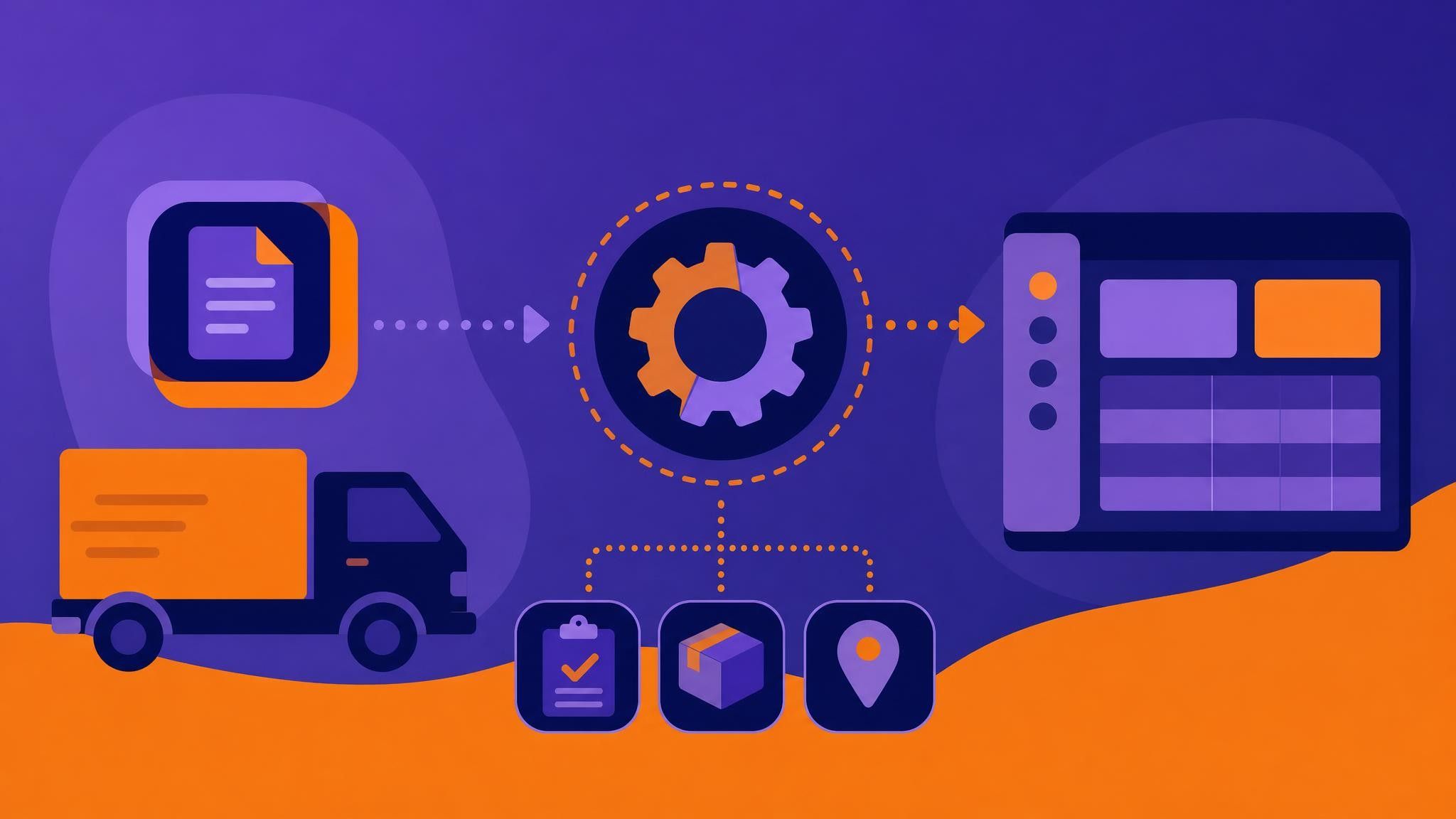
An optimizer uses advanced algorithms and your operational data to build stop sequences that meet specific criteria and constraints, such as:
- Vehicle capacities (weight/volume/items)
- Delivery windows and service time per stop
- Skills or special requirements (refrigerated vehicles, dock access, documents)
- Risk zones and restricted traffic areas
- Variable costs (tolls, urban vs. highway miles)
- Order prioritization and SLA
In Meu Rastreio, the Route Planning module combines these inputs and generates optimized plans, with real-time re-optimization when exceptions arise: https://meurastreio.app/pt-BR/planejamento-de-roteiros
Tips and strategies to maximize results
- Start with data quality
- Standardize addresses and ensure strong geocoding (ZIP code, suite/apartment details, landmarks).
- Keep accurate service times by delivery type (condo/high-rise, street-facing retail, big-box store).
- Register capacities and constraints for each vehicle and crew.
- Validate realistic delivery windows with customers.
The more precise your data, the more robust your optimization.
- Set clear routing objectives Not every operation seeks the same outcome. Prioritize one primary objective and define secondary goals:
- Minimize total trip cost
- Maximize delivery window compliance (service level)
- Balance workload across vehicles
- Reduce total route time (productivity)
In Meu Rastreio, you can tune weights and rules in the optimization engine to reflect your strategy.
- Segment your network and customers
- Create operational zones aligned with the urban layout.
- Split routes by service profile (B2B with dock access vs. B2C residential).
- Consider fixed visit frequencies (D+1, D+2, weekly) and cyclic routes for recurring stops.
Segmentation reduces back-and-forth and improves predictability.
- Model critical operational constraints
- Respect loading/unloading hours, license-plate rotation rules, and restricted circulation areas.
- Flag risk points to build safer routes.
- Consider tolls and alternative paths when cost impact is relevant.
Meu Rastreio lets you enforce these rules to generate routes that fit local realities.
- Use scenario simulations before publishing
- Compare cost vs. service: what changes when you raise the weight of delivery windows?
- Test adding/removing vehicles and shifts.
- Assess the impact of concentrating deliveries by micro‑zone.
Scenarios help back decisions and negotiate realistic targets with Sales.
- Monitor in real time and replan fast
- Track execution via geofencing and dynamic ETA.
- React to cancellations, new pickups, and incidents with re-optimization.
- Reallocate stops across vehicles to protect critical SLAs.
- Engage the front line
- Train drivers on the app (check‑in/out, proof of delivery with photo/signature).
- Standardize exception procedures (recipient unavailable, wrong address).
- Give Customer Support visibility to enable proactive communication with end customers.
When the last mile executes well, routing strategy pays off.
- Measure, learn, and iterate Continuous improvement depends on indicators:
- Miles per delivery and cost per delivery
- Average fleet utilization
- Delivery window compliance and OTIF
- Idle time and dock waiting time
- First‑attempt delivery success rate
Revisit parameters and master data based on these numbers.
Practical use cases
E‑commerce and last mile during seasonal peaks During Black Friday, a regional e‑commerce player needed to absorb a surge in orders without expanding the fleet. Using Meu Rastreio’s Route Planning, the city was segmented into micro‑zones, delivery window weighting was adjusted, and re‑optimization was activated throughout the day. Result: a significant increase in daily productivity per vehicle and high adherence to promised ETAs—even at peak.
B2B distributor with rigid windows A distributor supplies markets and restaurants, many receiving only at specific times. By registering delivery windows and dock service times, the optimizer produced feasible sequences and cut cross‑zone travel. Within weeks, the operation saw a drop in unproductive movements and a clear reduction in miles driven.
Field service with SLA A medical equipment company handles service calls with different priorities. After parameterizing SLA and technician skills (certifications, service radius), Meu Rastreio ensured routes that prioritize critical tickets first without compromising scheduled preventive maintenance.
Grocery retail with refrigerated vehicles A cash‑and‑carry wholesaler runs mixed deliveries (ambient and refrigerated). With capacities and refrigeration constraints configured, the system automatically split loads and built routes consistent with temperature control, reducing waste and avoiding returns.
Trends and insights to stay ahead
- Predictive intelligence: demand forecasting and identifying critical windows to pre‑position resources.
- Multi‑objective optimization: balance cost, lead time, and emissions simultaneously.
- Sustainability: routes that minimize emissions, support for EV fleets, and low‑emission zones.
- Seamless integrations: real‑time data across ERP/TMS, WMS, CRM, and support to eliminate friction.
- Customer experience: proactive communication with tracking and dynamic ETA elevates satisfaction and reduces “where is my order?” contacts.
How to measure ROI from your route optimizer
- Establish a baseline: miles/delivery, cost/delivery, OTIF, utilization, overtime, first attempt.
- Run a controlled pilot: select routes/zones to test for 4–8 weeks.
- Compare results: identify consistent gains and fine‑tuning opportunities.
- Scale with governance: standardize master data, train teams, and create KPI review cadences.
- Reinvest gains: adjust delivery window policies, renegotiate toll routes, and rebalance the fleet.
Organizations that combine solid data modeling, operational discipline, and re‑optimization typically capture meaningful, sustainable gains.
Why choose Meu Rastreio for Route Planning
- Advanced, flexible optimization: consider capacities, windows, costs, circulation restrictions, skills, and priorities.
- Real‑time replanning: adjust routes in a few clicks when exceptions occur.
- Full driver app: geo‑based check‑in/out and proof of delivery with photo/signature.
- End‑to‑end visibility: execution dashboards, dynamic ETA, and customer notifications.
- Dashboards and KPIs: cost per delivery, miles/delivery, utilization, window compliance, and more.
- Simple integrations: connect to your ecosystem (ERP/TMS/WMS/CRM) for continuous data flow.
- Fast onboarding and consultative support: a dedicated team for configuration, training, and best practices.
- Reliability and security: scalable SaaS architecture, LGPD‑compliant, and high availability.
With Meu Rastreio’s Route Planning, your operation gains the speed to make better decisions every day—from D‑1 to D+1: https://meurastreio.app/pt-BR/planejamento-de-roteiros
Conclusion
Maximizing results with an automatic route optimizer goes far beyond “generating routes.” It’s a discipline that combines high‑quality data, clear objectives, smart parameterization, real‑time monitoring, and continuous improvement. When this engine runs, the effects show up in the P&L (lower costs), in the field (higher productivity), and for the customer (greater predictability and satisfaction).
If you want to reduce costs, raise delivery window compliance, and step‑change your fleet efficiency, you’re one step away from seeing it in action.
Book a free demo of Meu Rastreio and discover how Route Planning can transform your operation: https://meurastreio.app/pt-BR/planejamento-de-roteiros
Or talk to a specialist to map your scenario and design a tailored pilot.