
Issuing the Conhecimento de Transporte Eletrônico (CT-e) — Brazil’s electronic transport tax document — is critical to the operational and fiscal health of any carrier or logistics operator. When done manually, it creates bottlenecks: rework, SEFAZ (state tax authority) rejections, risk of fines, delays in pickup/delivery, and low customer visibility. The good news: you can automate CT-e issuance directly in your Transportation Management System (TMS), cutting costs and increasing end-to-end reliability.
In this practical guide, you will learn how to automate CT-e issuance via your TMS, the technical and tax prerequisites, best practices to minimize rejections, and how Meu Rastreio’s CT-e module accelerates your operation while maintaining full compliance.
What CT-e is and why to automate
CT-e is the digital tax document that formalizes freight transportation services, with legal validity and digital storage. It connects to other documents such as MDF-e (Manifesto Eletrônico de Documentos Fiscais) and DACTE (Documento Auxiliar do CT-e) and must follow SEFAZ rules for each state.
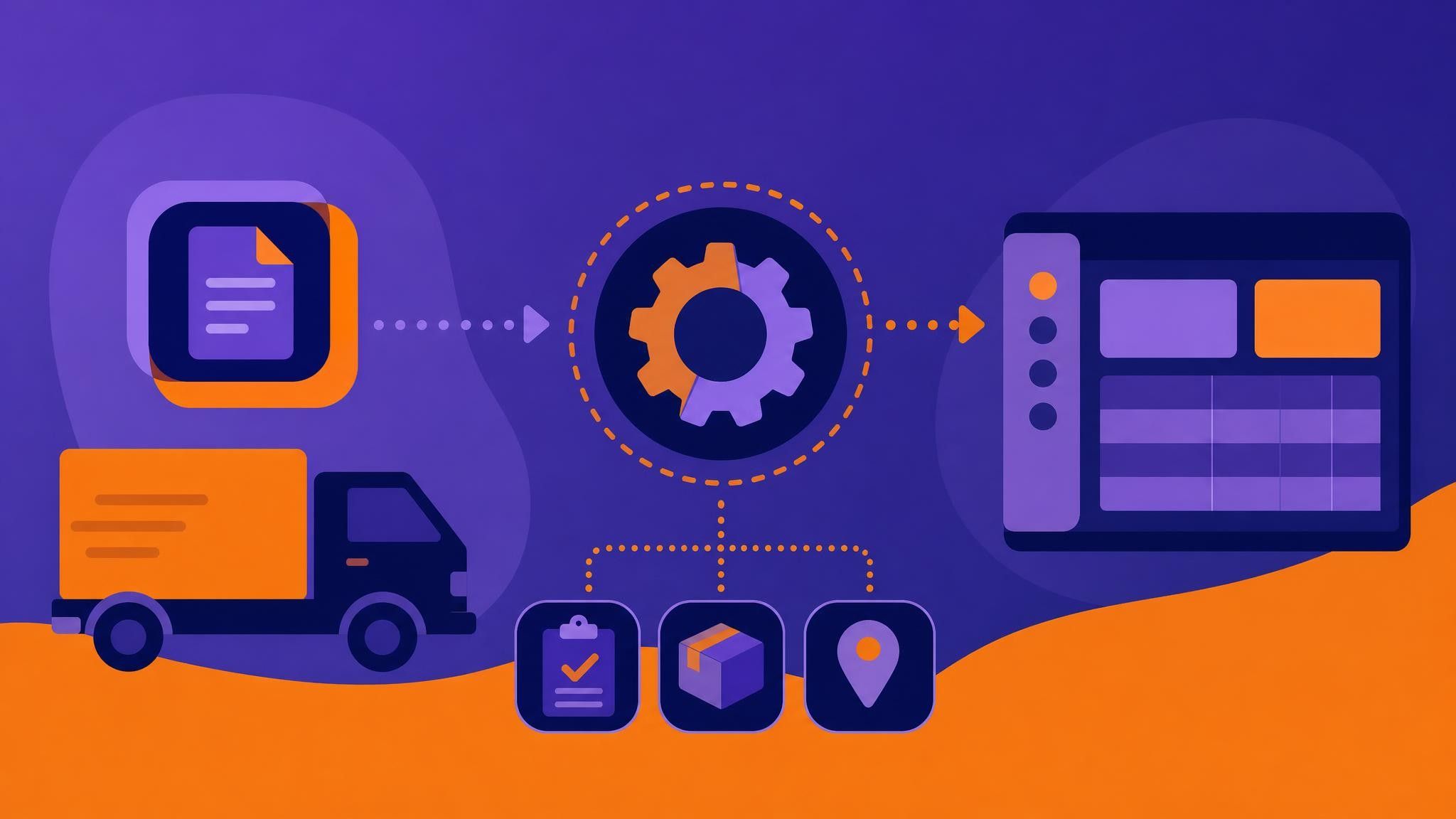
Automating issuance in the TMS means linking operational data (pickups, load manifests, freight orders, price tables, route, payer) to tax rules, generating and transmitting CT-e without manual intervention — with validations, numbering, and real-time monitoring.
Key gains:
- Speed and scale: issue in seconds, even during operational peaks.
- Fewer errors: automatic validations for registrations, CFOP (Fiscal Code of Operations and Services), ICMS (state VAT), rates, and state-by-state rules.
- Compliance: lower rejection rates and better traceability of events (issuance, cancellation, CC-e).
- Integration: DACTE, MDF-e, and tracking aligned in the same flow.
The challenges of manual CT-e issuance
- Rework and inconsistencies: discrepancies in payer, shipper/consignee data, and vehicle plates trigger rejections.
- Dependence on specialists: knowledge concentrated in a few people creates bottlenecks.
- Deadlines and SLAs: delays block loading, MDF-e, and delivery windows.
- Lack of standardization: different branches and shifts working in different ways.
- Low visibility: hard to measure rejection rate, average issuance time, and cost per document.
- Tax risk: repeated errors may lead to fines and mandatory corrections.
How automatic CT-e issuance works in the TMS
- Master data synchronized
- Customer/payer, shipper, consignee, address, CNPJ/CPF, IE (state tax ID), RNTRC (carrier registry), vehicle, driver.
- Tax tables (CFOP, CST/CSOSN, rates, state benefits) and tax regime parameters.
- Operational trigger
- Issuance is triggered by an event such as pickup confirmation, load manifest closure, route-based consolidation, or billing confirmation.
- Automatic tax pre-validation
- Check required fields, value consistency, unit of measure, insurance data, ANTT (transport agency), modal, linked documents, and state rules.
- Secure signing and transmission
- Use a digital certificate (A1 recommended for 24/7 operations) to sign and transmit CT-e to SEFAZ.
- Response and documentation
- Automatic receipt of authorization. DACTE generation and MDF-e linkage when applicable.
- Monitoring and events
- Dashboard with statuses (Authorized, Rejected, Contingency), alerts, and quick actions for cancellation, electronic correction letter (CC-e), and number voiding.
- Connected integrations
- ERP (financial/tax), freight management (third-party hiring/CIOT), routing, and tracking.
Prerequisites to automate your CT-e issuance
- Digital certificate: A1 recommended for continuous automation (A3 requires physical token/presence).
- Tax parameters: tax regime, CFOPs by operation, state rates, substitution/exemption rules, and state benefits.
- Clean master data: valid CNPJ/IE, standardized addresses, correct ZIP/IBGE codes, RNTRC, and vehicle/driver data.
- Defined processes: when to issue (by pickup, by LTL load, by route), cancellation/CC-e policies, and numbering control by branch.
- Integration with purchasing/operations: ensure orders, load manifests, and measurements feed the TMS with reliable data.
Best practices to reduce rejections
- Standardize records: use masks and validations for CNPJ/IE, ZIP, and street names.
- Configure per-state rules: CFOP and CST/CSOSN vary by origin/destination and service type.
- Validate before transmission: required fields, cancellation windows, and operational limits.
- Numbering control: avoid duplicates across branches and series.
- Contingency plan: clear policy for EPEC/contingency and regularization within the time window.
- Audit and logs: full history of issuances and changes for support and compliance.
Measurable benefits for operations
- Time: issuance in seconds, freeing teams for analysis and customer support.
- Cost: less rework and lower cost per document issued.
- Quality: significant drop in rejections and CC-e needs.
- Scalability: operation ready for peaks (Black Friday, harvests, seasonality).
- Visibility: performance metrics (authorization rate, average issuance time, rejections by reason/state).
Practical example (hypothetical)
A regional distributor issued about 500 CT-es per day, semi-automated. Average time per CT-e was 3–5 minutes, with recurring rejections due to registration errors and wrong CFOP.
After automating in the TMS:
- The trigger became route-based load manifest closure.
- Pre-validations blocked issuance with invalid IE and mismatched ZIP.
- The A1 certificate enabled uninterrupted issuance.
- DACTE was automatically sent to shipping and to the customer.
Observed result (hypothetical): average time per CT-e near 30–45 seconds; significant drop in registration-related rejections; team freed up to monitor exceptions and handle cancellations within deadlines.
Trends and insights for 2024 and beyond
- Rules-driven automation: broader use of fiscal rule engines to reduce state-by-state variations.
- Reliable data as a competitive edge: robust records and integrations enable frictionless issuance.
- End-to-end integration: CT-e connected to MDF-e, real-time tracking, and automated billing.
- Governance focus: audit trails and LGPD compliance in document and record management.
Why issue CT-e with Meu Rastreio
Meu Rastreio unifies operations, tax, and visibility in a single flow. CT-e module highlights:
- Automatic issuance integrated with the TMS: triggers by pickup, load manifest, route, or billing.
- Smart tax validations: CFOP, CST/CSOSN, state rates, and value consistency.
- Event management: cancellation, CC-e, number voiding, and centralized monitoring by branch/series.
- A1 digital certificate and security: audit trails, role-based permissions, and LGPD compliance.
- Integration with MDF-e and DACTE: automatic generation and distribution to shipping and customers.
- Dashboards and KPIs: authorization rate, rejection by reason, average issuance time, and SLA.
- Scalability: multi-CNPJ, multi-state, and high availability for peak demand.
Learn more: https://meurastreio.app/pt-BR/cte
How to get started in 5 steps
- Schedule a demo: understand the automatic issuance flow and map your operational triggers.
- Prepare your records: review payers, shippers/consignees, vehicles/drivers, and tax rules.
- Configure parameters: series/numbering per branch, CFOP by service type, and event policies (cancellation/CC-e).
- Connect integrations: align orders, load manifests, and billing with the TMS to ensure consistent data.
- Run a pilot: pick a branch/route, validate indicators (time, rejections, cost), and scale gradually.
Conclusion and next steps
Automating CT-e issuance in your TMS is a strategic step: it accelerates freight billing, reduces tax errors, brings predictability to operations, and frees your team to focus on higher-value work. With Meu Rastreio’s CT-e module, you centralize validations, issuance, events, and insights in one place — scaling your operation with security and compliance.
Ready to see it in action? Schedule a free demo with our specialists and learn how to issue CT-e automatically in your TMS with Meu Rastreio.