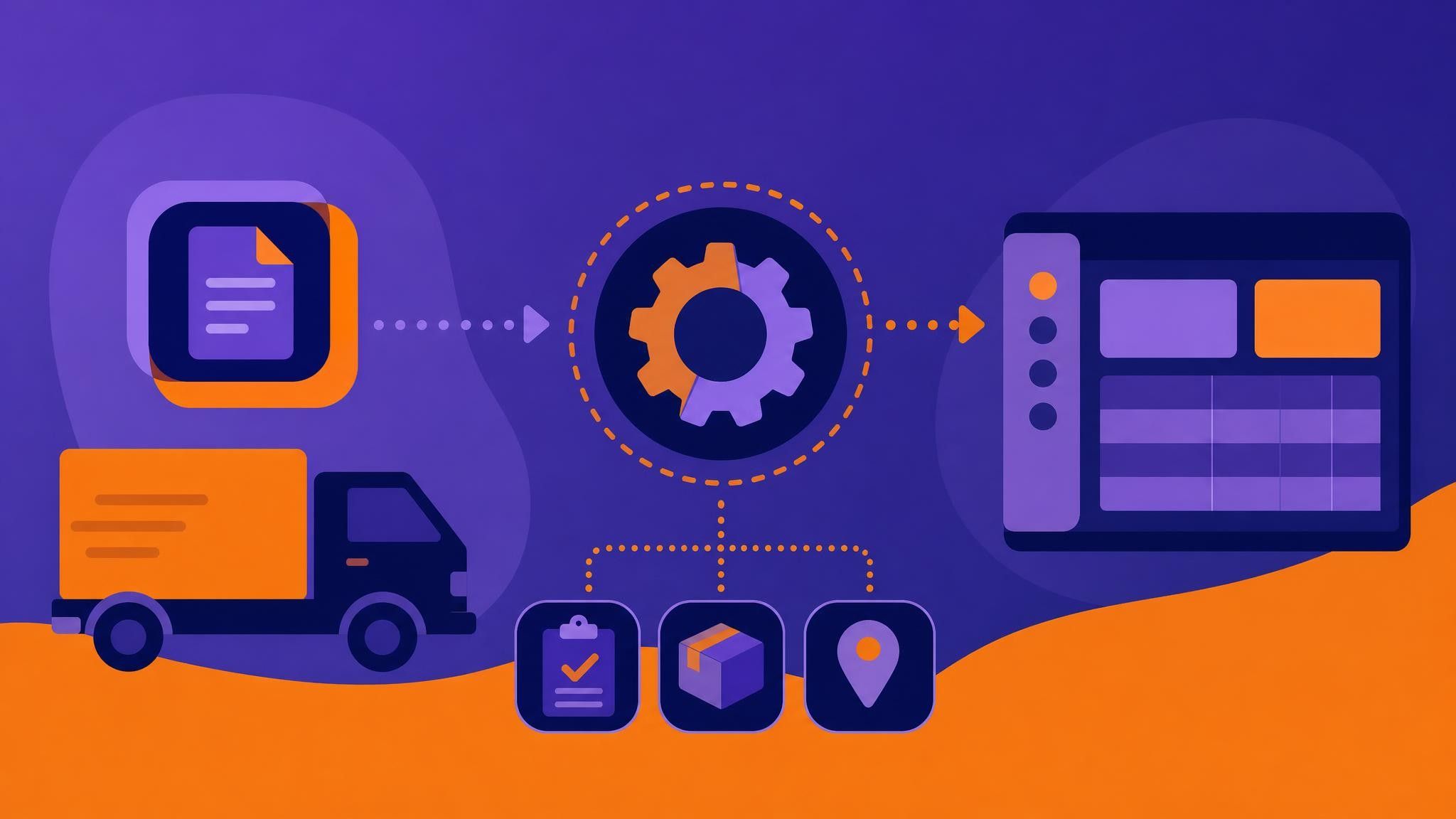
CT-e–ERP Integration: How to Automate the Tax Process
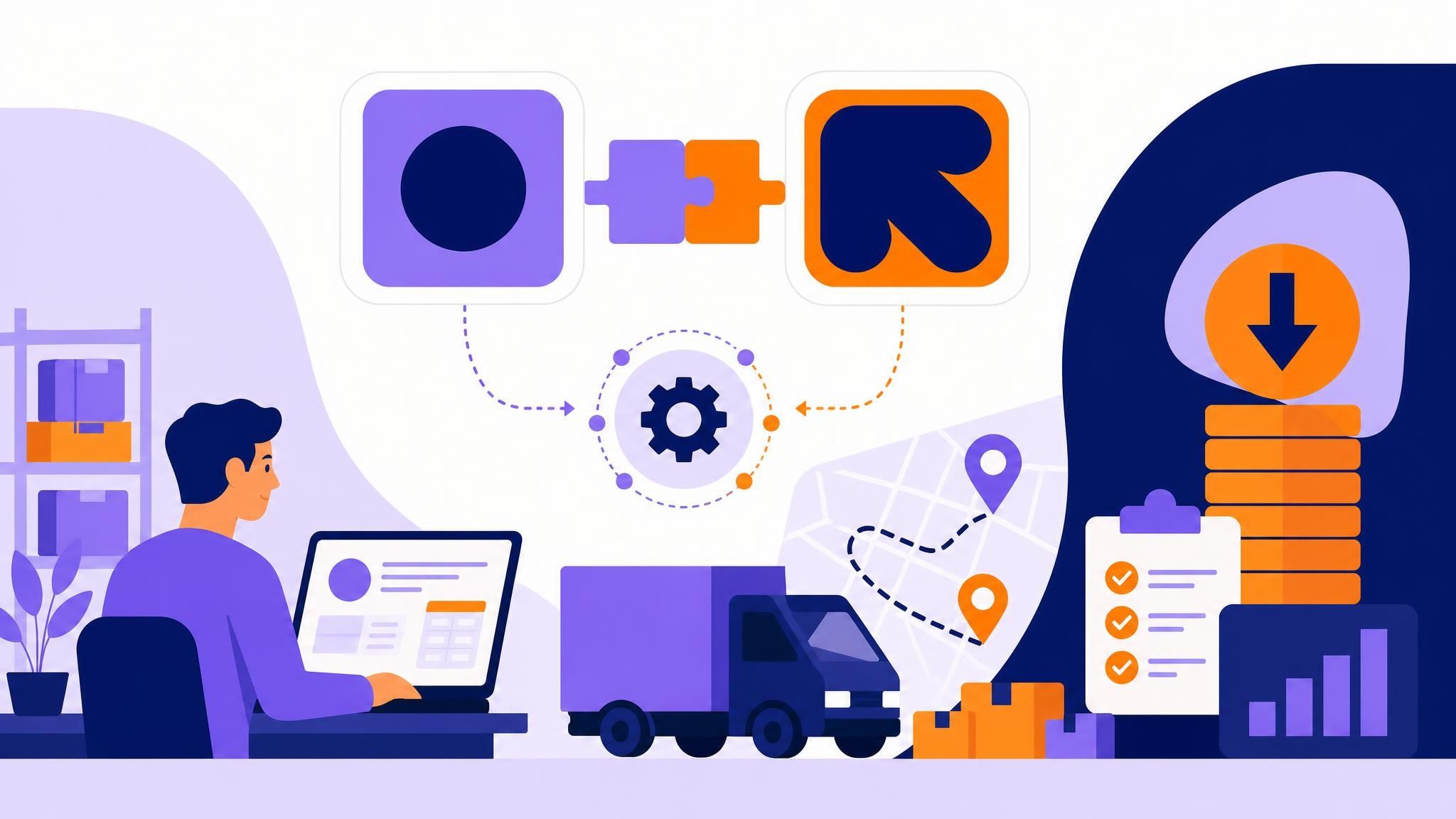
CT-e (Conhecimento de Transporte Eletrônico) — Brazil’s electronic bill of lading for freight — is a cornerstone of compliance. When CT-e issuance is handled manually — with data retyped into the ERP, “eyeballed” tax validations, and little visibility — the result is predictable: rework, shipment delays, exposure to fines, and a higher cost per document. Integrating CT-e with your ERP changes that scenario, connecting operations and tax into a continuous, automated, and auditable flow.
In this article, you’ll learn how to automate the CT-e tax process, the practical benefits for your operation, and how Meu Rastreio helps you move faster with a flexible, scalable CT-e module.
Why integrate CT-e with your ERP?
- Eliminate double entry: order, freight, and master data flows from your ERP to CT-e without retyping.
- Ensure tax consistency: CFOP and CST rules applied in a standardized, auditable way.
- Increase issuance speed: fewer bottlenecks between sales, logistics, and billing.
- Improve control and traceability: each CT-e tied to the right orders, trips, and cost centers.
- Cut costs and risk: fewer Sefaz rejections, fewer cancellations, lower exposure to fines.
In short: integration makes CT-e issuance a natural step in the logistics process — not an operational add‑on.
Key challenges without integration
- Constant reprocessing due to typing errors or outdated records.
- Tax mismatches (CFOP, ICMS, tax base, UF‑specific rates) that trigger rejections.
- Tight windows for issuance, events, and cancellations, with high non‑compliance risk.
- Lack of visibility over pending, authorized, or rejected documents.
- Difficulty composing the DACTE and distributing XML to customers and bill‑to parties.
- Slow audits: locating and proving data for a specific CT-e takes hours.
How CT-e–ERP integration works in practice
The ideal flow
- The transport/freight order is created in the ERP (shipper, consignee, bill‑to, amounts, and services).
- The loading order is generated and linked to operational data (license plate, driver, route, volumes).
- Applicable tax rules (CFOP, CST, ICMS, exemptions, reducers) are determined automatically.
- The CT-e is generated from this data and validated against Sefaz requirements.
- The document is transmitted, authorized, and the DACTE is made available for print/send.
- XML and DACTE are distributed to stakeholders; events (correction letter/CC-e, cancellation) are handled as needed.
- The ERP receives the CT-e status and key/number, ensuring fiscal and accounting reconciliation.
Essential components of automation
- A valid, well‑managed digital certificate (A1 or A3).
- Standardized master data for customers, bill‑to parties, shippers, and addresses.
- Tax tables (CFOP, CST, UF‑based rates, benefits) properly parameterized.
- Business rules by service type (interline/redespacho, subcontracting, multimodal, toll values).
- Sefaz status monitoring and contingency handling when needed.
- Secure XML storage and complete audit trails.
Step‑by‑step: automating the CT-e tax process
- Diagnose your current flow
- Monthly CT-e volume? Top rejections? Where does rework happen?
- Which ERPs and modules connect tax and logistics?
- Map scenarios and tax rules
- Which CFOPs and CSTs by operation (CIF/FOB, interline, subcontracting, returns)?
- UF‑specific nuances by origin/destination and service type.
- Standardize records and data sets
- CNPJs, state registrations (IE), addresses, and municipalities (official codes) consistent.
- Operation types and freight/services tables up to date.
- Configure the tax engine
- Define calculation logic, rounding, add‑ons (GRIS, TAC, toll), ICMS base.
- Set exceptions by customer, branch, or route when needed.
- Test in a sandbox/homologation environment
- Simulate critical scenarios (multiple bill‑to parties, last‑minute changes, contingency).
- Validate DACTE, XML, calculations, and status callbacks to the ERP.
- Train the team and document
- Procedures for issuance and events (CC-e, cancellation) and fallbacks.
- Define clear ownership: operations, tax, IT, and customer service.
- Go live with monitoring
- Track rejections, issuance times, and SLA adherence.
- Continuously fine‑tune tax rules and master data.
Measurable benefits of CT-e–ERP integration
- Operational speed
- Issue in minutes, not hours — even during peak dispatch.
- Fewer errors and rejections
- Less rework and lower cost per document.
- Continuous compliance
- Consistent application of CFOP/CST, legal deadlines, and events.
- Scalability
- Grow issuance without growing headcount at the same pace.
- Transparency and auditability
- Full trails of who did what and when.
- Data quality
- Standardized records prevent mismatches and improve the customer experience.
Best practices to keep the tax process under control
- Separate homologation and production with realistic (non‑sensitive) data.
- Establish internal SLAs for issuance, correction, and cancellation.
- Track digital certificate expiration and maintain a contingency plan.
- Use proactive reports and alerts for frequent rejections.
- Review tax rules and customer/UF exceptions monthly.
- Centralize and version documentation for processes and parameters.
Real‑world use cases
-
Regional carrier with high spot volume
- Situation: 2,000 CT-es/month, many new customers, inconsistent records.
- Solution: CT-e–ERP integration with automatic CNPJ/IE validation, UF‑based rules, and a mandatory‑fields checklist before issuance.
- Result: sharp drop in rejections, batch issuance, and stable peaks.
-
3PL with multiple branches
- Situation: each branch followed its own tax rules, hindering central control.
- Solution: centralized tax engine parameterized by branch/UF, with audit trails and governance.
- Result: standardization, consolidated visibility, and faster audits.
-
Shipper using FOB/CIF
- Situation: frequent gaps between negotiated values and what went into the CT-e.
- Solution: integration between the ERP’s freight module and the CT-e emitter, binding rate tables and add‑ons to the document.
- Result: automatic matching, fewer customer disputes, faster financial close.
Trends shaping tax automation in transportation
- Consolidation of specialized SaaS platforms, reducing internal IT effort.
- More real‑time validations and dynamic UF‑based rules.
- Predictive analytics to anticipate rejections and flag critical records.
- Data governance and security (LGPD) as table stakes for any integration.
- Tighter integration among related tax documents in transportation, cutting manual steps.
How Meu Rastreio accelerates CT-e–ERP integration
Meu Rastreio offers a CT-e module purpose‑built for logistics teams that need speed, compliance, and control:
- Smooth integrations with leading ERPs and custom scenarios.
- A parameterizable tax engine by UF, customer, branch, and service type.
- Automatic validations before sending to Sefaz to prevent rejections.
- Batch issuance, smart reprocessing, and event handling (CC-e, cancellation).
- Certificate management, contingency, and a real‑time status monitor.
- Secure XML storage and automatic DACTE distribution.
- Dashboards and reports for audits, SLAs, and continuous improvement.
- Onboarding guided by logistics and tax experts.
With a practical, results‑driven approach, your team issues CT-e with fewer clicks, fewer errors, and greater visibility — from order to invoicing.
Learn more about Meu Rastreio’s CT-e module: https://meurastreio.app/pt-BR/cte
Conclusion: your next step toward frictionless tax
Integrating CT-e with your ERP is more than “connecting systems.” It turns a critical transportation checkpoint into a competitive advantage. By automating tax rules, standardizing records, and monitoring every step, your company reduces costs, avoids risk, and gains the speed to serve customers better.
Ready to see CT-e automation in action and scale your operation? Book a free demo with our specialists and discover how Meu Rastreio can integrate with your ERP quickly and securely.