Operating transport in Brazil is complex by nature. Add tax documents to the mix—CT-e, BP-e, MDF-e, DACTE—and questions spike. One item that often causes confusion is CT-e OS: when should you use it, who is required to issue it, and how is it different from the standard CT-e?
This guide explains what CT-e OS is, who must issue it, its main differences from CT-e (model 57), and how to simplify everything with a modern issuance and management solution like Meu Rastreio’s CT-e.
What is CT-e OS The CT-e OS (Conhecimento de Transporte Eletrônico para Outros Serviços), model 67, is the electronic tax document used to record transportation services that do not involve freight/cargo—for example, chartered passenger transport, cash-in-transit (valuables), and excess baggage charges. It replaces paper documents and has legal validity once authorized by SEFAZ (the State Treasury Department).
Like the CT-e, the CT-e OS:
- Is a digital document with an electronic signature.
- Is electronically authorized by the SEFAZ of the UF (state) where the service starts.
- Generates an auxiliary document for carrying and inspection, the DACTE OS.
- Follows rules set by national legislation (such as Ajustes SINIEF) and state regulations.
In practice, CT-e OS formalizes the provision of “non-cargo” transportation services subject to ICMS (Brazilian VAT on the circulation of goods and interstate/intermunicipal transport), providing traceability, standardization, and tax security.
Who must issue CT-e OS In general, ICMS taxpayers who provide intermunicipal or interstate transportation services in the following situations must issue CT-e OS:
- Passenger transport companies providing charter services (ad hoc or continuous) on intermunicipal or interstate routes.
- Cash-in-transit and valuables transport companies (armored car, currency/document escort).
- Excess baggage charges in transport services where ICMS applies.
- Providers of other non-cargo transportation services regulated by state rules that require CT-e OS.
Important nuances:
- Municipal transportation is typically subject to ISS (not ICMS) and generally does not use CT-e OS.
- Regular line passenger transport (road, rail, waterway) uses the BP-e, not CT-e OS.
- Rules and accreditation vary by state (UF). Some scenarios require specific authorization from the transport regulator (e.g., tourist charters) in addition to SEFAZ accreditation.
- Independent carriers only issue CT-e OS if they are ICMS taxpayers, duly accredited, and compliant with state requirements.
CT-e OS vs. CT-e: what’s the difference Although both are Electronic Transport Knowledge documents, they cover distinct operations:
- Service scope:
- CT-e (model 57): freight/cargo transport.
- CT-e OS (model 67): other transport services (e.g., chartered passengers, valuables, excess baggage).
- Parties involved:
- CT-e: typically includes shipper, consignee, dispatcher, receiver, and the bill-to (tomador).
- CT-e OS: highlights the bill-to/contracting party (company, public agency, or individual) and, when applicable, passenger info, charter route, and service/contract details for valuables transport.
- Related documents:
- CT-e: usually linked to an NF-e/NF and may require an MDF-e for road cargo.
- CT-e OS: may reference charter contracts, work orders, tickets, and sector regulations. MDF-e is generally not required for passenger services, but rules vary by state and mode.
- Auxiliary printout:
- CT-e: DACTE.
- CT-e OS: DACTE OS.
- Tax rules:
- ICMS applies to intermunicipal and interstate services in both cases, but CFOP, CST/CSOSN, and calculation bases differ by service nature and state.
- Events:
- Cancellation, correction letter, number nullification, and recipient manifestation events exist for both, with deadlines and conditions defined per state.
Bottom line: if you transport goods, use CT-e; if you provide other transport services (such as chartered passengers or valuables), use CT-e OS.
Practical CT-e OS use cases
- Corporate shuttles: a company contracts buses to move employees between cities daily. The carrier issues CT-e OS per contract/period or trip, as configured in its tax rules.
- Tourism and events: an agency organizes intermunicipal transfers for a conference. The transport provider issues CT-e OS for the charter service.
- Cash-in-transit: a financial institution hires an armored car company for interstate routes. Each service is documented via CT-e OS with bill-to, route, and service value details.
- Excess baggage: in intermunicipal/interstate crossings, when regulators and state law set ICMS on excess baggage, the provider issues CT-e OS for the excess amount.
These examples illustrate the logic: where there is a non-cargo transport service with ICMS, CT-e OS is typically the right path.
How to issue CT-e OS without the headache Before issuing:
- Accreditation: be accredited with your state’s SEFAZ to issue CT-e OS (model 67).
- Digital certificate: hold a valid A1 or A3 certificate.
- Tax setup: define CFOP, CST/CSOSN, rates, and applicable tax benefits (per your tax regime and state).
- Series and numbering: establish series and internal controls to avoid conflicts.
Essential data for issuance:
- Bill-to/contracting party identification: CNPJ/CPF, state registration (if any), address.
- Service mode and route: origin, destination, legs, and planned dates/times.
- Values and price breakdown: fares, tolls, add-ons, and discounts.
- Regulatory information: charter contract number, work order, or regulator authorization, when applicable.
- Taxation: correct CFOP, CST/CSOSN, taxable base, and rates.
- Mandatory notes: fields required by state and sector regulations.
Issuance flow:
- Register data in your fiscal solution.
- Sign and transmit to SEFAZ.
- After authorization, generate the DACTE OS.
- Send the XML and DACTE OS to the bill-to party and archive electronically for the legal retention period.
- For adjustments, use the appropriate events (cancellation, correction letter) within your state’s deadlines.
Best practices:
- Validate CFOP and rules by state and service mode before issuing.
- Standardize customer/contract records to prevent discrepancies.
- Monitor rejections and handle contingencies automatically.
- Train operations and tax teams to identify when it’s CT-e OS vs. BP-e or CT-e.
Common mistakes and how to avoid them
- Issuing a CT-e (cargo) instead of CT-e OS: standardize processes and use checklists by service type.
- Wrong tax classification: review CFOP and CST/CSOSN per service type and state.
- Incorrect service start location: ensure the correct UF of service start for authorization.
- Disorganized numbering and series: define rules and use automated controls in your tool.
- Missing event deadlines: track state deadlines for cancellations and correction letters.
- Missing required references: charter contracts and regulator authorizations may be mandatory—record these references in the document.
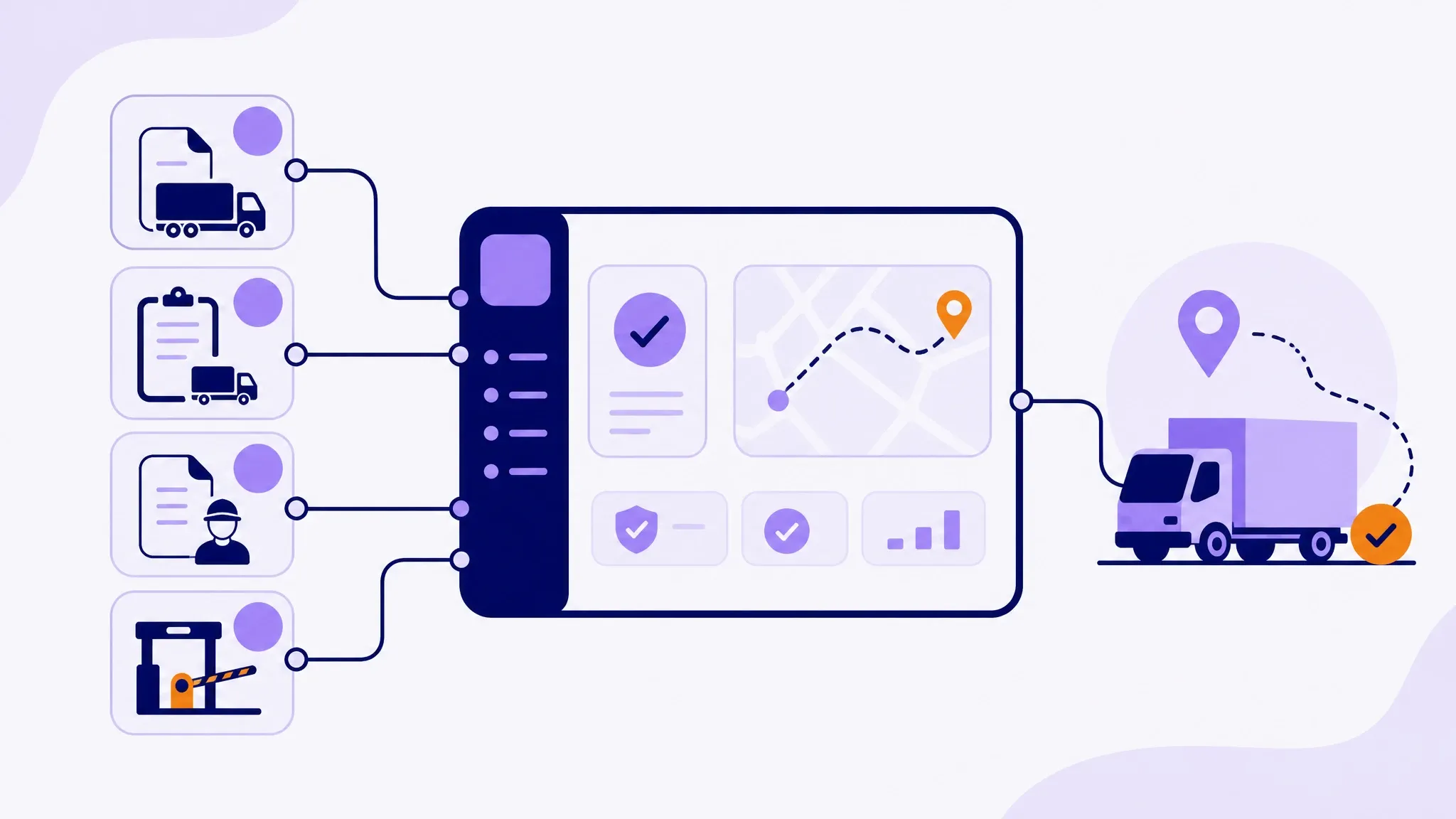
How Meu Rastreio streamlines CT-e OS and levels up your operation Meu Rastreio offers a modern solution for issuing and managing transport tax documents, including CT-e (model 57) and CT-e OS (model 67). Here’s how we help your team gain efficiency and compliance:
- Guided issuance for CT-e and CT-e OS: dedicated flows by service type (charter, valuables, baggage) to reduce classification errors.
- Real-time validations: rules by state, service mode, and tax regime with preventive alerts before transmission.
- Automatic DACTE and DACTE OS: generation, delivery, and secure storage of XML and auxiliary documents.
- Master data and contract management: register bill-to parties, routes, and charter contracts once and reuse them safely.
- Unified tax monitor: one dashboard for rejections, contingencies, cancellations, and deadlines.
- Operational integration: connect issuance with trip planning, fleet occupancy, time tracking, and billing.
- Logs and audit trails: full history by document, user, and event.
- Continuous updates: compliant with SEFAZ technical notes and changes without halting your operation.
- Expert support: a team focused on transport and electronic documents, ready to guide your daily routine.
Result: less rework, fewer tax risks, and a data-driven operation for decision-making. Explore Meu Rastreio’s CT-e solution at https://meurastreio.app/pt-BR/cte.
Trends and insights: why invest now
- Ongoing fiscal digitalization: Brazil’s e-document ecosystem (CT-e, CT-e OS, BP-e, MDF-e) evolves fast. Being ready reduces penalties and boosts competitiveness.
- Smart automation: pre-issuance validations and state-by-state rules prevent rejections and save back-office time.
- Data as an advantage: centralizing documents and KPIs on trips, occupancy, and billing enables route optimization, better customer negotiations, and revenue predictability.
- Compliance as value: large shippers demand auditable processes and strict SLAs; mastering CT-e OS and CT-e opens commercial doors.
Quick FAQ
- Does CT-e OS replace the BP-e?
- No. BP-e is the document for regular line passenger transport. CT-e OS covers other services (e.g., charter, valuables, excess baggage), per state rules.
- Do independent carriers need to issue CT-e OS?
- If they are ICMS taxpayers and accredited, yes. Otherwise, check their status and state requirements.
- Do I need MDF-e when I issue CT-e OS?
- It depends on the state and service mode. For passengers, MDF-e is generally not required; for other cases, consult SEFAZ/your accountant.
- What is the deadline to cancel a CT-e OS?
- Deadlines are defined by each state and may vary. Check local rules and use a solution that monitors these deadlines.
Conclusion CT-e OS is essential for providers of non-cargo transport services such as chartered passengers, valuables, and excess baggage. Knowing when to use it, how to issue it, and how it differs from the standard CT-e is key to staying compliant, billing without delays, and boosting operational efficiency.
With Meu Rastreio, your team issues CT-e and CT-e OS simply, with validations and operational integration—from trip planning to billing—reducing errors, costs, and risks.
Book a free demo and see how Meu Rastreio can elevate your transport operation: talk to a specialist today.